
Benin’s Foiled Coup: A Short-Term Victory Masks Long-Term Democratic Crisis
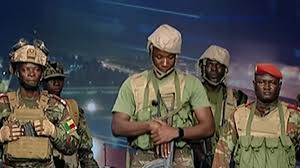
The swift collapse of the December 7 coup attempt in Benin presented a rare, clear-cut victory for constitutional order in West Africa. Within hours, the combined might of Nigeria’s air force and a rapid ECOWAS military deployment had quashed the rebellion, leading to the arrest of dozens of soldiers and, days later, the high-profile detention of former defence minister Candide Azannai. On the surface, President Patrice Talon’s government stands fortified, having demonstratively defeated a military uprising. Yet, this decisive security triumph papers over a more insidious and profound crisis: the systematic erosion of Benin’s once-celebrated democracy, which created the fertile ground for rebellion in the first place.
The immediate response showcased a newly assertive regional bloc. ECOWAS, criticised for its ineffective diplomacy in the face of recent successful coups in the Sahel, acted with uncharacteristic speed and unity. By deploying troops from Nigeria, Ghana, Ivory Coast, and Sierra Leone while President Talon still held constitutional authority, the bloc delivered a potent message. It was a tactical masterstroke that likely deterred broader military defections and re-established a deterrent against would-be putschists across the region. Domestically, the state moved with equal force, rounding up alleged plotters and charging them with treason.
However, the stated grievances of the coup plotters, led by the fugitive Lieutenant-Colonel Pascal Tigri, point directly to the ailments weakening Benin’s political body. They cited the government’s mismanagement of the spiralling jihadist insurgency in the north—a threat spilling over from Burkina Faso and Niger—and the perceived neglect of soldiers at the front. More fundamentally, their actions emerged from an atmosphere of political suffocation. Under President Talon, Benin has undergone a dramatic democratic retreat. Leading opposition parties were barred from parliamentary elections in 2019 and later excluded entirely from the 2021 presidential race, turning a vibrant multi-party system into a de facto one-party arena.
The current crackdown, therefore, presents a dangerous paradox. The detention of a figure like Azannai, an opposition leader who publicly condemned the coup, suggests the government is exploiting the emergency to sideline political dissent. This tactic conflates legitimate opposition with treason, a move that deepens societal fractures rather than heals them. As one analyst framed it, the state is employing autocratic methods to preserve a democratic façade, a strategy that may secure the government in the short term but enfeebles the nation’s democratic resilience in the long run.
Furthermore, the regional context fuels the crisis. Benin exists in the shadow of the “coup belt,” where successful takeovers in Mali, Burkina Faso, and Niger have normalised military rule and bred a contempt for civilian governance among some military circles. The plotters’ rhetoric echoed this regional sentiment, warning against foreign influence and “imperialism.” While ECOWAS won the military battle in Cotonou, it is losing the ideological war across the wider region, where juntas now form their own competing alliances and dismiss the bloc as a puppet of Western interests.
Ultimately, the foiled coup has solved nothing of Benin’s core political maladies. It has, instead, granted the government a pretext to tighten its grip. With President Talon due to step down in April 2026, his chosen successor, former Finance Minister Romuald Wadagni, is positioned to run in an election where the main opposition remains muzzled. The path ahead risks cementing a system where power changes hands only within a tightly controlled elite, devoid of genuine public contestation.
The soldiers in Kobe and Camp Togbin have been subdued, but the discontent that propelled them the sense of a closed political system, security failures, and economic exclusion remains unaddressed.
Benin has successfully defended its state from a sudden assault, but the slower, more corrosive crisis of its democracy continues unabated. A short-term victory, it seems, may have merely set the stage for a more protracted and complex struggle for the soul of the nation.