
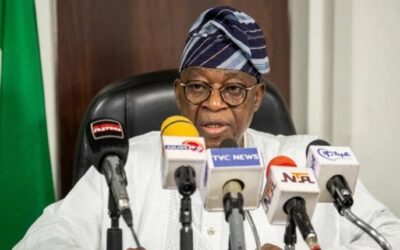
Breaking: Governor Siminalayi Fubara Defects to APC

Rivers State Governor Siminalayi Fubara announced on Tuesday, December 9, 2025, that he is leaving the Peoples Democratic Party (PDP) for the All Progressives Congress (APC). The announcement, made before a gathering of stakeholders at the Government House in Port Harcourt, marks a seismic shift in the political landscape of Nigeria’s oil-rich Niger Delta region and is the culmination of a prolonged and public feud with his political godfather, Federal Capital Territory Minister Nyesom Wike.
Governor Fubara, who was elected in 2023 on the PDP ticket with Wike’s crucial backing, declared his move to the ruling party, framing it as a decision made in the interest of the people of Rivers State. His defection follows the move of 16-17 state lawmakers loyal to Wike, led by Speaker Martin Amaewhule, who themselves defected from the PDP to the APC just days earlier on December 5. This sequence of events has effectively delivered control of both the executive and legislative arms of the state government to the APC, fundamentally altering the balance of power.
The governor’s decision ends months of intense speculation and is the latest chapter in a political crisis that has gripped the state for over a year. The rift between Fubara and Wike, which became public in late 2023 over control of governance and state resources, escalated into a series of dramatic confrontations. These included two attempted impeachment proceedings against the governor, the bombing of the state House of Assembly complex, and the intervention of President Bola Tinubu, who brokered a peace agreement between the two factions in December 2023.
The conflict reached a federal level in March 2025 when President Tinubu declared a six-month state of emergency in Rivers State, suspending Governor Fubara, his deputy, and the state assembly. The emergency rule, which lasted until September 18, 2025, temporarily froze the political hostilities but did not resolve the underlying tensions. Throughout this period, rumours persisted that a resolution might involve Fubara’s defection to the APC as a condition for political survival and a return to stable governance.
The PDP has been quick to condemn the move. National officials have previously warned that such a defection would be viewed as a profound betrayal, weakening the party’s stronghold in the South-South geopolitical zone. Conversely, the APC in Rivers State has celebrated Fubara’s crossover as a “homecoming” and a positive development for the state’s integration with the federal government’s agenda under President Tinubu.
For Rivers State, which accounts for a significant portion of Nigeria’s oil production, this political realignment is expected to herald a new era of direct collaboration with the federal government. Analysts anticipate that this could translate into improved funding for infrastructure projects, enhanced security allocations, and a more harmonious relationship between the state and federal authorities. However, it also raises questions about the future of Nyesom Wike, who remains a powerful figure within the PDP, and the potential for further realignments within his political camp.
Governor Fubara’s defection reduces the number of state governors elected under the PDP’s banner and represents a major victory for the APC as it consolidates power ahead of the 2027 general elections. It brings a decisive close to a protracted period of instability in Rivers State, but the long-term implications for governance, party politics in the Niger Delta, and the nation’s political equilibrium remain to be seen.