
CBN Projects 4.49% GDP Growth, 12.94% Inflation as Nigeria’s Economy Shows Signs of Stabilisation
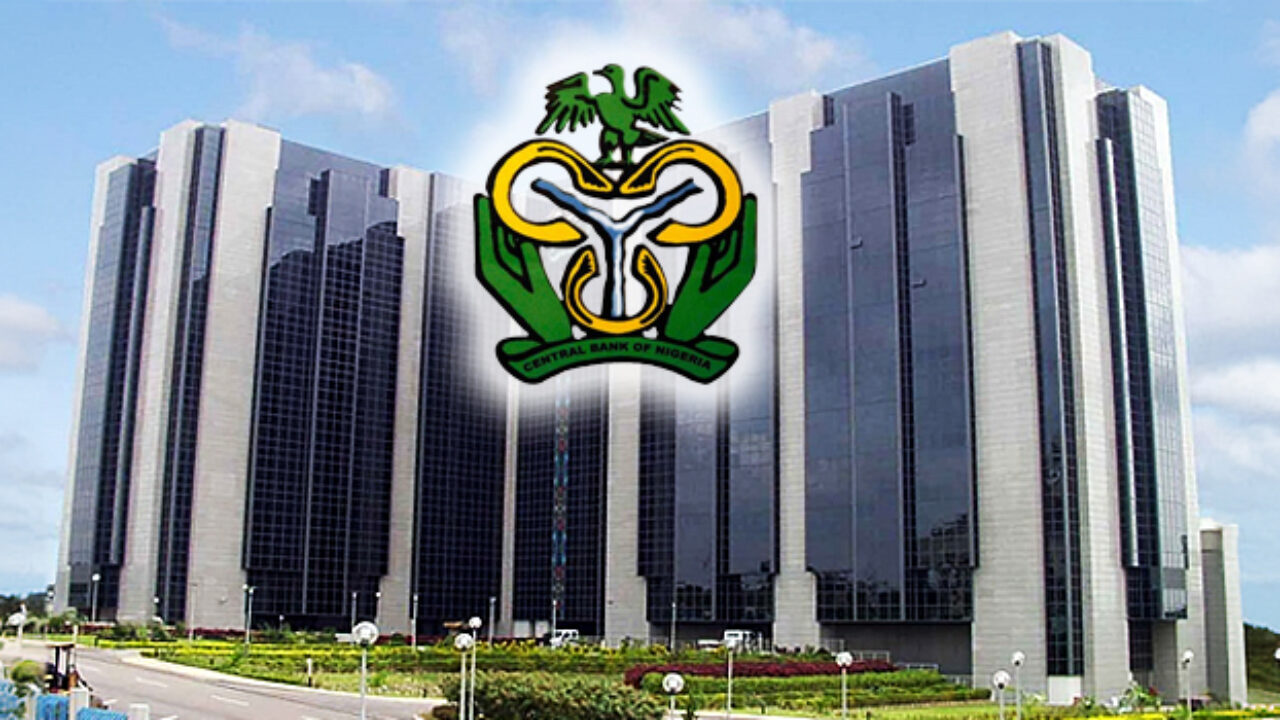
Nigeria’s economy is exhibiting early signs of stabilisation, with the Central Bank of Nigeria projecting stronger growth and easing inflation for 2026 amid ongoing structural and monetary reforms that have begun to reshape the country’s macroeconomic landscape.
In its latest macroeconomic outlook, the apex bank forecast that Gross Domestic Product will expand by 4.49 per cent this year, while inflation is expected to moderate to an average of 12.94 per cent. External reserves are projected to climb to $51.04 billion, up from $45.01 billion in 2025 and $40.19 billion in 2024, driven by improved crude oil production, enhanced local refining capacity, higher remittances, and increased capital inflows.
The Central Bank also expects the cost of lending to decline as monetary conditions gradually loosen, following months of tight policy aimed at curbing inflationary pressures that had pushed headline inflation to a peak of 34.6 per cent in November 2024.
Read Also: Dangote Group Appoints Former CBN Director as Chief Economist
These projections are rooted in the bank’s confidence that foreign exchange reforms, improved oil output, fiscal restructuring, and stronger market discipline will underpin economic stability and support a more globally competitive domestic economy.
The CBN Governor, Olayemi Cardoso, recently reflected on the progress achieved over the past year, describing it as a period marked by global uncertainty, domestic recalibration, and institutional rebuilding. Speaking at the 59th annual Bankers Dinner organised by the Chartered Institute of Bankers of Nigeria, Cardoso said the institution had worked deliberately to restore credibility, transparency, and policy alignment.
“I am pleased to report meaningful progress on all three fronts, even as we remain fully aware of the work ahead. Our actions continue to reflect the policy direction we articulated from the outset; in other words, we said what we would do, and we have done it, transparently and consistently,” Cardoso stated.
The CBN has consistently pursued policies targeted at moderating inflation, boosting output growth, building up foreign reserves, and improving earnings from non-oil exports. Analysts at United Capital Research have expressed optimism that Nigeria’s external reserves will continue their steady ascent, buoyed by stronger oil export receipts, robust diaspora remittances, and a favourable trade balance.
“With the reserves position strengthening, the CBN will have greater flexibility to sustain its interventionist approach in the FX market. This, in turn, should help to maintain relative stability in the naira across both official and parallel markets,” analysts at Cowry Assets said in a recent weekly market report.
The CBN further stated in its outlook that the growth prospect in 2026 is positive on account of continued gains from broad-based structural reforms and improved stability in the exchange rate. It added that easing monetary policy would add impetus to growth following the anticipated reduction in lending costs.
The Central Bank maintained its policy rate at 27 per cent at its November 2025 meeting, signalling confidence that inflation would continue to ease. Cardoso explained that the economy had moved from crisis containment to reform-based stabilisation.
“After nearly a decade in which real GDP growth averaged about two per cent, reforms have restored momentum and confidence in our broad macroeconomic environment. Our economy grew by 4.23 per cent in the second quarter of 2025, the strongest pace in four years, driven by improvements in telecommunications, financial services, and oil production,” he said.
He also confirmed that inflationary pressures were easing, noting that inflation had more than halved from its November 2024 peak to 14.50 per cent in November 2025, marking eight consecutive months of disinflation.
“This decline was restoring real purchasing power and solidifying policy credibility. We continue with determination to bring inflation down further. The current double-digit rate cannot be acceptable. Price stability is the foundation of sustainable growth,” Cardoso stated.
Read Also: CBN Caps Travel Cash at 25%, Mandates 75% on Prepaid Cards
He added that the CBN’s transition to an inflation-targeting framework is gaining traction through improved data analytics, strengthened communication, and the end of monetary financing of fiscal deficits, actions that have strengthened monetary policy transmission and anchored expectations.
“Our models project continued disinflation in 2026, helped by stronger production, improved FX liquidity and disciplined liquidity management. As inflation moderates and becomes firmly anchored, we will calibrate the policy rate in line with evolving data,” the governor said.
According to him, domestic and international observers have noted Nigeria’s “huge turnaround” in macroeconomic management, with the commitment remaining clear that monetary policy will stay evidence-based, data-driven, and unwavering in its pursuit of price stability.
The bank also expects the current account surplus to rise to $18.81 billion in 2026, supported by stronger exports, steady remittances, and better petroleum sector performance. Portfolio inflows and external borrowings are expected to leave the financial account in a net borrowing position of $10.15 billion, while the International Investment Position is projected at $69.58 billion in net borrowing terms.
The CBN insists that reforms are already yielding results, highlighting that the balance of payments posted an estimated surplus of $5.80 billion in 2025, supported by higher export earnings and the gradual recovery of investor confidence.
Ensuring growth delivers real gains for citizens
Despite the improving macroeconomic indicators, concerns remain that the benefits of recent reforms have yet to translate into tangible improvements in the living standards of ordinary Nigerians.
In April 2025, the International Monetary Fund acknowledged that while the Nigerian government had taken important steps to stabilise the country’s economy, the impact of these reforms was yet to be felt by most citizens, as poverty and food insecurity remain high.
“Gains have yet to benefit all Nigerians as poverty and food insecurity remain high,” the Fund said in a statement published on its website, following its recognition of bold fiscal and monetary measures such as the removal of fuel subsidies, halting monetary financing of the fiscal deficit, and implementing reforms to improve the foreign exchange market.
Speaking at the Seminar for Finance Correspondents and Business Editors in Lagos, the CBN Deputy Governor, Corporate Services, Ms Emem Usoro, said that despite recent gains in stabilising the economy, more work is required to strengthen macroeconomic fundamentals and improve the living standards of Nigerians.
In a keynote address delivered on her behalf by the Acting Director of the Corporate Communications Unit, Mrs Hakama Sidi-Ali, she stressed that the progress recorded so far was insufficient to significantly improve living standards.
“While progress has been made, more work is required to improve macroeconomic fundamentals and the standard of living for Nigerians,” she said.
The Director-General of the West African Institute for Financial and Economic Management, Dr Baba Musa, described Nigeria’s economic story as one of resilience and recalibration but warned that reforms must remain consistent.
In his report titled *Nigeria’s Economic Outlook at a Turning Point*, he wrote that Nigeria has demonstrated determination in the face of domestic inflationary pressures, unemployment, and infrastructure gaps.
“To sustain the recovery, Nigeria must maintain macroeconomic stability, deepen structural reforms, and ensure that growth translates into tangible improvements for citizens. Achieving this requires collaboration among government, the private sector, civil society, and development partners,” he stated.
He added that the true measure of progress lies in whether Nigerians experience improvements in their daily lives.
“The real test, however, lies not only in achieving stability but in ensuring that it translates into tangible socio-economic outcomes: decent jobs, rising incomes, improved productivity, and broader social welfare. If Nigeria deepens reforms, invests strategically in human capital, and leverages its structural advantages, the country can achieve not only recovery but also inclusive and durable economic transformation,” Musa said.
He explained that the growth outlook is supported by stronger crude production following operational reforms in the oil sector, improvements in services such as telecommunications, financial services and transportation, and better agricultural performance from improved weather conditions and mechanisation.
Musa also highlighted that the recent GDP rebasing gives a more accurate picture of the economy, recognising emerging sectors such as digital services, creative industries, and modular refining.
Global institutions have also acknowledged Nigeria’s resilience while warning about external risks. The World Bank, in its *Global Economic Prospects* report, stated that Nigeria will record three straight years of growth, with GDP rising by 3.6 per cent in 2025, 3.7 per cent in 2026, and 3.8 per cent in 2027. However, it warned that global growth is slowing, tariff tensions are rising, and uncertainty remains elevated worldwide.
Balancing reforms, risks and future growth prospects
The CBN remains confident that its reforms will help Nigeria consolidate its recovery. It forecasts a sharply higher current account surplus of $18.81 billion in 2026, reflecting expected improvements in oil output, diaspora inflows, and non-oil sector performance.
It also expects portfolio inflows and external borrowings to deliver a net borrowing financial account position of $10.15 billion, with the International Investment Position projected at $69.58 billion in net borrowing terms as high yields attract investors.
The bank maintains that the relative foreign exchange stability achieved in 2025 came from reforms in the FX market, higher capital inflows, increased local refining capacity, and rising export receipts. These factors are expected to strengthen in 2026, further boosting reserves and confidence.
However, risks remain on the horizon. The bank warned that fiscal pressures, global economic shocks, oil production disruptions, climate risks, and volatile capital flows could still weigh on the outlook. While inflation has slowed, domestic price pressures remain a concern and could resume if fiscal and monetary coordination weakens.
Experts at Comercio Partners noted that non-oil activities are stabilising and helping cushion the impact of external and structural pressures.
“Non-oil sectors are stabilising and providing a buffer against external and structural shocks, while the oil sector faces operational bottlenecks that limit its contribution to aggregate growth,” the investment house said, adding that “future GDP performance will depend on improvements in oil-sector operations, continued non-oil expansion, and the transmission of monetary policy into investment and consumption.”
Cardoso stressed that the bank will continue to prioritise evidence-based policy, maintaining that the reforms had restored credibility and discipline to monetary management and would continue to evolve in response to economic realities.
At the heart of the bank’s projections is a belief that economic stability, price moderation, and structural reforms can create a more resilient Nigerian economy. However, the translation of these reforms into real income growth, job creation, and social welfare remains the key test.