


Championship Crisis: Leicester City Fall to 20th After Six-Point Deduction
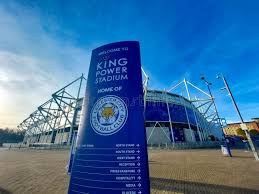
Leicester City, the club that defied sporting logic to win the Premier League title a decade ago, now face the grim prospect of falling into English football’s third tier after being docked six points for breaching financial regulations.
The sanction, announced on Thursday by an independent commission, has plunged the Foxes deeper into Championship relegation trouble, dropping them from 17th to 20th in the table and leaving them clinging to safety only by goal difference.
Read Also: Focus shifts for World Athletics U20 Championships
The commission found that Leicester had exceeded the profit and sustainability rules threshold by nearly £21 million ($29 million) over the three-year period ending with the 2023/24 season, when the club secured promotion back to the Premier League. According to the findings, Leicester posted cumulative losses exceeding £200 million across the three seasons from 2021/22 to 2023/24, significantly breaching the financial limits set by the English Football League.
Profit and sustainability rules, introduced to prevent clubs from spending beyond their means and ensure long-term financial stability, restrict Championship clubs to a maximum loss of £39 million over a rolling three-year period, or £13 million per season, unless owners cover the deficit through equity investment. Clubs that exceed these limits face disciplinary action, including fines, transfer embargoes, or points deductions.
Leicester’s breach is not the first high-profile case in recent years. In the 2023/24 season, both Everton and Nottingham Forest were docked points for similar violations while competing in the Premier League, sparking widespread debate about financial regulation and enforcement in English football. Everton were initially deducted 10 points, later reduced to six on appeal, while Forest received a four-point penalty that nearly cost them their top-flight status.
In a statement responding to the punishment, Leicester described the decision as “disproportionate” and argued that the commission had not given sufficient weight to “mitigating factors presented” during the disciplinary process. The club did not elaborate on what those factors were but indicated it remains open to further dialogue with the authorities.
“We remain committed to engaging constructively and ensuring that any action is fair, proportionate and determined through the appropriate processes,” the statement read.
The six-point deduction comes at a particularly vulnerable moment for Leicester. The club is currently without a permanent manager following the dismissal of Marti Cifuentes last month, and have failed to win any of their last four Championship fixtures. The combination of managerial instability, poor form, and the points penalty has left the club in a precarious position with only a handful of games remaining in the season.
Leicester’s fall from grace has been swift and dramatic. Just 10 years ago, in the 2015/16 season, the club achieved what is widely regarded as the greatest underdog story in sporting history, winning the Premier League title despite being 5,000-1 outsiders at the start of the campaign. Under Italian manager Claudio Ranieri, a squad assembled for a fraction of the cost of their rivals stunned the football world, finishing 10 points clear of second-placed Arsenal.
The triumph was built on the brilliance of players such as Jamie Vardy, Riyad Mahrez, N’Golo Kanté, and Kasper Schmeichel, who became global icons overnight. The achievement resonated far beyond football, symbolising hope and possibility in the face of overwhelming odds. It remains one of the most celebrated moments in English football history and was later immortalised in books, documentaries, and films.
Read Also: Saudi Pro League Officials Reject Ronaldo Influence as Star Misses Al-Riyadh Clash
Five years after that historic league title, Leicester added another major honour to their trophy cabinet by winning the FA Cup for the first time in their 137-year history. In May 2021, they defeated Chelsea 1-0 at Wembley Stadium, with Youri Tielemans scoring a stunning long-range winner. The victory was particularly poignant as it came during the pandemic and was dedicated to the memory of club owner Vichai Srivaddhanaprabha, who had died in a helicopter crash outside the King Power Stadium in 2018.
However, the club’s fortunes began to unravel in the 2022/23 season. Despite substantial investment in players and wages, Leicester were relegated from the Premier League, finishing 18th with just 34 points from 38 matches. The relegation marked a stunning reversal for a club that had competed in European football and regularly finished in the top half of the table.
Leicester responded by appointing Enzo Maresca, the former Manchester City assistant coach, who led them to an immediate return to the Premier League by winning the Championship title in the 2023/24 season. Maresca’s possession-based style and tactical discipline earned widespread praise, and the Italian was subsequently lured away to Chelsea, where he now manages in the Premier League.
But Leicester’s second stint in the top flight lasted just one season. They were relegated again in the 2024/25 campaign, managing only six wins in 38 games and finishing bottom of the table. The repeated relegations and financial losses have raised serious questions about the club’s strategy, recruitment, and governance in recent years.
The financial difficulties stem in part from Leicester’s attempts to maintain their competitiveness in the Premier League despite mounting losses. The club invested heavily in transfer fees and wages in a bid to consolidate their status among England’s elite, but those gambles failed to pay off on the pitch. Their wage bill remained high even after relegation, leaving them vulnerable to breaching financial regulations designed to prevent clubs from falling into unsustainable debt.
Leicester’s case also highlights broader concerns about the enforcement of financial rules in English football. Critics have long argued that the profit and sustainability framework is inconsistently applied and disproportionately punishes clubs that take financial risks in pursuit of sporting success, while allowing wealthier clubs to spend freely within the bounds of creative accounting. Others contend that the rules are necessary to protect clubs from reckless ownership and financial collapse, pointing to the numerous clubs that have entered administration or faced liquidation in recent decades.
The EFL, which governs the Championship, League One, and League Two, has faced pressure to tighten enforcement and ensure that sanctions are applied fairly and transparently. The independent commission system, which adjudicates on alleged breaches, is designed to insulate disciplinary decisions from political influence, but remains subject to appeals and legal challenges.
Leicester’s current predicament is compounded by their lack of managerial leadership. Cifuentes, who was appointed in February following the departure of previous manager Ruud van Nistelrooy, was dismissed after a string of poor results that left the club sliding towards the relegation zone. The club has yet to announce a permanent replacement, with coaching staff currently overseeing first-team affairs on an interim basis.
The managerial instability reflects deeper problems within the club’s hierarchy. Since the death of Vichai Srivaddhanaprabha, the club has been run by his son, Aiyawatt Srivaddhanaprabha, known as “Top.” While the younger Srivaddhanaprabha has maintained his family’s commitment to the club, Leicester have struggled to replicate the stability and vision that characterised the earlier years of Thai ownership.
If Leicester are relegated to League One, it would represent one of the most dramatic collapses in English football history. Only a handful of former Premier League champions have ever fallen into the third tier, with Blackburn Rovers, who won the title in 1995, being relegated to League One in 2017. For Leicester, a club that less than 10 years ago stood on top of English football, such a fall would be almost incomprehensible.
The club now faces a critical battle to avoid that fate. With only a slender goal difference separating them from the bottom three, and their form showing little sign of improvement, Leicester must quickly regroup, appoint a new manager, and rally their squad for a desperate fight for survival.