


Crude Nears $70 as US-Iran Standoff Shakes Markets
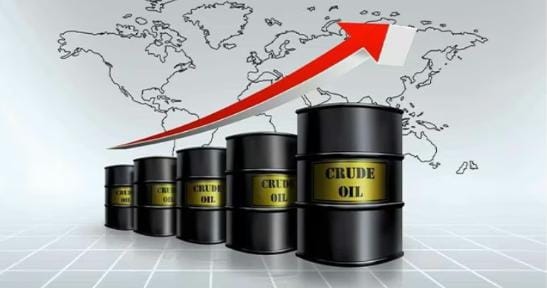
LAGOS — Global oil prices surged toward the $70 threshold this week following a breakdown in diplomatic negotiations between Washington and Tehran. Brent crude climbed to $69.25 per barrel, marking a sharp ascent from the $67 recorded just last week. This rally intensified after nuclear talks in Oman collapsed without a resolution between the two antagonistic nations. Consequently, the United States Department of Transportation issued an urgent advisory for commercial vessels to avoid Iranian territorial waters. Investors now fear that a direct military escalation could choke the vital maritime corridors of the Middle East.
The current volatility stems largely from heightened anxiety surrounding the Strait of Hormuz, a critical chokepoint for energy. Recent American military strikes against an Iranian drone have further rattled the nerves of global commodity traders. Furthermore, the Arabian Sea remains a theater of tension as both powers increase their naval presence. Market analysts suggest that traders are now pricing in significant risks of physical disruption to crude shipments. Meanwhile, Murban crude also mirrored this upward trend, trading at a premium of $69.51 per barrel on Tuesday.
Conversely, supply-side data from OPEC+ reveals a tightening market that could further sustain these elevated price levels. Total production from the alliance fell to 42.56 million barrels per day in January of this year. This represents a substantial decline of 270,000 barrels per day compared to the previous month’s output. Production cuts in Russia, Kazakhstan, and Libya drove this first monthly contraction in over a year. Furthermore, Nigerian output suffered a notable dip, contributing to the overall reduction in the group’s collective supply.
In a related development, local industry leaders warn that the benefit to Nigeria remains hampered by technical constraints. Mazi Colman Obasi of the Oil and Gas Service Providers Association described the current environment as highly unstable. He noted that while prices rise, Nigeria’s inability to meet its production quotas limits the potential windfall. Furthermore, opaque stockpiling strategies by China add another layer of complexity to the 2026 global surplus projections. Analysts believe geopolitical uncertainty will continue to override traditional supply-and-demand fundamentals for the foreseeable future.
Ultimately, the intersection of Middle Eastern conflict and African production hurdles creates a precarious path for the Nigerian economy. Higher prices offer a fiscal cushion but also threaten to increase the landing cost of refined petroleum. The federal government must now navigate these choppy international waters while addressing the domestic bottlenecks stalling output. Only a stabilized production environment will allow the nation to truly benefit from this geopolitical price surge. For now, the world watches the Persian Gulf with bated breath and rising costs.