

Dangote Refinery Exports 17 Petrol Cargoes To African Countries
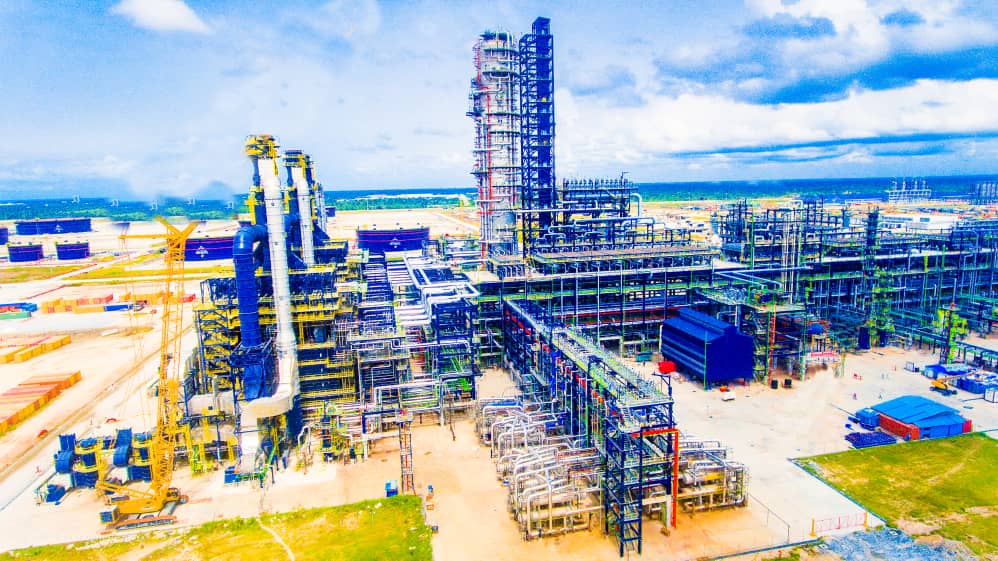
The Dangote refinery has emerged as a critical energy lifeline for Africa as the conflict between the United States and Iran paralyses Middle Eastern shipping. Operating at its full 650,000-barrel-per-day capacity, the Lagos-based facility recently exported 17 cargoes of petrol to nations across West, Central, and East Africa. This surge in regional trade follows the prolonged closure of the Strait of Hormuz, which has blocked roughly a fifth of the world’s oil supply since late February.
Aliko Dangote, President of the Dangote Group, confirmed on Monday that the refinery is now prioritising continental demand to cushion the impact of the global supply crunch. Beyond fuel, the complex has scaled up urea fertiliser exports to African buyers who previously sourced nutrients from sanctioned or war-disrupted markets. While the refinery’s urea typically heads to the Americas, the current geopolitical “hell” described by the Trump administration has forced a total recalibration of African trade routes.
The crisis in the Persian Gulf has sent Brent crude futures hovering near $109, with spot premiums hitting all-time highs. Iran’s rejection of a 45-day ceasefire and President Donald Trump’s looming Tuesday deadline to “take the oil” have kept markets in a state of high anxiety. Although the Nigerian National Petroleum Company (NNPC) increased its crude allocation to the Dangote plant to seven cargoes for May, record-high local fuel prices persist.
Nigeria’s domestic market has yet to see a price reprieve despite the refinery’s maximum output. To curb these costs, Dangote is pushing for more crude deliveries priced in Naira rather than US dollars. The state oil firm’s decision to increase supply to the refinery suggests a growing reliance on the private facility to maintain national energy security. Without this local refining capacity, Nigeria would be entirely at the mercy of a global market currently missing millions of barrels of Iranian and Gulf crude.
The geopolitical stakes remain dangerously high for the global economy. Iran continues to block the Strait of Hormuz to US and Israeli vessels, though it has allowed “friendly” Omani and Japanese tankers to pass. Trump’s ultimatum, set for 8:00 PM Washington time on Tuesday, threatens total military action if the waterway is not fully reopened. As the West and Asia scramble for alternative physical cargoes, the African continent is increasingly looking to Lagos to keep its engines running.
The Dangote refinery’s ability to pivot its export strategy proves its role as a regional hegemon. By supplying 17 petrol cargoes in a matter of days, the facility has demonstrated that African energy independence is a matter of infrastructure, not just resources. However, the true test will be whether the refinery can eventually lower costs for Nigerian consumers while the rest of the world braces for a potential escalation of the war in the Middle East.