


Dangote Refinery Slashes Petrol Import Bill by 29 Percent
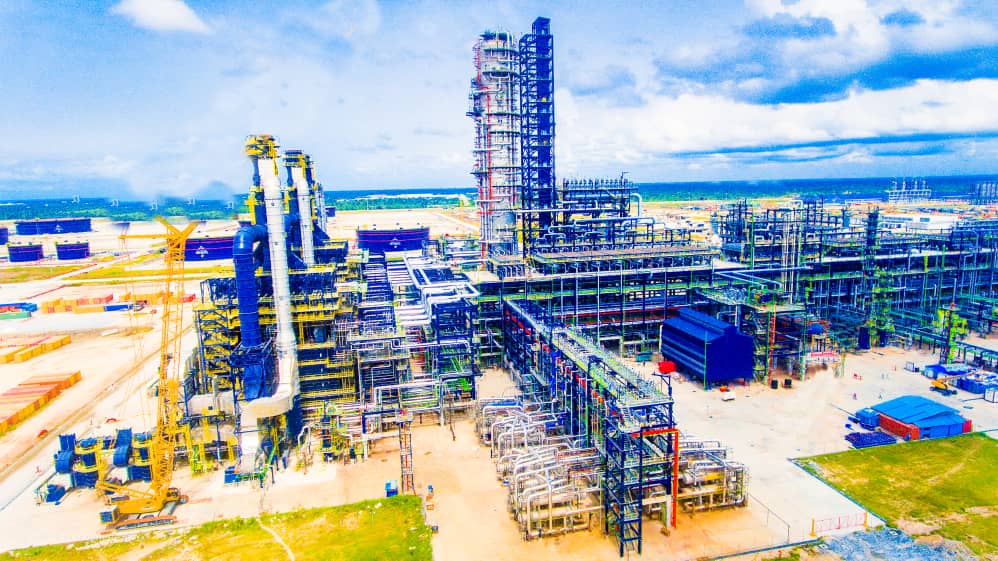
Nigeria’s petrol import bill dropped to $10 billion in 2025, a 28.88 percent decline from the $14.06 billion spent the previous year. Data from the Central Bank of Nigeria’s (CBN) latest balance of payments report attributes this sharp contraction to the commencement of domestic production at the Dangote Refinery. The 650,000-barrel-per-day facility began churning out petrol in September 2025, fundamentally altering the nation’s trade dynamics. This shift represents the first significant dent in Nigeria’s decades-long reliance on foreign refined fuel.
The refinery has quickly transitioned from a domestic supplier to a major regional exporter. In its first full year of operations, the facility exported $5.85 billion worth of refined petroleum products. This newfound export capacity helped the national goods account maintain a surplus of $14.51 billion, up from $13.17 billion in 2024. While Nigeria still imports substantial volumes, the net effect of local production is finally showing on the national balance sheet.
Crude oil earnings, however, provided a sobering counterpoint to the refinery’s success. Revenue from raw crude exports fell by 14.41 percent, dropping from $36.85 billion to $31.54 billion over the last twelve months. Part of this decline is structural, as the Dangote plant itself imported $3.74 billion worth of crude to feed its primary distillation units. Nigeria is essentially trading raw material exports for high-value refined products, a classic industrial transition that temporarily complicates headline revenue figures.
The broader trade picture remains mixed as non-oil sectors show signs of life. Non-oil exports grew by nearly 25 percent to reach $9.31 billion, while gas exports surged by 21.36 percent to cross the $10 billion mark. These gains offered a necessary buffer against the dip in crude receipts. Despite these improvements, the overall current account surplus narrowed to $14.04 billion from $19.03 billion. Increased spending on non-oil imports and a 60 percent surge in service-related outflows tightened the nation’s profit margins.
Nigeria’s external reserves ended the year in a position of relative strength. At $45.75 billion, the buffers are 13.83 percent higher than they were at the close of 2024. This growth occurred despite a lower overall balance of payments surplus, which settled at $4.23 billion. The central bank appears to be successfully hoarding liquidity even as the primary income account, which tracks interest payments and profit repatriations, sees a massive $9.09 billion drain.
The emergence of a domestic refining giant has provided the “hard news” the economy desperately needed. By reducing the dollar-denominated import bill, the refinery is easing the systemic pressure on the Naira. However, the reliance on crude as the primary source of foreign exchange remains a vulnerability. The transition from a petro-state to a refining hub is well underway, but the fiscal authorities must now ensure that the saved billions are reinvested in broader industrial growth.