


FCT Elections Under Tight Watch With Multi-Agency Forces
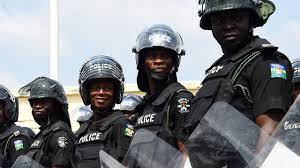
Security forces fanned out across the Federal Capital Territory on Saturday as the area council elections got underway, with the police command deploying personnel to all polling units amid assurances of a peaceful process bolstered by reinforcements from national headquarters.
The FCT Commissioner of Police, Miller Dantawaye, confirmed the extensive mobilization during a briefing, emphasizing early deployment to facilitate timely voting. “Deployments have commenced and virtually concluded. For us, every polling unit, as at this point, should have men unless they are a bit late,” Dantawaye stated. He added that electoral materials had begun arriving at polling units from Registration Area Centres, in line with arrangements made with the Independent National Electoral Commission. “Electoral materials, to the best of my understanding, have started to arrive at polling units from RAC centers, which is what we charged INEC to do. INEC is also very disposed to it. They made that commitment, so materials policemen have started arriving there,” the commissioner explained.
Dantawaye highlighted the rationale behind the prompt setup, noting it would allow accreditation and voting to start and end efficiently. “As it is, our reason for ensuring that we commence early is to commence accreditation and voting in good time, conclude in good time, and then, if possible, the whole process ends in good time,” he said. He affirmed the command’s preparedness, stating, “FCT Police Command is committed; we are very ready, we’ve deployed massively. Monitoring of the elections has commenced.”
The deployment includes support directed by the Inspector General of Police, Kayode Egbetokun, who ordered an additional commissioner of police and personnel from Force Headquarters to assist the FCT command. “The Inspector General of Police, in his wisdom, has deployed massively from the Force Headquarters to give us support. As it is today, there’s another commissioner of police that has come to support us in monitoring so many officers from the headquarters at all cutting across all ranks,” Dantawaye disclosed.
This security arrangement forms part of a broader inter-agency collaboration under the Inter-Agency Consultative Committee on Election Security, involving the Nigerian Army, Nigerian Air Force, Nigerian Navy, Department of State Services, and Nigeria Security and Civil Defence Corps. The NSCDC’s FCT Command has mobilized 4,000 personnel specifically to protect voters, deter harassment, and prevent breaches before, during, and after the polls, with Commandant Olusola Odumosu instructing officers to uphold professionalism and neutrality. Overall, the Nigeria Police Force has stationed 25,000 officers across strategic locations and polling centres in the FCT.
To further secure the environment, authorities imposed a vehicle movement restriction. The FCT Minister, Nyesom Wike, declared a ban from 8:00 p.m. on Friday, February 20, to 6:00 p.m. on Saturday, February 21, allowing only government vehicles on roads during this period. The police command separately announced a 12-hour restriction from 6:00 a.m. to 6:00 p.m. on election day, with exemptions for essential service providers and accredited election officials. These measures aim to minimize disruptions and enhance safety, though some residents have questioned the necessity of the earlier curfew start, citing no recent security incidents to justify it.
INEC is overseeing the elections across the six area councils—Abaji, Abuja Municipal Area Council, Bwari, Gwagwalada, Kuje, and Kwali—marking the only local polls in Nigeria managed by the national commission due to the FCT’s lack of a state electoral body. A total of 1,680,315 registered voters are eligible, with 1,587,025 having collected their Permanent Voter Cards, reflecting a 94.4 percent collection rate. Over 1.5 million residents with PVCs can participate to elect chairpersons, vice-chairpersons, and councillors for 68 positions, with 570 candidates from various parties competing across 2,822 polling units. INEC has deployed 1,132 vehicles, 620 motorcycles, and 14 boats for logistics, and will use the Bimodal Voter Accreditation System for verification, with results uploaded to the INEC Result Viewing portal after manual counting. Additionally, 83 domestic and five foreign observer groups are accredited to monitor the exercise.
Historical patterns in FCT elections have shaped current security strategies. The Inter-Agency Consultative Committee on Election Security, established following a 2010 workshop on election management challenges, has coordinated forces since the 2011 national polls, reducing inter-agency rivalries and enhancing efficiency. In the FCT specifically, past cycles have seen varying security needs. During the 2022 area council elections, flashpoints included areas like Karshi, Deidei, Kabusa, and Pegi, prompting targeted deployments. A pre-election assessment for 2026 identified AMAC, Gwagwalada, Bwari, and Kuje as high-risk zones for violence based on trends from 1999 to 2023, including competitiveness and historical incidents. The National Peace Committee flagged these councils as requiring extra vigilance, with data from its Election Security and Information Hub tracking potential threats.
Broader studies on Nigerian election security from 2011 to 2023 indicate that state-led deployments, while essential for order, have sometimes raised concerns about suppression in high-insurgency areas like the northeast, though in the FCT, focus has been on urban vulnerabilities. For the 2019 FCT polls, similar multi-agency efforts ensured relative calm, with ICCES providing leadership. In January 2026, ahead of this cycle, the FCT police boss assured adequate measures during an ICCES meeting, including a joint situation room and protection for PVC collection points. Civil society groups like CLEEN Foundation and BallotEyes have urged stakeholders to prioritize voter safety, with INEC emphasizing links between security and electoral credibility. The Economic and Financial Crimes Commission and Independent Corrupt Practices Commission are also deployed to curb vote-buying.
As polls continue, INEC has scheduled units to open at 8:30 a.m., urging voters to participate peacefully. Early reports from areas like Kuje show security operatives escorting materials to units by 7:00 a.m., aligning with the command’s operational plan. Authorities have called on residents to cooperate, remain law-abiding, and report infractions, assuring that the measures will support a credible outcome.