

Female NSCDC Officer Dies in Abuja Drill Accident
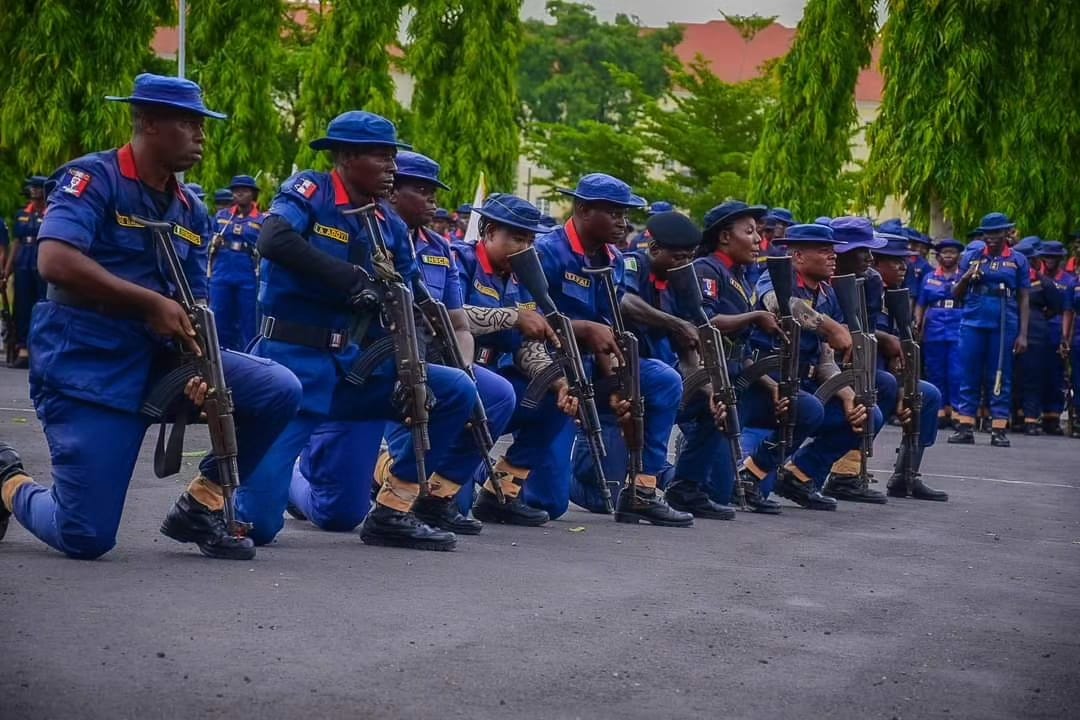
A routine training exercise turned fatal in Abuja on Saturday as a female officer of the Nigeria Security and Civil Defence Corps (NSCDC) was killed during a simulation drill. The tragedy occurred during a “show-of-force” exercise designed to test operational readiness. According to witness accounts and viral footage, the officer was struck and run over by an agency patrol vehicle as it performed a high-speed turn. The driver halted immediately, and a frantic crowd of colleagues and onlookers worked to lift the vehicle to extricate her, but she was later pronounced dead.
The NSCDC spokesperson, Afolabi Babawale, confirmed the incident on 28 February 2026, describing it as a “tragic accident.” He stated that the Corps has activated internal processes to investigate the circumstances of the drill. Senior officials have already been dispatched to the deceased officer’s residence to offer condolences to her family. The identity of the officer remains withheld pending formal notification of her next of kin. This incident highlights the inherent risks of high-intensity simulations, which are intended to prepare officers for real-world combat and crowd control.
The “show-of-force” drill is a standard procedure used by Nigerian security agencies to deter criminal activity through a display of personnel and hardware. However, this accident raises immediate questions about the safety protocols governing such exercises in urban environments. The footage, which shows the vehicle making a sharp manoeuvre before the impact, suggests a potential lapse in coordination or mechanical control. The NSCDC has promised a detailed statement once the preliminary investigation is complete.
This is not the first time the Corps has faced a training or operational tragedy in the capital. In September 2025, a deputy superintendent accidentally shot and killed a colleague in Abuja’s Life Camp area. These recurring incidents of “friendly” or accidental casualties within the force suggest a need for a rigorous review of safety standards. While the NSCDC has paid over N1 billion in compensation to families of fallen officers over the last two years, money is a cold comfort for the loss of a life during a practice run.
The mood at the NSCDC headquarters in Abuja remains somber as flags are expected to fly at half-mast. Emergency responders at the scene reportedly did their best to stabilise the officer, but the weight of the operational van caused internal injuries that proved fatal. Public reaction has been a mix of grief and calls for better regulation of paramilitary drills on public roads. For now, the “show-of-force” has been replaced by a quiet mourning for a fallen comrade.
As the agency prepares its official report, the focus will likely shift to the driver of the vehicle and the supervisors of the drill. Whether this was a mechanical failure or human error, the cost has been a life. The NSCDC must now balance its need for realistic training with the absolute necessity of keeping its personnel alive to see the actual field.