


Fires, Floods and Storms: 2025 Emerges as Year of Devastating Climate Disasters, Costing Over $120 Billion
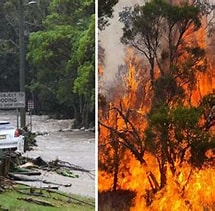
An unprecedented year of extreme weather has left no corner of the globe untouched. From the wildfires that ravaged California to the catastrophic floods that submerged communities across South Asia, climate-related disasters in 2025 have exacted a staggering economic and human toll. According to a comprehensive report released by international relief organisation Christian Aid, the ten costliest climate disasters of 2025 resulted in insured losses exceeding $120 billion, with the true financial and human cost likely far higher.
The findings paint a sobering picture of climate change’s escalating impact across every populated continent. These disasters—driven by a warming atmosphere and intensified by fossil fuel emissions—have claimed thousands of lives, displaced millions from their homes, and destroyed critical infrastructure in regions already struggling with poverty and limited resources.
The Palisades and Eaton wildfires in California stand as the costliest climate disaster of 2025, causing more than $60 billion in damages. The devastating blazes, which erupted in January, swept through residential neighbourhoods with terrifying speed, destroying homes and businesses with little time for evacuation.
The human cost proved equally devastating. An August study found that 400 people died from factors linked to the fires, including poor air quality and delays in accessing healthcare. Researchers attributed the disaster’s severity to climate change, which intensified the fires through heightened temperatures and drier conditions. The destruction extended across vast areas, with the fires consuming entire communities and leaving residents searching through the rubble for remains and salvageable belongings.
While California recorded the single most expensive disaster, Asia dominated the overall landscape of climate catastrophe. Cyclones and flooding across South and Southeast Asia in November resulted in around $25 billion in insured losses and killed more than 1,750 people. The disaster swept through multiple nations simultaneously, with overlapping tropical cyclones hitting Indonesia’s Sumatra region and Peninsular Malaysia at the same time, affecting Thailand, Indonesia, Sri Lanka, Vietnam and Malaysia.
The sheer volume of water unleashed by the simultaneous cyclones triggered massive flooding and landslides. Rivers overflowed, submerging entire towns and cutting off access to medical care and food supplies. The disaster struck one of the world’s most climate-vulnerable regions, compounding the impact on already fragile communities.
Asia accounted for four of the top six costliest disasters, with flooding in India and Pakistan killing more than 1,860 people, costing up to $6 billion and affecting more than 7 million people in Pakistan alone. The monsoon season, which brought eight per cent more rainfall than normal, triggered exceptional flooding and landslides across mountainous regions, with glacial melt worsening the situation.
More than $5 billion in damage was caused by typhoons in the Philippines, with more than 1.4 million people displaced. The sequence of powerful storms left communities devastated and infrastructure in ruins.
Nigeria’s experience exemplified the climate crisis’s devastating impact on nations with limited adaptation resources. On 28 May 2025, flooding in the market town of Mokwa in Niger State killed at least 500 people, with over 600 others missing, at least 200 injured, and over 4,000 homes destroyed. The disaster struck suddenly, with residents largely asleep when torrential rainfall submerged the town, leaving families no time to escape.
The destruction extended beyond human casualties. The flooding destroyed over 10,000 hectares of paddy fields and croplands, affecting over 5,000 dry-season farmers across Niger State and Kwara State, with estimated economic losses in the billions of naira. The Mokwa bridge collapsed, cutting off communities from urgent assistance, whilst schools and health centres lay in ruins.
Flooding in the Democratic Republic of Congo in April affected thousands, as did drought in Iran and West Asia that threatened the 10 million people in Tehran with possible evacuation due to a water crisis. In China, extreme rainfall and floods between June and August displaced thousands, caused $11.7 billion in damage and killed at least 30 people.
Europe, typically less vulnerable to such extremes, also suffered unprecedented impacts. Extreme temperatures fuelled wildfires in the Scottish Highlands that burned 47,000 hectares, whilst summer wildfires in Spain and Portugal followed prolonged and record-breaking heat. Australia recorded February cyclones that caused significant disruption, whilst Réunion island, off Africa’s coast, experienced devastating weather systems.
The $120 billion figure represents only insured losses a metric that obscures the true scale of the crisis. Losses that are difficult to quantify, such as damages to livelihoods, lost income, long-term damage to the environment, and permanent displacement of residents, were not taken into account in the analysis. The true toll of disasters is almost certainly far higher than the insured losses suggested.
This gap matters profoundly for developing nations. Wealthier countries with high property values and extensive insurance coverage see their losses reflected in statistics. Poorer communities, which contributed least to the climate crisis, often go uncounted in financial assessments despite bearing catastrophic human costs. The disparity reveals a grim inequality embedded in climate disaster response.
The report makes clear that these disasters are neither isolated nor inevitable. The events documented in this report are not isolated disasters or acts of nature. They are the predictable outcome of a warmer atmosphere and hotter oceans, driven by decades of fossil fuel emissions, according to research scientists who reviewed the data.
Patrick Watt, Christian Aid CEO, stated that “the suffering caused by the climate crisis is a political choice. It is being driven by decisions to continue burning fossil fuels, to allow emissions to rise, and to break promises on climate finance”.
The link between greenhouse gas emissions and intensified extreme weather has become measurable and indisputable. The economic impact of greenhouse gas emissions is measurable, totalling an estimated 28 trillion US dollars in damage between 1991 and 2020 alone, according to scientific research. As global temperatures rise, the frequency and intensity of extreme weather events continue to accelerate.
The 2025 disasters serve as a stark warning of accelerating climate impacts. Climate change is now measurably amplifying extreme weather across the world, increasing both its intensity and its cost in terms of lives lost, livelihoods destroyed, and economies damaged, scientists confirmed.
Yet despite these mounting costs, global emissions continue rising. Global emissions have continued to rise, driven largely by the burning of coal, oil and gas, even as renewable energy capacity has expanded rapidly. This contradiction underscores the political dimension of climate disaster that wealthier nations have failed to prioritise emissions reductions even as evidence of climate breakdown accumulates.
Patrick Watt urged that “in 2026, world leaders must act supporting communities already adapting at a local level, and providing the resources urgently needed to protect lives, land and livelihoods”.
The poorest communities remain most vulnerable. Patrick Watt highlighted the critical need for adaptation measures, particularly in the global South, where resources are limited, and communities face heightened vulnerability to extreme weather events.
Christian Aid’s report emphasises that the crisis remains solvable. The world is paying an ever-higher price for a crisis we already know how to solve, as scientific experts note. Reducing fossil fuel consumption, accelerating the transition to renewable energy, and substantially increasing climate finance for vulnerable nations remain the essential steps.
Yet with each passing year, the window for preventing the most catastrophic impacts narrows further. The disasters of 2025 and the billions lost to them may prove to be merely an opening chapter in a lengthening story of climate-driven destruction unless global leaders act decisively in the coming years.