

From Shock to Shrug: Nigeria and the Normalisation of Violence
In the famous Pirates of the Caribbean films, Tortuga is introduced as a place where disorder has settled in and made it comfortable. It is noisy, violent, indulgent, and strangely functional. People drink, fight, recruit allies, lose fortunes, and bury grievances all in the same breath. Authority is not absent, but it is weak, improvised, and rarely trusted. What holds the town together is not law but habit. Violence is expected. Chaos is familiar. No one gasps when a fight breaks out. They simply make space and carry on.
Tortuga works because it captures a hard political truth. Societies do not always collapse into silence or rubble when order fails. Sometimes they adapt. People recalibrate their expectations, lower their standards of safety, and learn to live with danger as background noise. The philosopher Thomas Hobbes described this condition as the state of nature, a life lived under constant insecurity where fear shapes behavior more than law. Tortuga is not anarchy in the dramatic sense. It is normalized disorder, and that is what makes it unsettling.
That image of Tortuga was not abstract for me. As an undergraduate at Osun State University, the hostel where I lived was nicknamed Tortuga by its residents, and not as a joke without meaning. That memory of Tortuga was shaped less by noise or fights than by neglect and improvisation. The building itself told the story. The walls were never plastered, let alone painted. Basic facilities that should define a hostel were absent. There was no functional bathroom or toilet, so residents constructed makeshift alternatives behind the building, learning to live with indignity as a routine condition. This was not an informal settlement at the margins of town. The house was located in Okuku GRA, a space that by name suggested order and planning, yet delivered the opposite.
What made the situation truly chaotic was the contradiction. A place meant to symbolize structure instead embodied abandonment. Students did not complain endlessly because survival demanded adjustment. You bathed when water appeared. You planned your day around basic bodily needs. You lowered your expectations quietly. Over time, the absence of essentials stopped provoking anger and began to feel normal. Chaos was not dramatic. It was slow, structural, and humiliating in small daily ways.
That memory returns uncomfortably when I look at Nigeria today. A society does not fall apart only when violence is constant. It begins to unravel when violence no longer startles, when people absorb it into daily life and adjust their expectations downward. Tortuga, whether fictional or real, thrives on this psychological shift. Disorder becomes livable, even manageable, and that is precisely when it becomes most dangerous.
Nigeria has lived with insecurity for so long that it is beginning to feel permanent. Since Boko Haram launched its first major insurgent attacks in 2009 in Borno State, violence has gradually spread beyond the North East into the North West, North Central, and increasingly the South. What began as an insurgency has mutated into a complex web of banditry, terrorism, communal violence, and mass kidnapping. Yet the most disturbing development today is not merely the scale of violence, but the growing silence that follows it.
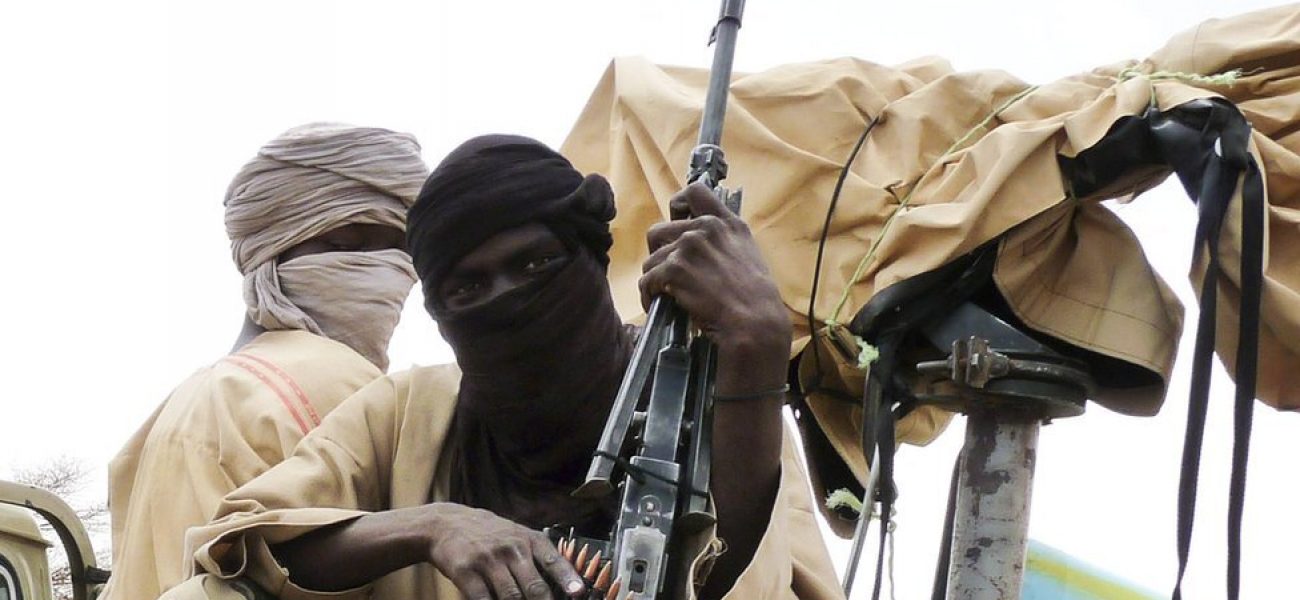
On February 4 and 5, 2026, Woro community in Kaiama Local Government Area of Kwara State experienced one of the deadliest attacks in recent memory. According to The International Centre for Investigative Reporting (ICIR), armed bandits overran the community for nearly ten hours, from about five pm until roughly three am, before soldiers eventually arrived. The village head, Umar Bio Salihu, disclosed this during an interview on ARISE Television on February 5. By the time troops arrived, the attackers had already left. Homes were razed, including parts of the district head palace, and entire families were wiped out.
What followed was confusion over the number of lives lost. Premium Times quoted the Kwara State government as confirming seventy-five deaths, based on information from the Emirate Council. Reuters cited a local politician who initially estimated forty deaths. However, the Nigerian Red Cross, as reported by Leadership Newspaper on February 6, confirmed that at least one hundred and sixty -two bodies had been recovered as search efforts continued in surrounding bushes. Residents told Premium Times that rescue teams counted about one hundred and seventy bodies. These conflicting figures are not merely statistical disputes. They reflect the disorder, fear, and institutional opacity that now accompany mass violence in Nigeria.
The official response followed a familiar script. Governor AbdulRahman AbdulRazaq described the massacre as a cowardly terrorist act. President Bola Tinubu approved the deployment of a new army battalion under what the state government described as Operation Savannah Shield. Condolences were offered. Yet the deeper question remains unanswered. How does a community remain unprotected for hours while its people are slaughtered? What happens after the statements fade?
It is also worth recalling that this same Kwara State has appeared in this grim narrative before. In November 2025, gunmen attacked a church in Eruku, a town in central Kwara, killing at least two people and abducting the pastor alongside several worshippers. The assault came only days after twenty-five girls were kidnapped from a boarding school, reinforcing the sense of a spreading and unchecked crisis. Police accounts and eyewitness reports at the time confirmed the attack, which immediately drew international attention, especially as the Nigerian government was already under scrutiny from the United States. Then President Donald Trump openly threatened possible military action, framing the violence as part of a pattern of persecution against Christians. Yet beyond the headlines and diplomatic statements, what remained was the familiar outcome. Lives were lost, communities were traumatized, and the state struggled to demonstrate lasting control. That Kwara has again witnessed mass killing only deepens the question of whether these incidents are treated as isolated tragedies or as warnings repeatedly ignored.
This crisis must be interrogated from first principles. Political philosophy offers no ambiguity here. Thomas Hobbes, in Leviathan, argued that without a sovereign capable of guaranteeing security, society collapses into a state of nature where life is solitary, poor, nasty, brutish, and short. The social contract rests on a simple exchange. Citizens surrender certain freedoms in return for protection. When a state cannot secure lives and property, it has failed in its most fundamental obligation. Security is not one policy area among many. It is the foundation upon which all governance rests. A government that fails on insecurity fails in everything else. Roads, schools, reforms, and budgets become meaningless if citizens can be killed in their homes without warning or rescue.
What troubles me most is how quickly we move on. Accepting mass killing as a normal feature of life is the greatest danger we now face. Nigerians scroll past reports of dozens or hundreds killed with a frightening calm, as if human life has become as ordinary and replaceable as bread. Outrage has been conditioned out of us. Experience has taught citizens that anger yields statements, troop movements, and media rounds, but rarely sustained safety. Troops neutralize a few targets, bodies are counted and recounted, investigations are announced, and then the next attack occurs. This cycle erodes confidence in governance quietly but relentlessly. Insecurity is no longer treated as a solvable failure but as a permanent feature of national life. I worry because when violence becomes normal, conscience dulls and expectation collapses. What happens when an entire generation grows up believing that massacres are routine? Where does society go from there?
The pattern extends beyond Kwara. In January 2026, gunmen abducted one hundred and sixty six worshippers during attacks on two churches in Kaduna State. Reuters reported on February 6 that all the worshippers were eventually rescued, with the Christian Association of Nigeria crediting prayers and the military. Yet the Kaduna State government and the police initially denied the abductions. Even more troubling is the obvious question no official seems eager to answer. How do armed groups move hundreds of kidnapped people across forests and settlements for days or months without detection? Rescue is welcome, but rescue should never have been necessary.
Insecurity in Nigeria has always been politicised. Each administration blames the past. Each opposition weaponises tragedy. Victims become statistics in partisan arguments. Yet bullets do not ask for party cards. In Woro, most of those killed were Muslims. In Kaduna, Christian worshippers were targeted. Violence respects neither religion nor ethnicity. It thrives instead on weak institutions, poor intelligence coordination, and political incentives that prioritise optics over prevention.
Recent developments have added an international dimension. On February 4, ThisDay Newspaper reported the federal government’s clarification regarding the presence of United States troops in Nigeria. Following confirmation by United States Africa Command AFRICOM, Defence Minister Christopher Musa explained in an interview with the BBC that the Americans were not combat troops but a small advisory team providing intelligence support and training at Nigeria’s request. General Dagvin Anderson of AFRICOM stated this in Dakar, emphasising cooperation rather than intervention. While international support may be useful, its necessity also raises uncomfortable questions about domestic capacity after years of defence spending and security reforms.
At its heart, this crisis is about governance credibility. Each time communities are attacked without timely response, the social contract weakens. Each time casualties are disputed, trust erodes further. Each time citizens move on too quickly, the abnormal becomes routine. A state that cannot protect life risks losing not just legitimacy, but meaning.
Nigeria no longer has the luxury of treating insecurity as background noise. The right to life is absolute. It is not negotiable, conditional, or seasonal. When hundreds die weekly and silence follows, society itself is in danger. The real question is not whether another attack will happen. It is whether Nigerians will continue to accept the unthinkable as normal, or insist that the state finally fulfils the one duty that justifies its existence.
Seun Perez Adekunle is a Political Science and International Relations lecturer who writes from Ibadan.