


Health Ministry Moves to Purge Toxic Cosmetics From Markets
The Federal Ministry of Health and Social Welfare has launched the state-level rollout of the National Policy on Cosmetics Safety and Health (NPCSH), beginning with a major stakeholder summit in Lagos. This five-year roadmap aims to sanitise a domestic market increasingly flooded with hazardous chemicals. The policy seeks to tighten the leash on manufacturers and distributors, mandating stricter labelling and higher production standards. It comes as a direct response to a surge in health complications linked to unregulated skin-lightening agents and substandard soaps.
Lagos serves as the logical starting point for the crackdown, given its status as the country’s primary hub for the cosmetics trade. The state government has already committed to domesticating the federal guidelines to ensure local enforcement is as sharp as the national mandate. The policy frames safety as a “shared responsibility,” requiring manufacturers to disclose ingredients and consumers to remain vigilant. International bodies, including the World Health Organisation, are providing technical support to align Nigerian standards with global best practices.
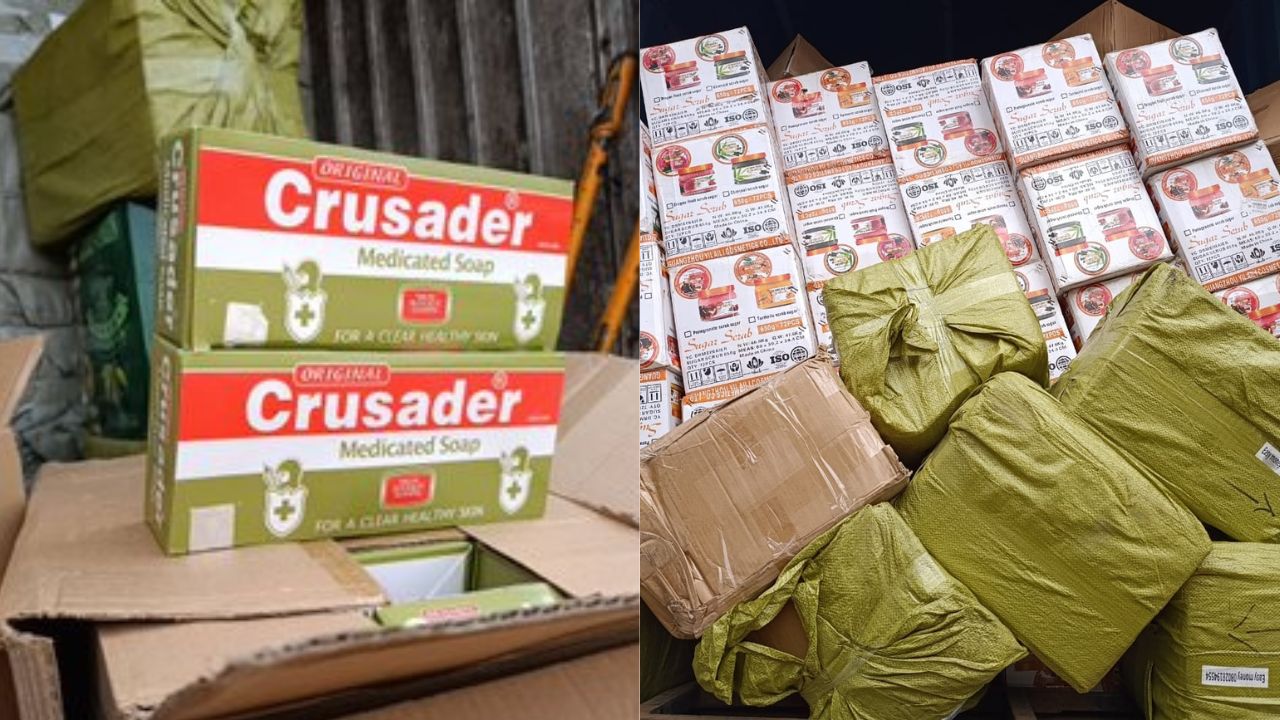
Regulators are already demonstrating the scale of the problem. In February 2026, NAFDAC uncovered a massive hoard of banned and fake cosmetics valued at over ₦3 billion at the APT Trade Fair Complex in Lagos. The haul included hundreds of cartons of banned soaps, such as Crusader and E45 variants, hidden within an uncompleted building. These products are often laced with mercury or high-dose steroids, which can lead to permanent organ damage or skin cancers.
Read Also: NAFDAC Busts Warehouse in Lagos; Seizes N3 Billion Worth of Banned Soaps
The enforcement drive involves a multi-agency task force comprising NAFDAC, the Nigeria Customs Service, and the Federal Ministry of Environment. By involving Customs, the government hopes to choke the supply of banned chemicals at the ports of entry before they reach the warehouse shelves. NAFDAC has warned that individuals and companies found violating the new safety guidelines will face severe administrative and criminal sanctions. The era of treating the cosmetics sector as a “wild west” of unregulated chemicals is ending.
Public awareness forms a critical pillar of the five-year plan. The Ministry of Health intends to launch education campaigns to help Nigerians identify “red flag” products that lack NAFDAC registration numbers or clear ingredient lists. Many consumers remain unaware that whitening soaps and “miracle” creams often contain industrial-grade toxins. Improving literacy on product labels is seen as a way to reduce the burden on a healthcare system already strained by the long-term effects of toxic exposure.
The success of the policy will depend heavily on sustained surveillance and the prosecution of major distributors. While seizing ₦3 billion worth of products is a significant victory, the sheer volume of illicit trade suggests a deeper systemic issue. The Federal Government’s commitment to “strong regulations” must now be backed by a consistent presence in the markets. For the millions of Nigerians using these products daily, the safety of their skin is now a matter of national policy.