

INEC Proposes N873.778 Billion for 2027 General Elections
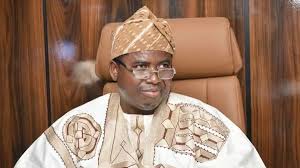
The Independent National Electoral Commission (INEC) has proposed a substantial budget of N873.778 billion for the conduct of the 2027 general election. This announcement was made by INEC Chairman, Professor Joash Amupitan, during the presentation of the Commission’s 2026 budget proposal and the projected cost for the 2027 elections to the National Assembly Joint Committee on Electoral Matters.
Professor Amupitan clarified that the N873.778 billion allocation for the 2027 elections is separate from the N171 billion budget proposal for the 2026 fiscal year. The 2026 budget covers routine operations, including by-elections and off-cycle elections, and does not factor in the proposed election expenditure for 2027.
The INEC Chairman provided a detailed breakdown of the proposed election budget, which is approaching the N1 trillion mark. The components are as follows: N379.748 billion for operational expenses; N92.317 billion for administrative costs; N209.206 billion for technology; N154.905 billion for capital expenditure; and N42.608 billion for miscellaneous items.
“The budget proposal was prepared in full compliance with Section 3(3) of the Electoral Act 2022, which mandates that the Commission must submit its election budget at least one year before a general election,” Amupitan said.
The proposed budget also excludes the request from the National Youth Service Corps (NYSC) to raise allowances for corps members who serve as ad-hoc election staff. The NYSC had submitted a separate request for an increase in their election allowances, which is still under review.
On the 2026 fiscal framework, Amupitan revealed that the Ministry of Finance had issued a budget ceiling of N140 billion for INEC. However, the Commission’s proposal for the year stands at N171 billion, which covers the following: N109 billion for personnel costs, N18.7 billion for overheads, N42.63 billion for election-related activities, and N1.4 billion for capital projects.
The INEC Chairman expressed concerns over the “envelope budgeting” system, stating that it does not align with the Commission’s operational realities, which often require urgent and flexible funding. He further highlighted the absence of a dedicated communications network, which he views as a major challenge for the Commission. Amupitan emphasized that developing an independent communications infrastructure would not only improve transparency but also empower Nigerians to hold INEC accountable for any technical failures.
The issue of funding for INEC was a point of debate during the session. Senator Adams Oshiomhole (Edo North) called for the removal of the envelope budgeting system for INEC, arguing that, given its constitutional mandate, the Commission should not be subjected to such rigid financial frameworks. He urged lawmakers to consider the actual funding needs of INEC to prevent the problem of underfunding.
Echoing this sentiment, Edo lawmaker Billy Osawaru proposed that INEC’s budget be placed on first-line charge, as stipulated by the Constitution. He advocated for the full and timely release of funds to ensure proper planning and implementation of election-related activities.
The Joint Committee ultimately approved a motion recommending the one-time release of INEC’s annual budget and indicated that it would review the NYSC’s separate request for an additional N32 billion to increase allowances for corps members to N125,000.
Senator Simon Lalong, Chairman of the Senate Committee on INEC, assured the Commission of full legislative support to ensure adequate preparations for the 2027 general elections. However, Mr. Bayo Balogun, Chairman of the House Committee on Electoral Matters, while also pledging support, cautioned INEC against making unfulfilled promises. He pointed out the issues with INEC’s previous commitment to uploading results to the INEC Result Viewing (IREV) portal during the 2023 elections, which gave the impression of real-time monitoring, although this was not explicitly stipulated in the Electoral Act but only in INEC regulations.
“Be careful how you make promises. The last election left some strong expectations regarding the IREV that were not entirely met,” Balogun warned.