


Iran War Skyrockets Airfares 150%
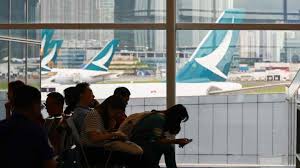
The escalating military conflict between the United States, Israel, and Iran has triggered a severe disruption to international air transport, with average airfares recording increases exceeding 100 percent across multiple routes as Middle Eastern carriers suspend operations indefinitely and major global airlines reroute flights away from the region.
The crisis, which has forced the closure of critical aviation hubs including Dubai, Abu Dhabi, Doha, and Tel Aviv, is affecting millions of travellers worldwide and severely impacting Nigerian international travel, with industry data showing that between 40 and 45 percent of passengers travelling in and out of Nigeria transit through Middle Eastern airports to reach final destinations in Europe, America, and Asia.
All major Middle Eastern carriers, including Emirates, Etihad Airways, Qatar Airways, and Middle East Airlines, announced indefinite flight suspensions as of yesterday, leaving thousands of passengers stranded and forcing travel agencies across Nigeria to process mass cancellations and refund requests.
The disruption extends beyond passenger travel, with the conflict severely hampering the transport of critical medical supplies to the Gulf region, particularly cancer drugs and other treatments requiring refrigerated cold-chain storage. Pharmaceutical companies have been forced to seek alternative overland routes through Saudi Arabia, Turkey, and Oman to maintain essential medicine supplies.
Four Middle Eastern airlines currently operate regular services to Nigeria through two major international airports, the Murtala Muhammed International Airport in Lagos and the Nnamdi Azikiwe International Airport in Abuja, providing a combined 47 weekly flight frequencies and a total of 17,634 weekly passenger seats.
Emirates operates the largest Nigerian service with 21 weekly flights, including 14 to Lagos and seven to Abuja, using Boeing 777-300 aircraft configured for 451 passengers, providing a weekly capacity of 9,314 seats. Qatar Airways operates 17 weekly flights using Boeing 787-8 aircraft, with 14 flights to Lagos and three to Abuja, offering 5,695 weekly seats with a 335-passenger configuration.
Etihad Airways, based in Abu Dhabi, operates seven weekly flights to Lagos using Boeing 787-9 aircraft with a capacity of 299 passengers and a weekly seat capacity of 2,093. Middle East Airlines, based in Beirut, flies twice weekly to Lagos using Airbus A330-200 aircraft with a capacity of 266 seats, providing a total weekly capacity of 532 seats.
Beyond Middle Eastern carriers, major European and international airlines including British Airways, Lufthansa, Swiss International Air Lines, Austrian Airlines, Air France, KLM Royal Dutch Airlines, Cathay Pacific, Singapore Airlines, Finnair, and Virgin Atlantic have all suspended flights to Dubai, Abu Dhabi, Amman, Bahrain, Doha, and Tel Aviv due to safety concerns.
The flight suspensions have triggered severe price inflation across remaining routes. A search on British Airways’ booking portal for economy class travel departing March 20, 2026, with a return on April 1, 2026, showed a fare of $2,656, approximately N3.6 million at current exchange rates. Before the outbreak of the conflict, the identical ticket cost $1,050, equivalent to N1.4 million, representing a 153 percent increase.
Similarly, a return ticket to Frankfurt on Lufthansa Airways for the same dates now costs between $1,100 and $1,150, approximately N1.504 million to N1.572 million, compared to $583 to $606 in February 2026, marking an increase of nearly 90 percent within weeks.
Bankole Bernard, Group Managing Director of Finchglow Holdings Limited, told The Guardian that the ongoing conflict had severely impacted global travel patterns, noting that most flights departing Nigeria route through either the Middle East or the Far East.
“The continents interlink. Most of the flights departing Nigeria go either through the Middle East or the Far East to China,” Bernard stated, emphasizing that the United Arab Emirates relies heavily on tourism and related sectors, which account for approximately 40 percent of its Gross Domestic Product.
Bernard explained that the closure of Middle Eastern airspace has effectively collapsed the region’s aviation-dependent economy, forcing travellers to the Far East to use European carriers or African airlines including Ethiopian Airlines, Kenya Airways, and RwandAir.
“Some of the travellers who could not shelve their flights now go through European carriers, which do not have enough luggage capacity, unlike Emirates or other Middle East carriers. You know Nigerians travel heavily,” Bernard said. “Also, some of them go through established African carriers to the Far East. This is an opportunity for Africa to position itself to benefit from tourism.”
Bernard noted that airfares on most international routes, particularly to Europe, America, and the Far East, have spiked as airlines are forced to fly longer routes to reach their destinations, while domestic operators are also raising fares in response to the global crisis.
Dr Yinka Folami, President of the National Association of Nigerian Travel Agencies, stated that the ongoing conflict would significantly shrink global travel, describing the Middle East as the major hub for the travel industry.
“Since a significant share of Nigeria’s outbound traffic connects through Middle Eastern hubs to Asia, Europe, America, Australia and others, the ripple effects are already beginning to affect travel planning and distribution within our market,” Folami said. “Cancellations and refunds are high, and sector commerce is shrinking. We hope there will be a quick resolution to the crisis.”
Folami indicated that travel agency revenues have declined sharply due to daily flight cancellations and continuous refund requests from passengers unable to complete planned journeys.
Charles Amokwu, an industry analyst, warned that the conflict carries significant psychological impact and creates uncertainty while further dividing the global community. He noted that as of mid-March 2026, the escalation of hostilities, particularly the disruption of the Strait of Hormuz and the Suez Canal, has created a dual chokepoint crisis reshaping trade flows for Africa and the global economy.
Amokwu stated that maritime rerouting is costing the global shipping industry approximately $2 billion to $3 billion in additional weekly operating costs as vessels avoid the Red Sea region.
“Rerouting around the Cape of Good Hope adds 12 to 19 days to Asia–Europe voyages. This delay effectively reduces global yearly cargo capacity by 10 to 15 percent,” Amokwu said, adding that freight rates for containers have reached premiums of $4,000 to $5,000 per twenty-foot equivalent unit, representing a 250 percent to 500 percent increase on certain routes since the escalation began.
Amokwu noted that in Nigeria, the U.S.-Israel-Iran conflict has created a paradox whereby the national treasury benefits from massive windfall revenues due to elevated oil prices, while average households experience an intensified cost of living crisis because the country remains heavily dependent on imported refined fuels and goods.
Emirates announced on Monday the temporary suspension of all flights to and from Dubai following the latest strikes on its facilities by Iran. The airline advised all travellers not to proceed to Dubai International Airport, stating that the suspension followed advice issued by the Dubai Civil Aviation Authority on Monday morning, which grounded all flights at the airport.
“All Emirates flights to and from Dubai remain suspended until further notice. We are working closely with the relevant authorities to assess the situation and support the safe resumption of operations when possible,” the airline stated. “Customers are reminded not to travel to the airport at this time and to continue checking this page for the latest updates. We thank our customers for their continued patience and understanding. The safety of our passengers and crew remains our highest priority.”
The conflict’s impact on pharmaceutical supply chains has raised particular concern among Western drugmakers operating in the Gulf region. While major shortages have not yet materialized, industry executives warn that prolonged disruption could create serious gaps in medicine availability, particularly for treatments with short shelf lives requiring strict cold-chain storage conditions.
Executives at Western pharmaceutical companies told media outlets they are seeking alternative routes into the Gulf, including trucking drugs overland from airports in Jeddah and Riyadh in Saudi Arabia, as well as routing through Istanbul and Oman, though these options present logistical challenges for temperature-sensitive medications.
The Middle East has historically served as a critical global aviation hub, with Dubai International Airport ranking among the world’s busiest by international passenger traffic, handling over 86 million passengers in 2019 before the COVID-19 pandemic. The region’s geographic position between Europe, Africa, and Asia has made it an indispensable transfer point for long-haul travel, with Gulf carriers investing billions of dollars in modern aircraft fleets and world-class airport infrastructure over the past two decades.
The current crisis represents the most severe disruption to Middle Eastern aviation since the Gulf War of 1990 to 1991, when coalition forces imposed no-fly zones across Iraq and Kuwait. However, the scale of the present conflict and its impact on multiple major hubs simultaneously creates unprecedented challenges for global air transport networks.
For Nigeria, which has seen rapid growth in international travel demand over the past decade driven by business travel, diaspora connections, medical tourism, and educational pursuits, the Middle Eastern route disruptions represent a significant setback. Nigerian travellers have increasingly favoured Gulf carriers due to competitive pricing, generous baggage allowances, modern aircraft, and relatively straightforward visa policies for transit passengers compared to European alternatives.
The ongoing uncertainty has left the global aviation industry in a holding pattern, with no clear timeline for the resumption of normal operations in the Middle East. Airlines continue to monitor the situation closely while governments work toward diplomatic solutions to the escalating military confrontation.