

Kano Governor Abba Yusuf Resigns from NNPP, Cites Irreconcilable Internal Crises
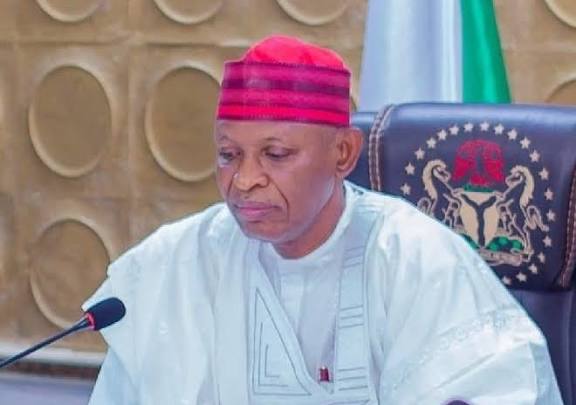
Governor Abba Kabir Yusuf of Kano State has formally resigned his membership of the New Nigeria People’s Party, citing deepening internal crises and protracted leadership disputes that he says have created uncertainty within the party and threatened his ability to govern effectively in the interest of the people of Kano State.
The governor conveyed his decision in a letter addressed to the Chairman of the NNPP in Diso–Chiranchi Ward, Gwale Local Government Area, stating that his resignation takes effect from Sunday, January 25, 2026. The development marks a significant political shift in one of Nigeria’s most populous states and raises fresh questions about the stability of the NNPP, which won governorship elections in only two states during the 2023 general elections.
In a statement issued by his spokesperson, Sanusi Bature, on Thursday, Governor Yusuf expressed gratitude to the party for the support and platform it provided him since his political engagement began in 2022.
Read Also: Kano Governor Meets Tinubu, Seeks Federal Backing For Security And Mega Projects
“I write with a deep sense of gratitude to formally notify the leadership of the New Nigeria People’s Party of my decision to resign my membership of the party, with effect from Sunday, 25 January 2026,” the letter read.
The governor thanked the NNPP leadership and members for their backing throughout his political journey with the party, acknowledging the role they played in his electoral success.
“I remain sincerely appreciative of the opportunity given to me by the party, its leadership, and members across Kano State to be part of its political journey since 2022, as well as the support, goodwill, and cooperation extended to me during my time in the party,” he stated.
Governor Yusuf attributed his decision to persistent internal disputes and legal challenges that have continued to unsettle the party at both state and national levels, creating what he described as increasingly irreconcilable divisions.
“In recent times, the party has been confronted with persistent internal challenges arising from leadership disagreements and ongoing legal processes, many of which are presently before the courts for judicial determination,” the governor stated.
According to him, these disagreements have weakened cohesion within the party and widened divisions among members, making it difficult to maintain the unity required for effective governance.
“The growing disenfranchisement among party members has created deep divisions within the party structure, resulting in cracks that appear increasingly irreconcilable and have generated uncertainty at both state and national levels,” he added.
The Kano governor stressed that his decision followed careful reflection and was guided strictly by considerations of public interest rather than personal grievances.
“After careful reflection, and without prejudice to the party’s capacity to resolve its internal challenges, I have come to the conclusion that my resignation is in the best interest of the people of Kano State,” he explained.
Governor Yusuf emphasized that the move was taken in good faith and without bitterness toward the party or its members.
“This decision is taken in good faith, without any ill will, and with a continued commitment to peace, unity, and the progress of Kano State,” he stated.
In what appears to be a coordinated move, 21 members of the Kano State House of Assembly, eight members of the House of Representatives representing Kano constituencies, and 44 local government chairmen are also resigning from the NNPP alongside the governor. The mass departure represents a significant portion of the party’s elected officials in Kano State and could potentially shift the political balance in the state assembly and local government councils.
The resignation letter was formally acknowledged by the party’s Secretary in Diso–Chiranchi Ward, Hon. Kabiru Zubairu, who commended the governor for his achievements in infrastructure development, urban renewal, health, education, and economic empowerment since assuming office.
“I wish to concur with His Excellency on the lingering crisis in our party. Though we are trying our best to contain it, we have no option than to accept the resignation of one of the most performing governors produced by the NNPP,” Zubairu stated.
The New Nigeria People’s Party emerged as a significant political force in the buildup to the 2023 general elections, largely due to the political influence of former Kano State Governor Rabiu Musa Kwankwaso, who served as the party’s presidential candidate. The party’s appeal was particularly strong in Kano State, where Kwankwaso’s political structure, known as the Kwankwasiyya movement, commands substantial grassroots support.
Read Also: Two Kano State Lawmakers Die in Rapid Succession, State in Mourning
Abba Yusuf, a long-time associate of Kwankwaso, contested the Kano State governorship election on the NNPP platform in March 2023. His victory was initially disputed by the All Progressives Congress candidate, but was eventually upheld by the courts, allowing him to assume office.
Beyond Kano, the NNPP also won the governorship election in Katsina State, making it one of the few opposition parties to secure state-level victories in the 2023 elections. However, the party’s national performance was modest, with its presidential candidate finishing fourth in the presidential race.
Since the elections, the NNPP has been plagued by internal leadership disputes, particularly between the national chairman and other stakeholders over the control of party structures and decision-making processes. These disputes have spilled into the courts, with various factions seeking judicial intervention to resolve leadership questions.
Governor Yusuf’s resignation from the NNPP continues a long-standing pattern in Nigerian politics where elected officials switch party allegiances, often citing internal crises, ideological differences, or strategic political considerations. The phenomenon of party defection has been a recurring feature of Nigeria’s democratic experience since 1999, affecting all major political parties at various times.
The Nigerian Constitution provides limited protection against such defections. Section 68(1)(g) stipulates that a legislator shall vacate their seat if they become members of another political party, except in cases of division within their original party. However, this provision has been subject to varying judicial interpretations, and governors are not explicitly covered by similar constitutional restrictions.
The political landscape in Kano State has historically been characterized by strong personality-driven politics and shifting alliances. The state, which is Nigeria’s second most populous and a major commercial hub in the northern region, has been governed by various political parties since 1999, including the All Nigeria People’s Party, the Peoples Democratic Party, and the All Progressives Congress.