

Khamenei Warns US ‘Will Not Succeed’ As Iran-US Geneva Talks Begin
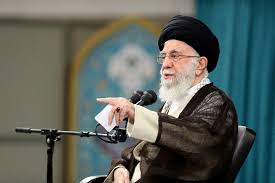
Iran’s supreme leader Ayatollah Ali Khamenei has declared that the United States will not succeed in destroying the Islamic republic, delivering the stark warning on Tuesday as a second round of nuclear talks between Tehran and Washington got underway in Geneva.
Speaking in a nationally broadcast address, Khamenei directly responded to remarks made by United States President Donald Trump, who had recently acknowledged decades of failed American pressure on Iran.
“In one of his recent speeches, the US president said that for 47 years America has not succeeded in destroying the Islamic republic… I tell you: you will not succeed either,” Khamenei said.
The commencement of Tuesday’s Geneva talks marked the second round of direct engagement between the two countries in recent weeks. The first round had been held earlier in February, following the collapse of earlier negotiations during last year’s Iran-Israel war — a 12-day conflict in June during which the United States briefly joined Israel in conducting strikes on key Iranian nuclear facilities.
The resumption of diplomacy comes against a tense military backdrop. Washington had deployed an aircraft carrier group to the Gulf following Iran’s deadly crackdown last month on anti-government protests, which were triggered by deepening economic hardship within the country. Khamenei, in his speech, did not shy away from addressing the naval deployment directly and issued what amounted to a veiled military threat.
“We constantly hear that they the United States have sent a warship toward Iran. A warship is certainly a dangerous weapon, but even more dangerous is the weapon capable of sinking it,” he said.
Despite the talks underway in Geneva, Khamenei made clear his scepticism about the likelihood of any meaningful diplomatic breakthrough, framing the very premise of negotiations as problematic given Washington’s stated positions.
“If there are to be negotiations because there is no real room for negotiation — determining the outcome of the negotiations in advance is a mistake and madness,” he said, in an apparent reference to US demands that Iran fully abandon its nuclear enrichment programme.
The nuclear file remains the central and most contentious issue between the two countries. Iran’s stockpile of enriched uranium had reached 60 percent purity before the June war and continues to feature among the key sticking points in the diplomatic process. The United States has repeatedly called for zero enrichment and has sought to bring Iran’s ballistic missile programme and its support for militant groups across the region into the scope of any agreement demands heavily influenced by Israeli pressure on Washington to adopt a comprehensive rather than a narrowly focused nuclear deal.
Iran has, however, maintained that its right to enrich uranium is non-negotiable and has insisted that the talks remain confined strictly to the nuclear question, rejecting any attempt to expand the agenda to missiles or regional proxy activities.
Khamenei framed the American approach as fundamentally one of domination rather than genuine diplomacy.
“The statements of the American president, at times threatening and at times dictating what should and should not be done, reveal a desire to dominate the Iranian nation,” he said.
The Geneva talks mark the latest chapter in one of the most enduring and complex diplomatic standoffs in modern geopolitics. Relations between Iran and the United States have been fractured since the 1979 Islamic Revolution, which toppled the American-backed Shah Mohammad Reza Pahlavi and saw Iranian students seize the US Embassy in Tehran and hold 52 American diplomats hostage for 444 days. The episode severed formal diplomatic ties, which have never been restored.
Successive American administrations have pursued a combination of sanctions, diplomatic pressure, and at various points, direct or proxy military confrontation in an effort to constrain Iran’s regional influence and nuclear ambitions. Iran’s nuclear programme, which Tehran insists is for civilian energy purposes, has been a flashpoint since the early 2000s when secret enrichment facilities were revealed, triggering years of international inspections, negotiations, and punishing economic sanctions.
The 2015 Joint Comprehensive Plan of Action, commonly known as the Iran nuclear deal, temporarily eased tensions by limiting Iran’s enrichment activities in exchange for sanctions relief. However, Trump’s unilateral withdrawal from the agreement in 2018 during his first term reignited hostilities and set off a prolonged period of escalation on both sides. Iran progressively rolled back its commitments under the deal, pushing enrichment levels higher, while the US reimposed sweeping economic sanctions that have significantly damaged the Iranian economy.
Trump, now back in office for a second term, has returned to a posture of maximum pressure while simultaneously leaving open the door for negotiations a dual-track approach that has defined the current round of diplomatic activity in Geneva.
Whether the talks will produce tangible results remains deeply uncertain, particularly given the gulf between the two sides on core issues and the combative public rhetoric emanating from Tehran even as diplomats meet at the table.