


Leadership Disputes Drive Tambuwal From PDP to ADC
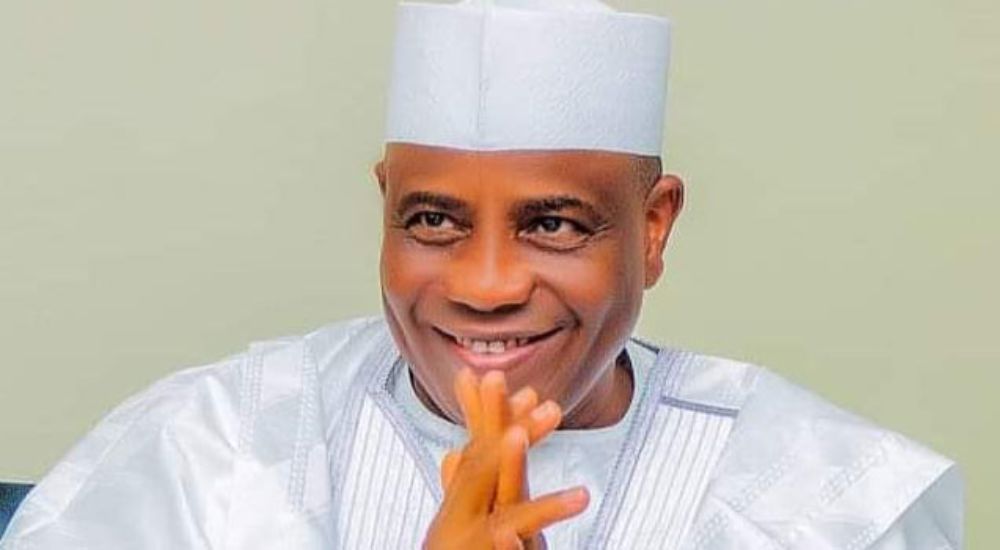
Aminu Tambuwal, former Speaker of the House of Representatives and two-term Governor of Sokoto State, has formally severed his 23-year association with the Peoples Democratic Party, announcing his defection to the African Democratic Congress in the early hours of Thursday. The move, disclosed via a statement posted on his X account at approximately 12:30 a.m., marks one of the most significant political realignments ahead of the 2027 general elections and underscores the continuing fragmentation of Nigeria’s opposition landscape.
Tambuwal, who served as Speaker from 2011 to 2015 before governing Sokoto State from 2015 to 2023, attributed his departure to what he described as the PDP’s irreversible internal decay. “The persistent internal crisis, leadership disagreements, and growing divisions within the PDP have made it increasingly difficult to continue my membership of the party,” he wrote. “These developments have unfortunately weakened the unity and direction that once defined the party and have necessitated this decision.”
The defection places Tambuwal within a growing cohort of former PDP stalwarts who have migrated to the ADC in recent months, most notably Peter Obi, the Labour Party’s 2023 presidential candidate, who formally joined the ADC in August 2025. Political analysts suggest this accumulation of high-profile figures signals a deliberate effort to consolidate opposition forces into a single viable alternative to the ruling All Progressives Congress, though the ADC remains structurally limited in its national footprint compared to the PDP’s historical machinery.
Tambuwal’s political trajectory has been characterised by strategic party movements. He initially won the Speaker’s position in 2011 as a PDP member but defected to the All Progressives Congress in 2014 during the party’s formation, only to return to the PDP in 2018 ahead of his second gubernatorial bid. His return to the opposition fold in 2026 therefore represents his third major party switch in fifteen years, a pattern that reflects both personal political survival instincts and the fluid ideological boundaries that have defined Nigerian party politics since the return to civilian rule in 1999.
The PDP, which governed Nigeria for sixteen consecutive years between 1999 and 2015, has been embroiled in a protracted leadership crisis since its defeat in the 2015 presidential election. The party’s internal fractures deepened following the 2023 elections, when it recorded its worst electoral performance since the Fourth Republic began, winning only thirteen of thirty-six governorship positions and failing to secure the presidency despite fielding former Vice President Atiku Abubakar as its candidate. Subsequent attempts to reconcile competing factions loyal to Atiku, former Rivers State Governor Nyesom Wike, and various state-level power brokers have repeatedly collapsed, leaving the party without a functional national working committee for extended periods.
Tambuwal’s statement acknowledged this institutional paralysis without naming specific individuals. “The PDP has been a significant part of my political journey, and I remain grateful for the opportunities it provided me to serve Nigeria at different levels,” he noted, before adding that the party’s current condition no longer permitted effective participation. He confirmed that he had submitted his resignation letter to his ward chairman in Sokoto State prior to the public announcement, fulfilling procedural requirements for party exit under Nigerian electoral guidelines.
His selection of the ADC as his new platform carries particular significance given the party’s recent rebranding efforts. Founded in 2006, the ADC has historically functioned as a marginal political force, securing only a single Senate seat and three House of Representatives positions in the 2019 elections. However, the party’s merger negotiations with Obi’s supporters and its absorption of disaffected PDP elements have expanded its organisational capacity, with party officials claiming membership growth of approximately 340 percent between January 2024 and February 2026, according to data compiled from Independent National Electoral Commission registration records.
In explaining his choice, Tambuwal emphasised governance principles over personal ambition. “I am convinced that this decision is guided by my belief that Nigeria needs a stronger political platform built on integrity, accountability, inclusiveness, and a clear commitment to national development,” he stated. He further pledged to “continue to uphold the values of democracy, justice, and national unity” within his new political association.
The timing of Tambuwal’s announcement suggests careful political calculation. By declaring his intentions in March 2026, he positions himself to participate in the ADC’s delegate selection processes for the 2027 elections while distancing himself from the PDP’s anticipated leadership selection battles scheduled for later this year. The PDP’s national convention, repeatedly postponed due to factional disputes, is now tentatively expected to occur in June 2026, though party officials have declined to confirm a definitive date.
Reactions from PDP leadership remained muted in the immediate aftermath of Tambuwal’s announcement. The party’s national publicity secretary, Debo Ologunagba, did not issue a formal response as of Thursday afternoon, though sources within the party’s national secretariat indicated that an emergency caucus meeting had been convened to assess the implications of the defection. The PDP has lost an estimated seventeen federal legislators and four governors to various opposition parties since January 2024, according to parliamentary records maintained by the National Assembly.
Tambuwal’s departure carries specific electoral ramifications for Sokoto State politics. During his governorship, he maintained a robust political network across the state’s twenty-three local government areas, delivering PDP victories in the 2019 and 2023 gubernatorial elections despite national headwinds. His shift to the ADC potentially disrupts the PDP’s organisational coherence in the North-West geopolitical zone, where the party has already suffered significant defections in Zamfara, Kebbi, and Katsina states.
The ADC leadership welcomed Tambuwal’s entry with a statement issued by its national chairman, Ralph Nwosu, who described the defection as “a validation of our party’s growing appeal among Nigerians who prioritise principled governance over political expediency.” Nwosu confirmed that Tambuwal would assume a yet-to-be-defined role in the party’s national strategy committee, which is tasked with coordinating opposition activities ahead of the 2027 electoral cycle.
Constitutional lawyers note that Tambuwal’s party switch does not trigger any automatic vacating of previously held positions, as he currently holds no elected office. However, the defection may influence pending legislative considerations, as Tambuwal has remained active in national discourse regarding electoral reform and constitutional amendment processes. He served as chairman of the Governors’ Forum Technical Committee on Electoral Reforms between 2020 and 2023, advocating for electronic transmission of results and expanded independent candidacy provisions.
The broader context of Tambuwal’s move reflects the continuing realignment of Nigeria’s political architecture. Since the 2023 elections, which produced the most fragmented National Assembly since 1999, with no single party holding a two-thirds majority in either legislative chamber, opposition figures have increasingly explored coalition-building outside traditional party structures. The ADC has positioned itself as the primary beneficiary of this fragmentation, though its ability to translate elite defections into mass electoral support remains untested in a general election context.
Electoral data from the 2023 presidential election indicates the scale of challenge facing any opposition consolidation effort. The APC secured 8,794,726 votes (36.61 percent), while the PDP received 6,984,520 votes (29.07 percent) and the Labour Party 6,101,533 votes (25.40 percent). The ADC captured only 81,005 votes (0.34 percent), suggesting that its recent membership expansion has not yet translated into significant electoral market share. For Tambuwal and other recent defectors to alter this trajectory, they must either absorb substantial portions of their former parties’ voter bases or activate previously unmobilised segments of the electorate.
Tambuwal’s statement concluded with a reaffirmation of his commitment to democratic participation. “I remain committed to the service of our people and the advancement of our democracy,” he wrote, thanking “all my supporters, colleagues, and well-wishers for their understanding and continued support.” The post, published at 12:47 a.m. Nigerian time, had accumulated over 47,000 interactions within twelve hours, indicating significant public interest in the development.