


Momodu: Atiku-Obi Ticket Ends Tinubu in 2027
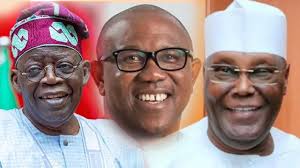
African Democratic Congress chieftain and former presidential candidate Dele Momodu has predicted that President Bola Tinubu will lose the 2027 general election if former Vice President Atiku Abubakar forms a joint ticket with a prominent southern politician such as Peter Obi or former Rivers State Governor Rotimi Amaechi.
Momodu made the declaration on Sunday during an appearance on Channels Television’s Sunday Politics programme, arguing that a strategically structured north-south coalition ticket built around Atiku would decisively dismantle the ruling All Progressives Congress’s hold on power.
“I believe if we have a combination of Atiku, maybe with Peter Obi, maybe with Rotimi Amaechi, or any other person that comes from the South, Tinubu will be gone. It will be the end of Tinubu’s foundation, not the APC,” Momodu stated.
The ADC chieftain defended Atiku’s continued relevance as a presidential candidate despite repeated unsuccessful attempts to win the presidency, drawing a comparison with United States President Donald Trump to illustrate that political persistence and long-term preparation often yield results.
“From my analysis, Atiku Abubakar — even those who didn’t like Atiku before — now he’s smelling like roses, because the enemy of your enemy is your friend. He has prepared forever, just like Donald Trump was preparing forever. People said Donald Trump is old, and like a joke, he is doing his second term now,” Momodu said.
Atiku Abubakar, a former vice president under the Olusegun Obasanjo administration from 1999 to 2007, has contested the Nigerian presidency six times across multiple political platforms. He ran unsuccessfully in 2007 under the Action Congress, lost the Peoples Democratic Party primary in 2011 to Goodluck Jonathan, contested again in 2015 under the APC but lost the primary to Muhammadu Buhari, and later returned to the PDP to run as its flagbearer in 2019 and 2023, losing both elections to Buhari and Tinubu respectively.
Despite these setbacks, Atiku remains one of Nigeria’s most experienced presidential contenders, with a national political network spanning decades and a reputation for resilience within opposition circles. His 2023 campaign secured approximately 6.9 million votes, finishing second behind Tinubu’s 8.8 million, according to results declared by the Independent National Electoral Commission.
Momodu also criticized what he described as President Tinubu’s apparent preference for a weakened opposition, warning that the ongoing wave of defections from the PDP to the APC threatens Nigeria’s democratic vitality.
“Tinubu wants to contest against himself, and it doesn’t make sense to me,” Momodu said, describing the erosion of the PDP as “a sad day for democracy.”
The PDP, which governed Nigeria for 16 uninterrupted years from 1999 to 2015, has witnessed significant hemorrhaging of its membership base since its defeat in the 2023 general elections. High-profile defections to the APC have included serving governors, federal legislators, and former national officers, many of whom cited internal crises, leadership disputes, and diminishing electoral prospects as reasons for their exits.
The party’s difficulties have been compounded by factional disputes over leadership legitimacy, unresolved tensions from the 2023 presidential campaign, and conflicts between rival camps within state chapters. These internal fractures have weakened the PDP’s capacity to present a unified opposition front, creating political openings for emerging platforms such as the ADC.
Atiku, Obi, and Amaechi, who contested the 2023 presidential election under different party banners, have since aligned within the ADC as part of an expanding opposition coalition that also includes former Senate President David Mark, former Osun State Governor Rauf Aregbesola, and former Kaduna State Governor Nasir El-Rufai. All three are widely regarded as potential presidential contenders under the ADC platform ahead of the 2027 elections.
Peter Obi, who defected to the ADC on March 6, 2026, after leaving the Labour Party, secured over six million votes and won 12 states in the 2023 presidential election, including Lagos, Nigeria’s commercial capital. His candidacy galvanized significant youth support through the Obidient movement, a grassroots mobilization effort that dominated social media discourse and street-level campaigns during the election cycle.
Rotimi Amaechi, a former Minister of Transportation under the Buhari administration and two-term governor of Rivers State, contested the APC presidential primary in 2023 but lost to Tinubu. He later distanced himself from the APC and has been linked with opposition realignment efforts, though his formal defection to the ADC has not been officially announced as of the time of this report.
The ADC has scheduled its national convention for April 14, 2026, following ward and state congresses set to commence on April 7. The convention is expected to formalize the party’s leadership structure, ratify new membership registrations, and outline its strategic direction ahead of the 2027 general elections.
The party, originally registered with INEC in 2006, has historically struggled to gain electoral traction beyond marginal representation in state assemblies. However, the recent influx of established political figures including Obi, Aminu Tambuwal, and potentially Atiku and Amaechi has transformed the ADC into a credible third force capable of challenging the dominance of the APC and the weakened PDP.
Momodu’s prediction of a Tinubu defeat hinges on the assumption that a structured coalition ticket combining northern political capital with southern electoral strength could replicate the kind of broad-based appeal that powered the APC to victory in 2015. That election saw an alliance of northern political heavyweights, southwestern progressives, and key defectors from the PDP coalesce around Muhammadu Buhari to unseat the incumbent Jonathan administration.
However, political analysts have cautioned that while the ADC’s recent acquisitions signal growing opposition momentum, the party still faces significant organizational, financial, and structural challenges. Building a nationwide campaign infrastructure, securing funding to compete with the well-resourced APC, and managing the ambitions of multiple presidential aspirants within a single platform remain formidable obstacles.
The APC and the Tinubu administration have not issued official responses to Momodu’s predictions. However, ruling party officials have previously dismissed opposition realignment efforts as opportunistic coalitions lacking ideological coherence and grassroots legitimacy.
President Tinubu, who won the 2023 election with 8.8 million votes representing 36.6 percent of the total votes cast, has yet to formally declare his intention to seek re-election in 2027, though political observers widely expect him to run for a second term. His administration has faced mounting public criticism over economic hardship, rising inflation, fuel subsidy removal, and currency devaluation policies, factors that opposition figures believe have eroded his political capital.
Momodu’s assertion that Atiku now “smells like roses” to Nigerians disaffected with the Tinubu administration reflects a broader sentiment among opposition strategists that widespread dissatisfaction with current governance could create a favorable environment for a unified opposition challenge in 2027.
Whether such a coalition materializes and whether it can overcome the structural advantages of incumbency, including control of state apparatus, security agencies, and significant financial resources, remains an open question as Nigeria’s political landscape continues to shift ahead of the next electoral cycle.