


NAF Combat Unit Flew 495 Missions Against Oil Theft in Niger Delta — Air Chief
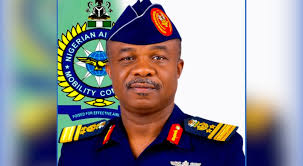
The 115 Special Operations Group of the Nigerian Air Force executed 495 combat helicopter missions across the Niger Delta in 2025, all directed at countering illegal oil bunkering and protecting critical petroleum infrastructure that remains central to Nigeria’s national revenue. The figures, disclosed by the Chief of the Air Staff during an operational visit to the Nigerian Air Force Base in Port Harcourt, offer a rare numerical window into the scale of aerial operations sustained by the Air Force in one of the country’s most economically sensitive and security-challenged regions.
Air Marshal Sunday Aneke disclosed the operational statistics while addressing personnel at the Port Harcourt base, where he also used the occasion to urge continued vigilance and a commitment to intelligence-led operations.
“Fly smart,” Aneke told personnel, emphasising that every mission must be purposeful and grounded in timely, actionable intelligence. He stressed that operational results must be measurable and that each sortie must contribute concretely to the protection of Nigeria’s economic assets.
The 115 Special Operations Group is the Nigerian Air Force’s dedicated combat helicopter unit stationed in the Niger Delta, a region whose creeks, swamps, and riverine terrain have long made conventional land-based security operations difficult. The unit operates from NAF Base, Port Harcourt, which serves as the principal hub for air-based security interventions in Rivers State and across the broader Niger Delta area.
The Niger Delta, which spans parts of Rivers, Bayelsa, Delta, Edo, Imo, Abia, Cross River, and Akwa Ibom states, accounts for the overwhelming majority of Nigeria’s crude oil output and export earnings. Nigeria’s oil production, which averaged roughly 1.4 to 1.6 million barrels per day in recent years according to figures from the Nigerian Upstream Petroleum Regulatory Commission and the Organisation of Petroleum Exporting Countries, is generated almost entirely from this region. It is also a region where oil theft and illegal bunkering have remained deeply entrenched challenges, costing the country substantial volumes of crude oil and billions of naira in lost revenue annually.
The Nigerian Extractive Industries Transparency Initiative and various government audits have, over the years, highlighted the scale of oil theft as a structural problem. Estimates of losses to crude oil theft have varied widely between official and independent assessments, but figures cited by the Nigerian National Petroleum Company Limited and the Office of the Auditor-General at different points have put the losses in the range of tens of thousands of barrels per day. Illegal bunkering, the tapping of pipelines and oil infrastructure to siphon crude oil for sale on informal markets, has been one of the most persistent forms of economic sabotage in the region and a significant driver of both security operations and diplomatic concern around Nigeria’s oil output reliability.
The deployment of combat helicopter units to the Niger Delta for counter-bunkering operations is not new. The Nigerian Air Force has maintained a rotary-wing presence in the region for years, and the 115 SOG has operated within this framework as the primary unit tasked with aerial surveillance, interdiction of illegal bunkering networks, and force support for ground operations. The 495 missions recorded in 2025 represent the unit’s output over a full year of sustained operational engagement.
Aneke’s visit to NAF Base Port Harcourt formed part of a broader operational tour of Nigerian Air Force installations in the Niger Delta. Such visits by service chiefs serve dual purposes: they provide an opportunity for leadership to assess operational conditions firsthand and signal the high command’s attention to frontline units. For personnel stationed in a high-tempo operational environment like the Niger Delta, the presence of the air chief carries institutional weight.
During his address to personnel, Aneke reaffirmed the Nigerian Air Force’s commitment to the protection of Nigeria’s vital oil and gas assets in the Niger Delta. He framed the operations of the 115 SOG not merely as a security function but as a contribution to economic preservation, recognising that the stability of oil infrastructure in the region has direct implications for federal revenue, foreign exchange earnings, and the country’s ability to fund its budget.
His call to “fly smart,” while colloquial in phrasing, carried a specific operational meaning: that the Air Force’s missions in the Niger Delta must be driven by intelligence rather than reactive patrols, ensuring that sorties are targeted, efficient, and productive. In a region as geographically complex as the Niger Delta, where illegal actors are often well-informed about security patterns, intelligence-based operations are widely regarded by military analysts as essential to effectiveness.
Ahead of his address to personnel, Aneke paid a courtesy visit to Rivers State Governor Sir Siminalayi Fubara. The visit was an acknowledgement of what the air chief described as sustained and material support by the Rivers State Government to the Nigerian Air Force’s presence and operational capacity in the state.
Aneke enumerated specific contributions made by the state government. These include the handover of an AgustaWestland AW139 helicopter to the Nigerian Air Force, the rehabilitation and resurfacing of the runway and aprons at NAF Base Port Harcourt, the issuance of a Certificate of Occupancy for the base, and the provision of two blocks of twelve two-bedroom residential accommodation units for Air Force personnel and their families.
The AW139 is a twin-engine medium helicopter widely used by military and paramilitary operators globally for surveillance, search and rescue, and light attack roles. Its handover by a state government to a federal military service is an unusual and significant gesture, reflecting both the governor’s prioritisation of security cooperation and the economic stakes that Rivers State has in the stability of its operational environment. Port Harcourt, the state capital, is the commercial hub of the Niger Delta and home to major oil company operations, refining infrastructure, and a large population directly or indirectly dependent on the oil economy.
The runway rehabilitation at NAF Base Port Harcourt carries practical operational importance. A serviceable runway and well-maintained aprons are fundamental to the tempo and reliability of air operations. Without airfield infrastructure in good condition, even well-equipped air units face limitations on the frequency and nature of sorties they can sustain. The state government’s investment in that infrastructure, therefore, directly expands the Nigerian Air Force’s operational ceiling in the region.
“These interventions have significantly strengthened the Air Force’s operational readiness and its capacity to respond effectively to emerging security challenges within the Niger Delta region,” Aneke stated during the visit.
Governor Fubara, in his response, reaffirmed the Rivers State Government’s commitment to sustaining cooperation with the Nigerian Air Force and other security agencies. He described security as foundational to economic progress.
“Security remains a prerequisite for economic growth and development,” Fubara said.
He assured of continued support for the Nigerian Air Force’s operational presence in Rivers State, adding that “the collaboration between the State Government and the Service will continue to contribute to safeguarding lives, protecting critical infrastructure, and advancing the prosperity of the State and the nation.”
Aneke’s Niger Delta tour also took him to Bayelsa State, where he paid a visit to Governor Douye Diri. Bayelsa, which sits at the heart of the oil-producing region and is among the states most densely concentrated with oil and gas infrastructure, occupies what Aneke described as a strategic position within Nigeria’s security and economic framework.
“Bayelsa State occupies a strategic place within Nigeria’s security and economic architecture,” Aneke stated. He reaffirmed the Nigerian Air Force’s commitment to close engagement with the state government and other stakeholders to protect lives, national assets, and long-term peace across the Niger Delta.
Diri, for his part, commended the Nigerian Air Force for its role in maintaining stability and protecting oil and gas infrastructure in the region, reflecting a shared understanding between state and federal authorities of the stakes involved.
The visits to both Rivers and Bayelsa governors are part of a broader pattern of civil-military engagement that Nigerian security services have increasingly emphasised as necessary for effective operations in the Niger Delta. Unlike conventional battle zones, the Niger Delta’s security environment is shaped as much by community dynamics, political economy, and local grievances as by the operational capacity of security forces. State governments, by virtue of their proximity to communities and their control over some of the resources and relationships that shape local conditions, are regarded as essential partners in any durable security framework.
The Niger Delta’s security challenges have roots that stretch back several decades. From the early agitations of minority ethnic communities demanding a fairer share of oil revenues in the 1960s, through the civil conflicts of the 1990s that saw groups like the Movement for the Survival of Ogoni People gain international attention, to the full-scale militancy of the mid-2000s when armed groups like the Movement for the Emancipation of the Niger Delta paralysed oil production and brought Nigeria’s output to a fraction of its potential, the region has been the site of a persistent tension between oil wealth and community underdevelopment.
The Federal Government’s 2009 amnesty programme, which offered former militants cash stipends, training, and rehabilitation in exchange for disarmament, significantly reduced the intensity of armed conflict and allowed oil production to recover. However, the underlying structural grievances, including environmental degradation from decades of oil spills, inadequate infrastructure development, unemployment, and a sense of exclusion from the proceeds of resources extracted from Niger Delta soil, have never been fully resolved. This unresolved tension continues to provide the social soil in which oil theft networks and sporadic sabotage of infrastructure take root.
Against this backdrop, the Nigerian Air Force’s sustained combat operations in the region, represented numerically by the 495 missions flown by the 115 SOG in 2025, are part of a long-running security commitment that successive administrations and service chiefs have maintained, recognising that the protection of oil infrastructure is inseparable from Nigeria’s fiscal stability.
Aneke’s visit, his directives to personnel, and the cooperative framework being sustained with the Rivers and Bayelsa state governments all point to an institution working to anchor its Niger Delta operations on both operational rigour and the kind of civil partnerships that security scholars and practitioners widely regard as essential to lasting effectiveness in complex environments.