

NAFDAC Busts Warehouse in Lagos; Seizes N3 Billion Worth of Banned Soaps
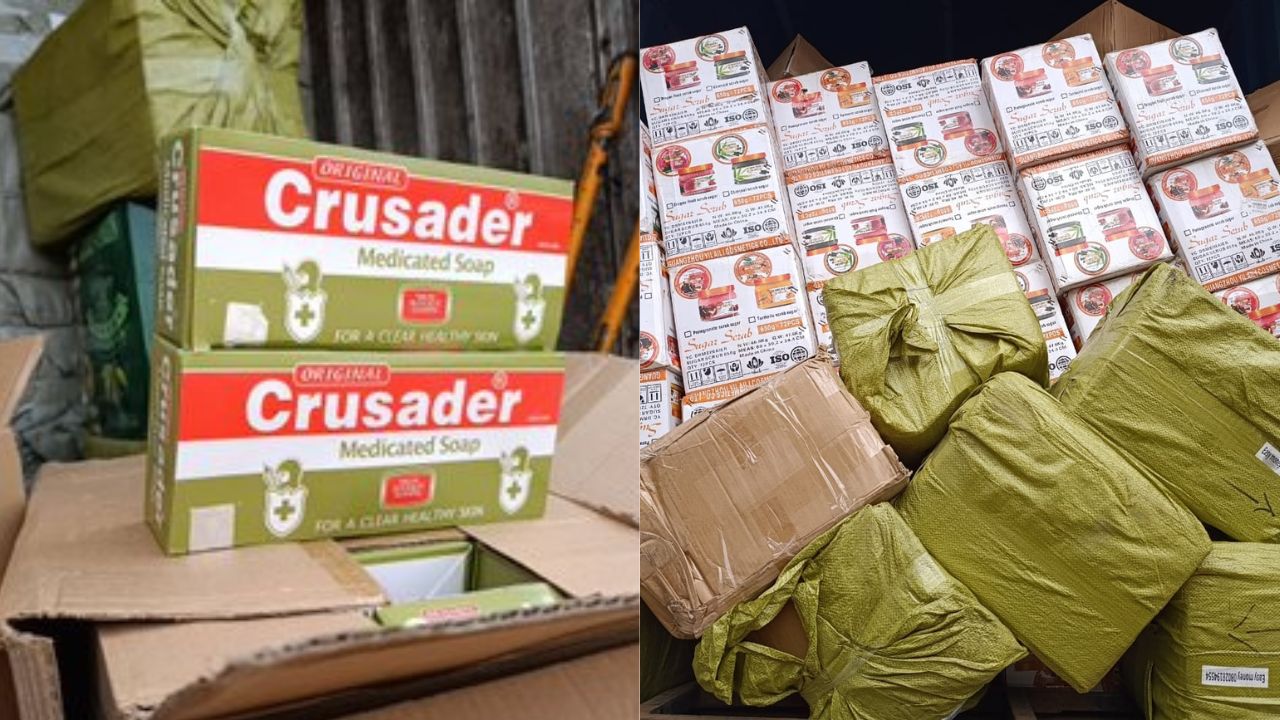
LAGOS — The National Agency for Food and Drug Administration and Control (NAFDAC) has uncovered a massive illicit warehouse containing banned, fake, and unregistered cosmetic products valued at over ₦3 billion. The facility was concealed within an uncompleted building at the APT Trade Fair Complex in Ojo, Lagos. In a surgical enforcement operation concluded on Sunday, February 22, 2026, the agency recovered over 1,400 cartons of prohibited skin-lightening soaps, including the mercury-laden Crusader and E45 brands. Consequently, NAFDAC has evacuated the entire shipment to prevent the toxic distribution of these carcinogen-linked chemicals into the Nigerian retail market. While it is true that the warehouse was disguised as an inactive construction site, intelligence reports successfully pinpointed the high-value contraband.
The seizure highlights the persistent challenge of mercury-added cosmetics, which the Federal Government banned under the international Minamata Convention. NAFDAC confirmed that the recovered Crusader soap contains dangerous levels of inorganic mercury, a heavy metal that causes severe kidney and brain damage. Furthermore, the agency’s Investigation and Enforcement Directorate seized large quantities of Extract Gold whitening soaps and various unregistered perfumes and body oils. While it is true that these products often promise rapid skin lightening, their use frequently leads to permanent organ failure and skin thinning. Indeed, the agency’s Director of Investigation, Dr. Martin Iluyomade, noted that the facility manager is currently undergoing intensive interrogation to reveal the cartel’s financiers.
The Trade Fair Complex has recently been a flashpoint for regulatory tension, including past physical assaults on enforcement officers. In a related development, the agency has placed several truckloads of cooking oils and unidentified chemical reagents on hold for further laboratory assessment. Granted, these syndicates utilize forged customs documents and “shadow warehouses” to bypass the 100% physical examination at the ports.
Significantly, the public health risk extends beyond the users to family members who may inhale mercury vapors in confined domestic spaces. Subsequently, NAFDAC has urged all consumers to verify products using the mobile authentication service (MAS) before purchase. Although the “Crusader” brand claims to be manufactured in England, forensic analysis often traces its origins to unregulated facilities in South Asia. Above all, the agency warns that skin-lightening products targeted at minors pose a generational threat to the nation’s dermatological health.
The focus of the agency shifts to the forensic audit of the warehouse ledger to identify the major distributors nationwide. Therefore, NAFDAC must continue its high-frequency “sting” operations to sustain the current pressure on counterfeiters. As a result of this discovery, the APT Trade Fair Complex will likely undergo a permanent regulatory re-classification. The quest for a safe and authentic consumer market in Nigeria remains a non-negotiable priority for the Shere-led administration.