

NAFDAC Warns of Fake Avastin, Tecentriq
The National Agency for Food and Drug Administration and Control (NAFDAC) has issued an urgent public warning regarding the confirmed circulation of counterfeit versions of two critical cancer medications—Avastin and Tecentriq—within the Nigerian drug supply chain, raising significant concerns about patient safety and the efficacy of cancer treatment across the country.
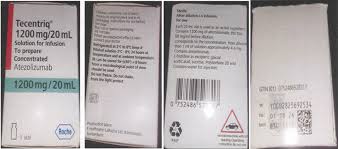
In a public alert released on Thursday, the agency disclosed that fake batches of Avastin 400mg/16ml (Bevacizumab) and Tecentriq 1200mg/20ml (Atezolizumab) had been identified and were being sold to unsuspecting patients and healthcare providers. NAFDAC stated that the development represents a serious threat to public health, given the nature of the conditions these drugs are designed to manage.
According to the alert, the investigation was triggered by official communication from the drugs’ Marketing Authorisation Holder, Roche Nigeria, following a series of complaints from healthcare professionals across various medical facilities in the country. The agency noted that several cases came to light after patients presented suspected fake drugs at hospitals, prompting further scrutiny from both medical staff and regulators.
Avastin, the generic name Bevacizumab, is commonly indicated for the treatment of recurrent glioblastoma in adults, a aggressive form of brain cancer. Tecentriq, or Atezolizumab, is an immunotherapy drug prescribed for several advanced-stage cancers, including non-small cell lung cancer, hepatocellular carcinoma (liver cancer), and melanoma, a dangerous type of skin cancer.
NAFDAC’s preliminary investigations revealed that the counterfeit medicines were often being transacted at prices significantly below the market rate, ranging between N180,000 and N350,000. This price disparity, the agency noted, served as an early indicator of illegitimacy in several of the reported cases.
“The Marketing Authorisation Holder reported receiving complaints from healthcare professionals across Nigeria,” the agency’s statement read in part. “On investigation, clear evidence of counterfeit packaging materials was established.”
The alert specifically identified an oncologist who had initially raised concerns about certain vials of Avastin. This report prompted a detailed examination by Roche, the manufacturer, whose analysis confirmed the presence of counterfeit batches in the supply chain.
NAFDAC listed specific counterfeit batches that have been identified. These include Avastin bearing the batch numbers H4239A70, H2290A34, and A3508B02, as well as Tecentriq with batch number B3071A12. The agency warned that these batches are not genuine and should be rejected by all stakeholders.
A detailed analysis of the counterfeit products revealed multiple red flags that distinguish them from authentic medicines. According to the agency, the fake products contain batch numbers that do not exist in the manufacturer’s official database, effectively making lot tracing impossible. Furthermore, the packaging exhibits poor-quality printing and spelling errors, incorrect placement of critical product information, and tamper-evident labels that are inconsistent with the security features on genuine products. The serial numbers on the packages were also found to be invalid.
“The batch number does not exist in the Roche database, making lot tracing impossible,” NAFDAC noted, underscoring the challenge in tracking the origin and distribution path of the falsified products.
The agency further warned that counterfeit cancer medicines pose severe risks to patients. Such products may contain incorrect or no active pharmaceutical ingredients, harmful chemical contaminants, or the wrong dosage strength. The potential consequences for patients undergoing cancer therapy are grave.
“This could result in treatment failure, disease progression, serious adverse events, or death,” the agency cautioned, emphasizing that patients relying on these biologics for survival could face catastrophic health outcomes if administered falsified versions.
However, NAFDAC disclosed that full chemical analysis of the suspected products could not be conducted at this time, as no physical samples were made available to its laboratory network. The investigation has, to this point, relied on photographic evidence and packaging materials submitted by complainants and healthcare professionals. This limitation means the exact composition of the counterfeit drugs—whether they contain any active ingredient, a sub-potent dose, or toxic substances—remains unverified by laboratory testing.
The circulation of counterfeit oncology treatments in Nigeria is not an isolated phenomenon but part of a broader, persistent challenge facing the country’s pharmaceutical sector. Nigeria has long been identified as a high-risk zone for substandard and falsified medical products. According to a 2019 report by the World Health Organisation, one in ten medical products circulating in low- and middle-income countries is estimated to be substandard or falsified. The situation is exacerbated by weak supply chain oversight, the proliferation of unlicensed medicine vendors, and the high cost of genuine medicines, which creates a market for cheaper, illegitimate alternatives.
In response to the immediate threat, NAFDAC has directed all its zonal directors and state coordinators across the 36 states and the Federal Capital Territory to intensify surveillance operations within their jurisdictions. The agency has mandated an immediate effort to identify, trace, and “mop up” the counterfeit products from pharmacy shelves, hospital stores, and unlicensed points of sale.
The agency also issued strong advisory guidance to all stakeholders along the pharmaceutical supply chain. Importers, distributors, healthcare professionals, and patients have been urged to exercise extreme vigilance when handling or purchasing cancer medications. NAFDAC specifically advised that all medicines must be sourced only from authorised and licensed suppliers, warning that procurement from unverified sources significantly increases the risk of exposure to counterfeit products.
Members of the public who suspect they have encountered counterfeit or substandard medicines have been encouraged to report immediately. Reports can be made through the nearest NAFDAC office, via the agency’s dedicated hotline at 0800-162-3322, or by email to sf.alert@nafdac.gov.ng.