


Naira Depreciates to N1,390/$ Officially, N1,376 in Parallel Market
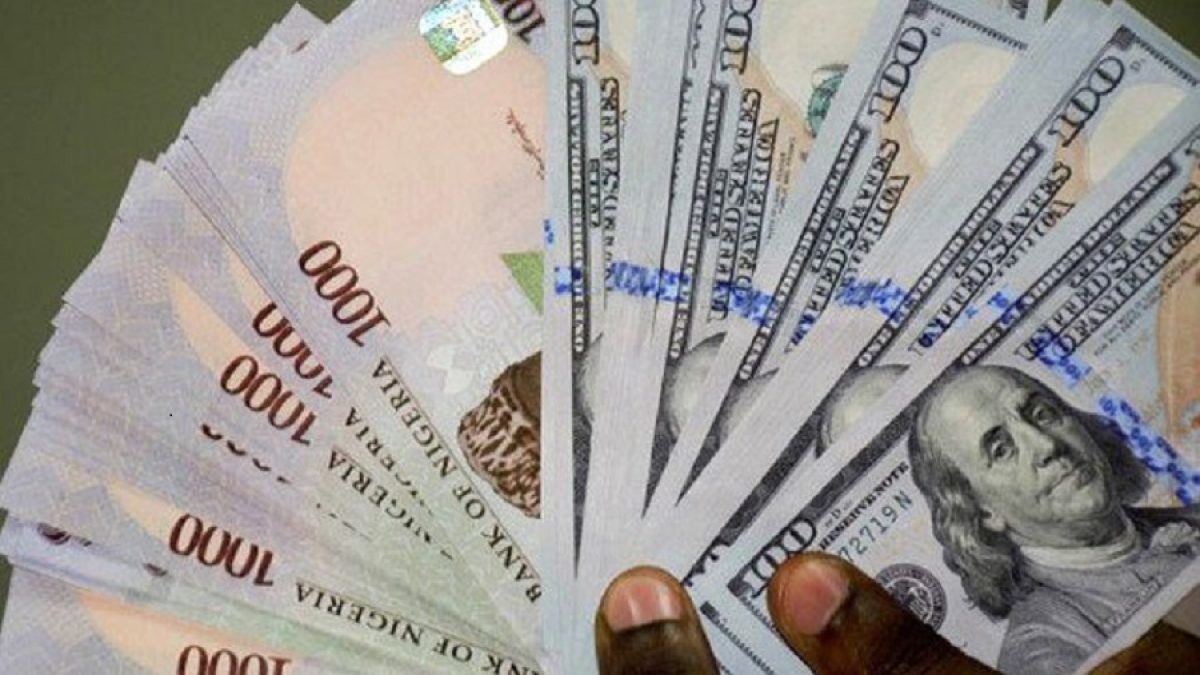
The Nigerian currency recorded its second consecutive daily depreciation in both the official Nigerian Foreign Exchange Market and the parallel market, reversing some of the gains achieved during February’s appreciation rally.
The naira extended its losing streak against the United States dollar yesterday, depreciating across both the official and parallel foreign exchange windows as demand pressures resurfaced in the retail segment of the market.
In the parallel market, commonly referred to as the black market, the naira weakened to N1,376 per dollar from N1,370 per dollar recorded on Monday. Bureau De Change operators in major commercial centres including Lagos, Abuja, and Port Harcourt quoted the dollar at higher levels, reflecting sustained demand for foreign currency among retail end users .
Similarly, the naira recorded its second depreciation of the week in the Nigerian Foreign Exchange Market, the official trading window. Data obtained from the Central Bank of Nigeria showed that the indicative exchange rate for the naira rose to N1,390 per dollar from N1,376 per dollar on Monday. This represents a N14 depreciation for the local currency within a single trading session at the official window.
The depreciation widened the margin between the parallel and official markets to N14 per dollar, compared to a spread of N6 per dollar recorded on Monday. The widening gap signals renewed pricing disparities between the two market segments after weeks of relative convergence that followed policy interventions by the central bank.
The official market depreciation reflects increased demand for foreign exchange from importers and other corporate entities accessing dollars through authorised dealer banks. Data from the CBN’s foreign exchange platform showed trading activity within a band, with the naira fluctuating between intraday highs and lows before settling at the N1,390 closing rate .
At the parallel market segment, BDC operators attributed the depreciation to sustained demand pressures from travellers, school fee payments, and other invisible transactions that typically drive retail dollar purchases. The segment remains sensitive to sentiment and liquidity conditions, often reacting more sharply to demand-supply imbalances than the official window .
The spread between both markets, though widened from the previous day, remains significantly narrower than the gaps exceeding N100 per dollar recorded in previous months. Market observers note that sustained convergence depends on continued dollar liquidity in both segments and consistent policy implementation by monetary authorities.
Yesterday’s depreciation marks a reversal from the relative stability that characterised much of February, when the naira recorded its strongest monthly performance in recent years. The local currency gained 4.31 percent in February, defying late-month dollar purchases by the CBN aimed at preventing what policymakers viewed as excessive currency appreciation .
A report by the Financial Market Dealers Association showed that the naira firmed across both the NFEM and parallel markets during February, even as the apex bank stepped in to absorb foreign exchange liquidity toward the end of the month. The move was designed to keep the currency from strengthening too sharply, a scenario that could distort returns for investors who bought into local fixed income securities when the naira traded between N1,400 and N1,500 to the dollar .
The naira ended February 2026 at N1,368.5 per dollar in the official market, up from N1,384.5 per dollar at the start of the month, reflecting a modest month-on-month appreciation. Data from the CBN showed that despite late-month volatility, the currency maintained a firmer position relative to January .
The February gains built on momentum established earlier in the month. On February 16, the naira climbed to a two-year high of N1,347.78 per dollar in the official market, further narrowing the spread with the black market. The appreciation followed the central bank’s decision to reopen access to the official foreign exchange market for licensed BDC operators, a move aimed at improving dollar liquidity in the retail segment .
The CBN had on February 10, 2026, issued a circular permitting all duly licensed BDCs to purchase foreign exchange from the NFEM through authorised dealer banks at prevailing market rates. The policy effectively reintegrated BDCs into the formal FX supply chain after years of restrictions .
Under the framework, authorised dealer banks are required to conduct full know-your-customer checks and due diligence on BDC clients in accordance with regulatory standards. Banks may sell foreign currency to BDCs strictly for eligible retail transactions, subject to a weekly cap of 150,000 dollars per bureau .
The guidelines impose strict utilisation controls. Any foreign exchange purchased but not deployed must be resold into the market within 24 hours, as BDCs are prohibited from holding positions funded through the official window. All licensed operators are also mandated to submit timely and accurate electronic transaction returns to the CBN .
Settlement of FX transactions must be conducted exclusively through accounts with licensed financial institutions. Third-party settlements are prohibited, while cash transactions are limited to 25 percent of each deal, reinforcing the regulator’s push to curb cash-based FX activity and strengthen traceability .
Aminu Gwadabe, president of the Association of Bureaux De Change Operators of Nigeria, had described the policy shift as a major boost for the retail foreign exchange segment, noting that early signs pointed to increased stability and improved liquidity conditions. Following the directive, the gap between the official and parallel markets reduced significantly from around N84 to approximately N30 or N40 .
The recent currency performance unfolds against a backdrop of strengthening external buffers. Gross external reserves climbed to approximately $50 billion at the end of February, up from $46.59 billion at the start of the month. The CBN Governor, Olayemi Cardoso, confirmed reserves had reached $50.45 billion as of February 16, 2026, the highest level recorded in 13 years .
Cardoso had earlier disclosed that the country’s net external reserves surged 772.18 percent over two years to $34.80 billion at the end of 2025, up from $3.99 billion in 2023, reflecting improved FX management and rising oil receipts .
Net foreign exchange reserves rose from $23.11 billion at the end of 2024 to $34.80 billion at the end of 2025, representing an increase of $11.69 billion within one year. Gross external reserves increased from $40.19 billion at end-2024 to $45.71 billion at end-2025 .
The improved reserve position provides the central bank with more capacity to manage currency volatility when needed, though policymakers have signalled a preference for market-determined exchange rates with minimal direct intervention.
Analysts note that broader global factors continue to influence naira performance. The U.S. dollar rallied globally following renewed geopolitical tensions in the Middle East, with the dollar index climbing nearly 1 percent on Monday, marking its strongest single-day gain in seven months as investors sought safety .
The stronger dollar environment typically tightens global financial conditions, which can weigh on emerging market currencies including the naira. The renewed rally helped restore the dollar’s traditional role as a crisis-era hedge after months of scepticism about its safe-haven appeal .
Crude oil prices, which directly impact Nigeria’s external earnings and foreign exchange liquidity, have climbed to around $80 per barrel as tensions escalated between the United States and Iran. Analysts at the FMDA stated that crude oil prices would continue to offer a buffer for the naira as tensions escalate, noting that if inflows from crude oil continue to increase due to rising global oil prices, the CBN would be expected to mop up excess liquidity to prevent the naira from reaching a point that could trigger investor concerns .
Market estimates suggest that a full disruption of the Strait of Hormuz, which accounts for roughly 25 percent of global seaborne oil trade, could push crude prices toward $120 to $150 per barrel. Such a spike would significantly improve Nigeria’s export revenues, although it could also fuel domestic inflationary pressures .
Muda Yusuf, chief executive officer of the Centre for the Promotion of Private Enterprise, said escalating tensions among Iran, the United States and Israel could provide short-term relief for Nigeria’s foreign exchange market, but cautioned that the benefits may come at a cost. While stronger oil prices could boost dollar inflows and stabilise the currency, higher energy costs globally could transmit inflationary shocks domestically, worsening household welfare in an economy already grappling with elevated price levels .
The currency’s performance intersects with broader price developments in the economy. Headline inflation declined for the eleventh consecutive month to 15.1 percent in January 2026. Compared to January 2025, when inflation stood at 27.61 percent, the rate has fallen by 12.51 percentage points, reflecting a significant moderation in overall price growth across the country .
Monetary policy decisions also shaped market sentiment in February. The Central Bank’s 304th Monetary Policy Committee cut the Monetary Policy Rate by 50 basis points to 26.5 percent from 27 percent. The Cash Reserve Ratio was maintained at 45.0 percent for commercial banks and 16.0 percent for merchant banks, while the Liquidity Ratio remained at 30.0 percent .
Analysts suggest that the combination of stronger reserves, oil windfalls and active central bank management underscores a delicate balancing act: allowing the naira to appreciate enough to reinforce investor confidence, while preventing sharp gains that could disrupt carry trade positions and fiscal planning benchmarks.
Traders and analysts will watch today’s trading sessions for indications of whether yesterday’s depreciation represents a temporary correction or the beginning of a sustained reversal. The width of the official-parallel spread will serve as a key barometer of market confidence and the effectiveness of policy measures aimed at sustaining convergence.
The CBN’s willingness to supply dollars through the NFEM and its continued engagement with BDC operators through the new framework will influence near-term price discovery. Market participants also await further clarity on the operational guidelines for BDC participation, which Gwadabe had indicated would be released for the takeoff of trading following the February 10 circular .