


Naira Holds Steady as Reserves Hit 13-Year High
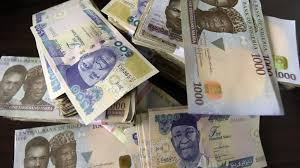
Data from the Nigerian Foreign Exchange Market showed the local currency quoted at an average of N1,357.11 per dollar during Thursday’s early morning trading session, representing a marginal movement from Wednesday’s closing position and signaling continued resilience in the official market following months of volatility that characterized the exchange rate regime through much of 2024 and early 2025.
The stability comes as Nigeria’s gross external reserves crossed a landmark threshold of $50.03 billion, marking a 13-year high and providing the Central Bank of Nigeria with what Governor Olayemi Cardoso recently described as substantial “firepower” to manage volatility in the foreign exchange market amid escalating geopolitical tensions in the Middle East that have driven Brent crude prices above the $100 per barrel mark.
Market turnover in the official window remained robust on Thursday, supported by the CBN’s recent strategic interventions aimed at ensuring liquidity and maintaining exchange rate stability. The apex bank has maintained an active presence in the market since the beginning of 2026, deploying targeted dollar sales to authorized dealers and end users to meet legitimate foreign exchange demand while discouraging speculative activities.
The last time Nigeria’s external reserves exceeded $50 billion was in 2013, during the administration of President Goodluck Jonathan, when crude oil prices averaged above $100 per barrel and the country’s production capacity remained relatively stable despite security challenges in the Niger Delta region. The reserves peaked at approximately $62 billion in 2008 before the global financial crisis triggered a steep decline that saw the buffers drop to $32 billion by 2010.
The current reserves buildup reflects a combination of elevated crude oil revenues, improved remittances from the diaspora, increased foreign portfolio inflows into Nigerian Treasury Bills and bonds, and the CBN’s disciplined management of foreign exchange resources. Nigeria’s oil production has averaged approximately 1.7 million barrels per day in recent months, according to data from the Nigerian Upstream Petroleum Regulatory Commission, representing a significant recovery from the production lows of 1.1 million barrels per day recorded in 2022 due to crude theft and pipeline vandalism.
With Brent crude currently trading above $100 per barrel, driven by supply concerns linked to geopolitical tensions involving major oil-producing nations in the Middle East, Nigeria stands to benefit substantially from increased petrodollar earnings. The country’s 2026 budget was benchmarked on an oil price assumption of $75 per barrel and production of 1.78 million barrels per day, meaning the current price levels could generate significant revenue windfalls for the federal government.
In the parallel or informal market, the exchange rate held relatively firm on Thursday, with Bureau De Change operators in major commercial hubs including Lagos and Abuja quoting the dollar at N1,410 for buying and N1,415 for selling. The rates represent a continuation of the stability witnessed in the parallel market over the past several weeks, following a period of sharp fluctuations that saw the Naira trade as weak as N1,900 per dollar in some locations in early 2024.
The premium between the official and parallel markets currently stands at approximately N53 to N58, a gap that has narrowed significantly from the N500 to N700 differentials recorded during the peak of the foreign exchange crisis in mid-2024. Analysts attribute the persistent gap to lingering demand from small-scale importers who lack access to the official market, individuals funding international school fees and medical tourism, and travelers purchasing foreign currency for business and leisure trips.
The narrowing of the parallel market premium reflects the effectiveness of reforms introduced by the CBN under Governor Cardoso’s leadership since his appointment in September 2023. The reforms included the unification of multiple exchange rate windows, the introduction of a willing buyer-willing seller model in the official market, enhanced transparency in foreign exchange allocation, and aggressive efforts to clear a backlog of foreign exchange obligations estimated at $7 billion that had accumulated under previous administrations.
Despite the current stability, the CBN issued a cautionary statement on Thursday morning warning of potential “imported inflation” risks associated with elevated global oil prices. While high crude prices boost Nigeria’s dollar earnings and support the Naira, they also increase the cost of petroleum products, energy, and transportation, which could undermine recent progress in moderating the country’s headline inflation rate.
Nigeria’s headline inflation rate stood at 15.06 percent in February 2026, according to the latest data released by the National Bureau of Statistics, representing a significant decline from the peak of 34.19 percent recorded in June 2024. The moderation in inflation has been attributed to improved food supply following favorable harvests, enhanced security in farming communities, and the stabilization of the foreign exchange market that reduced imported inflation pressures.
However, the CBN’s concerns about imported inflation are rooted in Nigeria’s continued dependence on refined petroleum product imports despite being one of Africa’s largest crude oil producers. Although the Dangote Refinery has commenced operations and is currently running at a capacity of 700,000 barrels per day, the country still imports a substantial portion of its Premium Motor Spirit, diesel, and aviation fuel requirements. Rising global oil prices directly translate into higher import costs for these products, which then cascade through the economy via increased transportation and energy expenses.
Financial market analysts have described the Naira’s current position as a “consolidation phase,” with expectations that the currency will maintain stability within the N1,350 to N1,400 range against the dollar in the near term, barring any unexpected shocks to global oil markets or domestic economic conditions.
The increased operational capacity of the Dangote Refinery, which has ramped up production from initial levels of 350,000 barrels per day in late 2025 to the current 700,000 barrels per day, is expected to provide significant support for the Naira toward the end of the second quarter of 2026. Once the refinery reaches its full design capacity of 650,000 barrels per day for refined products, Nigeria’s foreign exchange demand for fuel imports is projected to decline by an estimated $20 billion annually, according to industry projections.
The refinery’s impact on foreign exchange demand has already begun to manifest in official market data. The Nigerian National Petroleum Company Limited has indicated that it is increasingly sourcing refined products from the Dangote facility, reducing the volume of imports that previously accounted for a substantial portion of the country’s foreign exchange demand. Petroleum product imports represented approximately 30 percent of Nigeria’s total import bill prior to the refinery’s commissioning, making the sector one of the largest sources of foreign exchange pressure.
The CBN’s foreign exchange management strategy in 2026 has focused on maintaining adequate liquidity in the official market while building reserves to insulate the economy from external shocks. The apex bank has continued to intervene regularly in the market, selling dollars to authorized dealers at prevailing market rates while monitoring activities to prevent round-tripping and other sharp practices that previously undermined market integrity.
Governor Cardoso has repeatedly emphasized the importance of transparency and predictability in foreign exchange management, stating in recent public appearances that the CBN is committed to allowing market forces to determine exchange rates while intervening strategically to smooth out excessive volatility. This approach represents a significant departure from the multiple exchange rate regime and restrictive allocation system that characterized CBN policy for much of the previous decade.
The stability in the foreign exchange market has contributed to improved investor confidence in the Nigerian economy. Foreign portfolio inflows into Nigerian government securities have increased substantially in recent months, with data from the Financial Markets Dealers Quotation showing that foreign investors purchased over $3 billion worth of Treasury Bills and bonds in the first quarter of 2026. The yields on Nigerian government securities remain attractive to international investors, with 364-day Treasury Bills currently offering returns above 18 percent per annum.
However, challenges remain in sustaining the Naira’s stability over the medium term. Nigeria’s non-oil export sector remains underdeveloped, contributing less than $5 billion annually to foreign exchange earnings compared to over $60 billion from crude oil exports. The country continues to run a significant trade deficit, importing far more goods than it exports, which places structural pressure on the foreign exchange market.
The government’s economic diversification agenda, articulated in the Renewed Hope Agenda of President Bola Ahmed Tinubu’s administration, seeks to address these structural imbalances by promoting non-oil exports, enhancing agricultural productivity, developing solid minerals exploitation, and attracting foreign direct investment into manufacturing and technology sectors. Implementation of these policies remains at early stages, with measurable impacts expected to materialize over a longer time horizon.
Market participants have expressed cautious optimism about the Naira’s trajectory in the coming months, with many analysts projecting that sustained oil prices above $90 per barrel, continued CBN interventions, and the Dangote Refinery’s full operationalization could support further appreciation of the local currency toward the N1,300 per dollar level by the third quarter of 2026.
The foreign exchange market will continue to monitor developments in global oil markets, the CBN’s monetary policy decisions, and progress in implementing economic reforms that can strengthen Nigeria’s external sector fundamentals and reduce dependence on volatile oil revenues.