


‘Nigeria, Others Ignore Our Judgment,’ ECOWAS Court
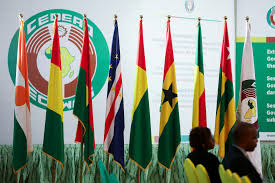
Eighty per cent of the judgements handed down by the Court of Justice of the Economic Community of West African States cannot be enforced a damning statistic that the court’s own president laid bare before Nigeria’s highest judicial officer in Abuja, underscoring a deepening compliance crisis that has long undermined the legitimacy and operational effectiveness of one of West Africa’s most important regional institutions.
Justice Ricardo Goncalves, President of the ECOWAS Court of Justice, made the disclosure during a courtesy visit to the Chief Justice of Nigeria, Justice Kudirat Kekere-Ekun, in which he led a delegation of judges from the regional court. The visit was specifically aimed at soliciting the CJN’s active support to compel member states, particularly Nigeria, to honour and implement the court’s verdicts.
According to a statement signed by the CJN’s media aide, Mr Tobi Soniyi, three Supreme Court justices — Inyang Okoro, Adamu Jauro, and Chioma Iheme-Nwosu — were also present at the meeting, which formed part of the broader Bilateral Meeting on the Status of the Judgements of the Community Court of Justice of ECOWAS.
Justice Goncalves was unambiguous in laying the blame for the enforcement crisis on a fundamental absence of political will within member states, identifying Nigeria specifically as a country whose compliance could serve as a catalyst for the rest of the sub-region.
“If Nigeria enforces the court’s judgements, other member states will follow suit,” he said, urging Africa’s most populous nation to assume a leadership role commensurate with its regional stature.
The ECOWAS Court of Justice was established under the Revised Treaty of the Economic Community of West African States in 1993 and became operational with expanded jurisdiction in 2005. It was empowered to adjudicate cases involving human rights violations, disputes between member states, and matters arising from community law. Over the years, the court has delivered hundreds of judgements covering a wide range of issues — from unlawful detention and the suppression of civil liberties to labour rights abuses and violations of fundamental freedoms.
Its rulings have applied to Nigeria, Ghana, Senegal, The Gambia, Niger, Togo, and other member states. Yet despite the court’s mandate and the binding nature of its decisions under ECOWAS treaty obligations, the enforcement architecture has consistently proven inadequate. Unlike domestic courts that can rely on sheriffs, bailiffs, and national security forces to execute their orders, the ECOWAS court has no independent mechanism to compel compliance. It depends almost entirely on the goodwill and political disposition of member state governments — a dependence that Justice Goncalves’s statistics make painfully plain.
The 80 per cent non-enforcement figure is not merely a bureaucratic inconvenience. It effectively renders the court’s decisions advisory in practice, even where they are binding in law. For litigants who endure years of proceedings only to be awarded judgements that governments decline to execute, the gap between legal entitlement and practical remedy is enormous.
Nigeria’s relationship with the ECOWAS Court has been publicly contentious. The federal government had, as recently as 2024, openly pushed back against the court’s authority at the highest levels.
At the opening session of the statutory meeting of the ECOWAS Judicial Council held in Abuja, the Attorney-General of the Federation and Minister of Justice, Prince Lateef Fagbemi, SAN, who appeared on behalf of the Federal Government, urged the regional court to exercise greater restraint and self-awareness in its orders.
Fagbemi argued that certain judicial pronouncements emanating from the ECOWAS Court were “practically incapable of enforcement,” calling on the institution to pay closer attention to the peculiarities of individual member states before delivering its verdicts. He further argued that there was a “dire need to promote and deepen alternative dispute resolution measures within the region,” a position that critics interpreted as an attempt to redirect disputes away from the court’s jurisdiction.
The AGF’s remarks reflected a longstanding tension between Nigeria’s domestic legal and political architecture and the demands of supranational adjudication. Successive Nigerian administrations have grappled with court awards requiring financial payments, releases of detained individuals, or policy reversals — outcomes that often require either legislative appropriation or executive action that governments have been unwilling to take.
Prominent cases have included compensation orders involving Nigerian citizens detained by security forces, media freedom rulings, and judgements concerning minority rights and political prisoners. In several instances, the federal government or its agencies simply declined to comply, leaving successful litigants with paper victories and no practical remedy.
Justice Kekere-Ekun received the delegation with what observers described as a combination of acknowledgement and measured restraint. She commended the ECOWAS Court for what she termed its “landmark and impressive judgements on enforcement of fundamental human rights in the sub-region,” a recognition that gave institutional credibility to the court’s jurisprudential record even as its enforcement difficulties were being discussed.
The CJN, however, was careful not to overstate the judiciary’s independent capacity to resolve the problem. She stressed that enforcing the court’s decisions lies mainly with the executive arm of government — an important constitutional clarification that accurately reflects the separation of powers but also signals the structural constraints within which any judicial cooperation can operate.
She advised the ECOWAS Court to use the bilateral meeting to develop a uniform procedure for the enforcement of its decisions, and she urged judges to consult widely with stakeholders to rework existing guidelines. The CJN also pledged support for training cooperation through the National Judicial Institute.
Her call for new enforcement guidelines reflects a wider recognition that the institutional framework governing compliance has not evolved to match the court’s expanding caseload and jurisprudential ambition.
The enforcement crisis at the ECOWAS Court is not unique to West Africa. Regional courts globally from the Inter-American Court of Human Rights to the African Court on Human and Peoples’ Rights face similar challenges in bridging the gap between judicial pronouncement and practical compliance. States that ratify treaty obligations and accept court jurisdiction often discover, when those courts rule against them, that domestic political costs outweigh the diplomatic and reputational costs of non-compliance.
In West Africa, the problem is compounded by a political environment characterised in recent years by coups, democratic backsliding, and the formal withdrawal of several member states including Mali, Burkina Faso, and Niger from ECOWAS itself following military takeovers. Those departures have strained the community’s institutional coherence and reduced the peer pressure that regional membership once exerted on governments reluctant to honour their treaty obligations.
Within the remaining member states, the absence of a dedicated enforcement mechanism equivalent, for instance, to the contempt powers available to domestic courts means that the ECOWAS court must rely on diplomacy, persuasion, and the political calculations of national governments rather than legal compulsion.
For human rights defenders, journalists, and ordinary citizens who have won judgements in Abuja against their own governments, the practical impact of this systemic failure is severe. The court’s decisions, however carefully reasoned and legally sound, remain largely symbolic unless backed by political will at the national level.
The Bilateral Meeting on the Status of the Judgements of the Community Court of Justice of ECOWAS, in the margins of which the courtesy visit to the CJN took place, represents one institutional avenue through which reform-minded stakeholders hope to advance progress. Discussions at such meetings have previously covered reporting mechanisms, liaison structures between the community court and national judiciaries, and proposals for automatic legislative domestication of ECOWAS court decisions.
Whether the current round of engagement will produce a different outcome depends, as it always has, on the political commitment of member state governments particularly Nigeria, whose size, economic weight, and democratic tradition make it the most consequential actor in the enforcement debate.
Justice Goncalves’s direct appeal to the CJN was a deliberate strategy to engage Nigeria’s judiciary as a potential bridge between the regional court and the executive branch. Nigerian judges, including those of the Supreme Court, cannot compel the presidency or the AGF’s office to execute ECOWAS judgements. But sustained judicial advocacy — including public statements, joint frameworks, and institutional endorsement can raise the reputational stakes for non-compliance and build a domestic constituency for reform.
Whether Chief Justice Kekere-Ekun’s measured response translates into sustained institutional engagement remains to be seen. Her pledge of support through training cooperation and her call for new enforcement guidelines are constructive starting points, though observers note they fall well short of the decisive political pressure that Justice Goncalves was visibly hoping to receive.
The ECOWAS Court’s predicament empowered by law, constrained by politics is ultimately a test of how seriously the nations of West Africa take their own regional commitments. As Justice Goncalves made clear in Abuja, Nigeria’s answer to that question carries weight far beyond its own borders.