


Nigeria Rejects Claims Of Accepting Foreign Deportees In UK Deal
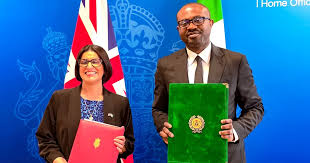
Fresh concerns over a new migration agreement between Nigeria and the United Kingdom have prompted the Presidency to issue a formal clarification, insisting the arrangement applies strictly to Nigerian nationals without legal status in the UK.
Temitope Ajayi, Senior Special Assistant to the President on Media and Publicity, stated in a post published on X on Friday that the agreement does not permit the return of non-Nigerians into the country. His clarification followed widespread reports and public commentary suggesting that Nigeria had agreed to accept foreign deportees from the UK.
“For clarity, it is important to state that the agreement signed by the Minister of Interior, Olubunmi Tunji-Ojo, during the state visit of President Bola Ahmed Tinubu, on behalf of the Government of Nigeria, and the UK Home Secretary, Shabana Mahmood, only relates to Nigerians who do not have legal status to live and remain in the UK,” Ajayi said.
He added: “The Nigerian government is not taking back non-Nigerians. The UK government is not compelling Nigeria to take those who are not our citizens. This clarification becomes necessary because of those who have already revved up their misinformation machinery.”
The agreement, signed on Thursday, forms part of broader efforts by both countries to manage migration flows and strengthen bilateral cooperation on border control. It was concluded during President Tinubu’s official visit to the United Kingdom, with Nigeria’s Minister of Interior, Olubunmi Tunji-Ojo, signing on behalf of the federal government, while UK Home Secretary Shabana Mahmood represented the British government, according to the UK Home Office.
Available details indicate that the arrangement targets specific categories of individuals, including failed asylum seekers, visa overstayers, and foreign national offenders who are Nigerian citizens and have no legal right to remain in the UK.
The Federal Ministry of Interior, in a separate statement, explained that the agreement establishes a structured framework for the return and reintegration of affected individuals. The ministry noted that the process will involve secure travel documentation and case-by-case identity verification to confirm nationality before any return is carried out.
Provisions within the deal also include safeguards for vulnerable persons, particularly individuals who may be victims of human trafficking or exploitation. Authorities said such cases would be handled with additional protections in line with international obligations and domestic legal standards.
Ajayi further stated that Nigerians returned under the agreement would retain their rights under Nigerian law and would be treated with dignity throughout the process. He added that the arrangement does not permanently bar returnees from the UK, noting that individuals may be eligible to re-enter if they meet future immigration requirements.
Another key feature of the agreement is the introduction of administrative measures aimed at addressing documentation challenges that often delay deportation processes. Under this provision, Nigeria may accept “UK letters” as temporary identification documents for individuals who do not possess valid passports, enabling authorities to proceed with returns after due verification.
Beyond deportation procedures, the agreement outlines areas of institutional cooperation between both countries. These include information sharing, capacity building, training programmes, and joint research initiatives focused on migration management and border security.
Migration agreements of this nature are not new in Nigeria’s diplomatic history. Over the years, the country has entered into similar arrangements with European partners as part of wider international efforts to curb irregular migration and human trafficking. These agreements often reflect obligations under global frameworks such as the International Organisation for Migration’s return and reintegration programmes and bilateral commitments on border governance.
Nigeria remains a significant country of origin for migrants to Europe, driven by a mix of economic, social, and security factors. Data from international migration agencies have consistently shown that irregular migration routes, particularly through North Africa and the Mediterranean, pose risks to migrants and present enforcement challenges for destination countries.
The latest agreement appears to align with ongoing UK policies aimed at tightening immigration controls and accelerating the removal of individuals without lawful residence. At the same time, Nigerian authorities have maintained that any cooperation must respect national sovereignty and the rights of citizens.
Public reaction to the agreement has remained mixed, largely due to initial misinterpretations about its scope. The Presidency’s clarification seeks to address those concerns by drawing a clear distinction between the return of Nigerian nationals and the alleged acceptance of foreign deportees.
As implementation begins, attention is expected to focus on how both governments manage verification processes, protect vulnerable individuals, and ensure that reintegration measures are effectively carried out within Nigeria.