

Nigeria, UN Expand Women & Youth Development Partnership
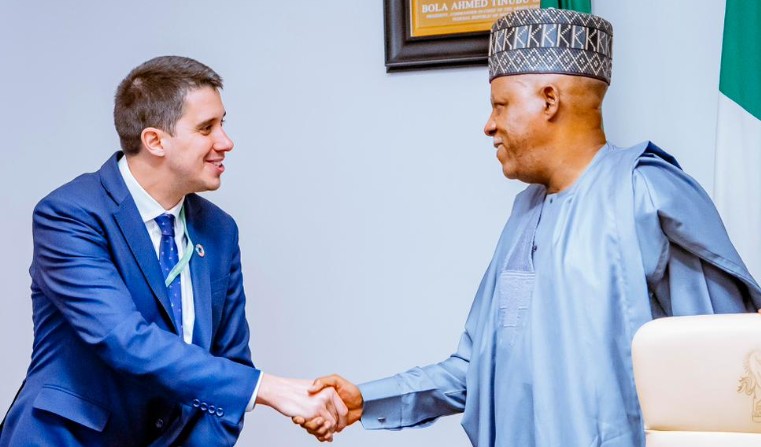
Nigeria will deepen its collaboration with the United Nations to fast-track the economic empowerment of women and young citizens. Vice President Kashim Shettima confirmed the plan during a meeting with UN Assistant Secretary General on Youth Affairs, Felipe Paullier, in Abuja on Thursday. The renewed pact focuses on financial inclusion, job creation, and technical skills development. Government officials believe these sectors hold the key to national stability. President Bola Tinubu views the country’s youthful population as a primary engine for growth. This shift aims to move beyond treating young Nigerians as mere statistics.
The administration plans to create new institutional mechanisms to manage these international partnerships. These bodies will oversee the delivery of empowerment programmes across the thirty-six states. Mr Shettima argued that the youth act as the backbone of any societal change. He noted that the government intends to turn a looming demographic bulge into an economic dividend. Without such interventions, a large, idle population poses a significant risk to internal security. The Vice President insisted that gender equality remains a central pillar of this strategy.
Dr Paullier chose Nigeria for his first official visit due to its influence on global youth trends. He noted that the UN General Assembly established a dedicated youth office in 2022 to protect human rights and improve vocational training. The UN delegation intends to align its global resources with Nigeria’s specific development goals. This support supplements existing work done by various UN agencies already on the ground. International observers see Nigeria as a crucial testing ground for large-scale youth policies. Success here could provide a template for other emerging economies.
Economic progress in West Africa depends largely on how well Nigeria integrates its young people into the formal economy. Access to credit and modern education remains the greatest hurdle for most aspiring entrepreneurs. Dr Paullier emphasised that innovation accelerates only when authorities place the youth at the centre of decision-making. The UN aims to bridge the gap between local talent and global opportunities. Proper investment in this demographic could solve chronic unemployment issues.
The federal government has pledged to prioritise peace and security as a foundation for these economic goals. Conflicts often disproportionately affect women and prevent young people from accessing schools or markets. By partnering with the UN, Nigeria seeks to adopt international best practices in social protection. This cooperation should help standardise skills training to meet global demands. Mr Shettima believes this approach will future-proof the nation against economic shocks.
Nigeria’s commitment to gender equality serves as a pragmatic move rather than a mere social gesture. Evidence suggests that empowering women leads to better health and education outcomes for the next generation. The administration claims it will ensure women have equal access to the new financial inclusion tools. Critics will watch closely to see if these institutional mechanisms produce tangible jobs. For now, the rhetoric from the Presidential Villa suggests a high level of urgency.