

“Nigeria Will Not Become a One-Party State” — ADC
The African Democratic Congress has declared its determination to participate in the 2027 general election on its own platform, defying the Independent National Electoral Commission’s decision to derecognise its leadership. The declaration comes amid a protracted leadership crisis that has tested the party’s institutional resilience and raised questions about the regulatory framework governing political parties in Nigeria.
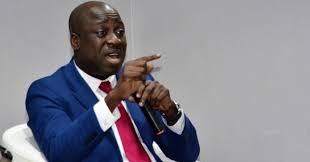
Speaking on Channels Television’s Politics Today on Tuesday, National Publicity Secretary Bolaji Abdullahi expressed unwavering confidence in the party’s legal position and electoral prospects. “One thing I can guarantee is that we will contest the 2027 election on the ADC platform,” he stated. The assertion signals the party’s refusal to capitulate despite INEC’s withdrawal of recognition from its competing factions, a move triggered by a subsisting court order that has cast uncertainty over the party’s leadership structure.
The electoral commission’s position has placed the ADC in a precarious situation, yet Abdullahi maintained that the party retains faith in the judicial system to resolve the impasse. “Regardless of what has happened in Nigeria, we still have confidence in the judiciary. We believe we have a slam-dunk case,” he said. “While we are hoping for the best, we are also preparing for the worst.”
The spokesperson revealed that the party had fulfilled statutory obligations by formally notifying INEC of its planned congresses, suggesting that the commission’s subsequent actions contradict its earlier acknowledgments. “If the same INEC that swore in an affidavit that it was aware of the leadership change in the ADC is now turning around to say what they are saying, they are not going to stop us,” Abdullahi stated.
The ADC’s stance includes a firm rejection of electoral boycott as a tactical response. Abdullahi characterised withdrawal from the process as counterproductive, remarking, “We are not going to boycott. Like I said, to boycott is to surrender. I mean, you boycott, you make headlines — then what?”
The party’s rhetoric has taken a sharper edge regarding the political environment, with Abdullahi accusing the ruling All Progressives Congress and President Bola Tinubu of systematic efforts to consolidate power and marginalise opposition voices. “We in the African Democratic Congress are saying that Nigeria will not become a one-party state in our generation. We will do everything within the law to resist it,” he declared. The spokesperson alleged that the administration aims to engineer a political landscape where “President Bola Ahmed Tinubu will be the only viable contestant” in 2027.
Despite the institutional turbulence, Abdullahi emphasised that the ADC views itself as a vehicle for Nigerians seeking alternatives to the dominant political formations. The party’s insistence on maintaining its electoral presence underscores broader tensions within Nigeria’s multi-party system, where smaller parties frequently confront structural and regulatory obstacles that threaten their survival.
The crisis highlights ongoing challenges in the relationship between INEC and registered political parties, particularly regarding leadership disputes and the commission’s authority to determine legitimate party structures. Legal practitioners and political analysts continue to monitor the case for its potential implications on electoral jurisprudence and opposition party rights in the lead-up to the 2027 election cycle.