


Nigerian Stock Market Loses N457 Billion as 23-Session Bull Run Ends
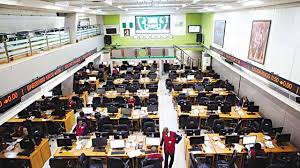
Investors on the Nigerian stock market suffered a loss of N457 billion on Thursday as the bourse reversed course after 23 consecutive sessions of gains, marking the end of one of the longest bullish streaks in recent trading history.
The downturn, which saw the market capitalisation shed 0.43 per cent, was attributed to widespread profit-taking across multiple sectors, with 41 declining stocks overwhelming 36 gainers in what analysts described as a natural pause following weeks of sustained upward momentum.
The Nigerian Exchange Ltd. market capitalisation, which opened trading at N106.780 trillion, closed at N106.323 trillion, representing the loss of N457 billion in investor wealth within a single session. The All-Share Index mirrored the decline, falling 714.66 points, or 0.43 per cent, to settle at 166,057.29 from Wednesday’s close of 166,771.95.
The selloff was particularly pronounced in mid-tier stocks. McNicholas topped the losers’ chart with a 9.99 per cent decline to N6.58 per share, while Caverton Offshore Support Group shed 9.47 per cent to close at N7.65. Ikeja Hotel followed closely, dropping 9.43 per cent to end the day at N35.05.
Read Also: Davido Loses ₦75 Million After Super Eagles Fall To Morocco
Other notable casualties included FTN Cocoa Processors, which fell 9.38 per cent to N7.05, and Neimeth International Pharmaceutical, which lost 8.91 per cent to close at N9.20 per share. In total, 36 other stocks recorded losses, contributing to the negative market breadth.
Despite the overall decline, several blue-chip and mid-cap stocks posted significant gains. Nestlé Nigeria led the gainers with a 10 per cent increase, settling at N2,153.80, while NCR Nigeria gained 9.97 per cent to close at N116.90. Jaiz Bank rose 9.92 per cent to N8.20, Morison Industries added 9.90 per cent to finish at N5.66, and Mecure Industries appreciated 9.84 per cent to close at N97.70 per share.
Trading activity showed mixed signals. A total of 1.03 billion shares valued at N31.6 billion changed hands across 51,227 deals, compared with 761.9 million shares worth N29.9 billion traded in 55,751 transactions during the previous session. This represented a 36 per cent increase in volume and a six per cent growth in value, but an eight per cent decline in the number of deals executed.
Zenith Bank dominated trading value, recording N5.03 billion in transactions, which accounted for 15.92 per cent of the total value traded for the day. In terms of volume, Access Corporation and Zenith Bank led the market, accounting for 7.58 per cent and 7.00 per cent of total shares traded, respectively.
Market analysts viewed Thursday’s decline as a healthy correction rather than a cause for alarm. Mr David Adonri, Vice President of Highcap Securities, attributed the downturn to market fatigue following the prolonged rally.
“The market had been fatigued after prolonged sessions of a relentless rally and therefore needed to rest,” Adonri said, describing the development as normal market behaviour. He explained that investors were beginning to reposition their portfolios in anticipation of the earnings season, when publicly listed companies would disclose their financial performance to shareholders and the investing public.
Adonri expressed confidence that the market would regain momentum in the near term, suggesting that the pause represented a tactical adjustment rather than a fundamental shift in market sentiment.
The 23-session bull run that preceded Thursday’s decline had been one of the most sustained rallies on the Nigerian Exchange in recent memory, driven by a combination of factors including improved macroeconomic indicators, corporate earnings optimism, and increased participation by both institutional and retail investors.
However, profit-taking after such extended gains is a common occurrence in equity markets, as investors seek to lock in returns accumulated during periods of sustained growth. The timing of Thursday’s selloff, just ahead of the earnings season, also reflects strategic repositioning as market participants await corporate financial disclosures that could influence future valuations.
Read Also: US Suspends Immigrant Visa Processing For Nigeria, Ghana,
The Nigerian stock market has experienced significant volatility over the past year amid broader economic challenges including high inflation, currency pressures, and elevated interest rates. Despite these headwinds, the market has shown resilience, with the All-Share Index recording substantial gains since the beginning of the year.
The upcoming earnings season, during which listed companies will release their financial results for the previous quarter, is expected to provide clarity on corporate performance and could determine the market’s trajectory in the coming weeks. Analysts anticipate that strong earnings reports could reignite investor appetite and trigger another upward cycle, while disappointing results could deepen profit-taking and lead to further corrections.
Thursday’s negative market breadth, with losers outnumbering gainers by 41 to 36, indicates that the selloff was broadly distributed across sectors rather than concentrated in specific industries. This pattern suggests a general reassessment of valuations following the recent rally rather than sector-specific concerns.
The Nigerian Exchange has implemented various reforms aimed at deepening the market and attracting both domestic and foreign investors. These include efforts to improve market infrastructure, enhance transparency, and facilitate easier access to trading platforms. The resilience demonstrated during the 23-session bull run reflects growing confidence in the market’s structural improvements.