
NLC Links Petrol Price Surge to Middle East Crisis
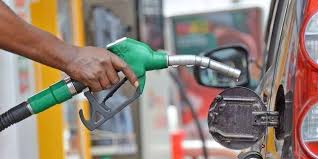
The Nigeria Labour Congress has called on the Federal Government to deploy projected oil revenue windfall from the ongoing Middle East crisis to protect Nigerian workers and citizens from the economic impact of petrol prices that have surged to between N1,170 and N1,300 per litre across the country.
In a statement issued Thursday by its President, Joe Ajaero, the labour union linked the recent price spike to escalating military tensions involving the United States, Israel, and Iran, which have triggered volatility in global oil markets and imposed unbearable pressure on workers already grappling with severe economic hardship.
The NLC cited projections from the Nigeria Economic Summit Group indicating that Nigeria could earn approximately N30 trillion in oil windfall as a result of the Middle East crisis, and insisted that such revenue must be channeled directly toward alleviating citizens’ suffering.
“The about N30 trillion oil windfall expected to accrue to Nigeria as a result of the current Middle East war must not grow wings but should be invested in the Nigerian people,” the union stated, describing the petrol price increase as “a direct assault on the Nigerian people.”
The labour body demanded immediate implementation of a wage award and cost of living allowance for workers, expanded cash transfers for vulnerable citizens, tax relief for low-income earners, and a clear timeline for the operationalization of all public refineries in Port Harcourt, Warri, and Kaduna.
Ajaero said the military escalation in the Middle East has sent shockwaves through global oil markets, forcing Nigeria’s downstream petroleum sector to adjust prices upward despite the country being a major crude oil producer.
“The military escalation involving the U.S., Israel, and Iran has sent shockwaves through global oil markets. Consequently, petrol prices in Nigeria have skyrocketed to between N1,170 and N1,300 per litre,” the statement read. “This is a direct assault on the Nigerian people. While imperialist rivalries play out with bombs abroad, our working class is bombarded with poverty and hunger because we have refused to ensure that our public refineries are operational.”
The NLC’s intervention comes amid growing public frustration over fuel price instability following the removal of petrol subsidy in May 2023. President Bola Ahmed Tinubu announced the subsidy removal during his inauguration speech, triggering an immediate price jump from an average of N195 per litre to over N500 per litre within weeks. Subsequent adjustments have seen prices climb steadily, with the Nigerian National Petroleum Company Limited adjusting its pump price multiple times in response to foreign exchange volatility and global crude oil price movements.
Nigeria’s four public refineries in Port Harcourt, Warri, and Kaduna have remained largely non-functional for over a decade despite successive governments spending billions of naira on turnaround maintenance. The Port Harcourt refinery, with a combined installed capacity of 210,000 barrels per day across its old and new plants, has been undergoing rehabilitation since 2021 under a $1.5 billion contract awarded to Tecnimont S.p.A, an Italian engineering firm. The Warri refinery has a nameplate capacity of 125,000 barrels per day, while the Kaduna refinery is designed to process 110,000 barrels per day, bringing the total installed refining capacity of Nigeria’s public refineries to 445,000 barrels per day.
However, none of these facilities has operated at optimal capacity in recent years, forcing Nigeria to import the bulk of its refined petroleum products despite being Africa’s largest crude oil producer. According to data from the Nigerian Upstream Petroleum Regulatory Commission, Nigeria produced an average of 1.25 million barrels of crude oil per day in 2024, far below its OPEC quota of 1.5 million barrels per day, but still substantial enough to meet domestic refining needs if the public refineries were functional.
The NLC statement highlighted that the privately owned Dangote Refinery, which commenced operations in 2024 with a capacity of 650,000 barrels per day, has also adjusted its prices in response to global market volatility, indicating that even private sector refining capacity is not insulated from international price shocks.
“This crisis has brutally exposed the fragility of Nigeria’s downstream sector. As long as we remain dependent on a market-driven pricing structure tied to global vicissitudes, we will remain hostages to wars and speculators,” the NLC said, warning that rising fuel prices have already increased transportation costs and accelerated food inflation across the country.
The labour union noted that the cost of Premium Motor Spirit and Automotive Gas Oil has made transportation unaffordable for workers, compounding the effects of broader inflationary pressures that have eroded purchasing power.
“The cost of PMS and AGO has made transportation a noose around workers’ necks. Food inflation is galloping, and meagre wages are being swallowed by this induced scarcity,” the statement added.
Nigeria’s inflation rate stood at 24.86 percent in January 2026 according to the National Bureau of Statistics, with food inflation at 28.12 percent, driven largely by transportation costs, currency depreciation, and persistent insecurity affecting agricultural production in key farming regions.
The NLC’s demand for immediate wage awards and cost of living allowances follows protracted negotiations between organized labour and the Federal Government over a new national minimum wage. In July 2024, President Tinubu signed the National Minimum Wage Act 2024, raising the minimum wage from N30,000 to N70,000 per month. However, labour unions have consistently argued that the new wage is insufficient given the prevailing economic realities, particularly the removal of petrol subsidy and floating of the naira, which have driven up the cost of living.
The labour body emphasized that the projected oil revenue windfall presents an opportunity for the government to cushion the impact of global market shocks on ordinary Nigerians, stressing that such funds should not be diverted or mismanaged.
“We are not a statistic; we are the engine of this nation. When the engine overheats, the entire vehicle crashes. We demand action. We demand justice. We demand survival,” the statement concluded.
The NLC’s call for expanded cash transfers aligns with the Federal Government’s existing Conditional Cash Transfer program, which currently reaches approximately 12 million households according to the National Social Safety Nets Coordinating Office. However, labour unions have argued that the coverage is insufficient and disbursement amounts inadequate given the scale of economic hardship facing Nigerians.
The union also demanded tax relief for low-income earners, a proposal that would require amendments to the Finance Act and potentially reduce government revenue at a time when fiscal pressures are mounting. The Federal Inland Revenue Service reported total tax revenue of N12.3 trillion in 2024, representing approximately 60 percent of the Federal Government’s total revenue as oil revenues declined due to production challenges and theft.
The Middle East crisis referenced by the NLC involves escalating military confrontations between Israel and Iran, with the United States maintaining significant military presence in the region. Global oil prices have responded to the tensions with increased volatility, with Brent crude trading above $85 per barrel in recent weeks compared to an average of $78 per barrel in the fourth quarter of 2025. Nigeria’s crude oil grade, Bonny Light, typically trades at a premium to Brent crude and has seen corresponding price increases.
While higher crude oil prices could translate to increased revenue for Nigeria as an oil-exporting nation, the benefits are offset by the country’s continued dependence on imported refined petroleum products, which become more expensive as global prices rise. This structural imbalance has long been identified as a critical vulnerability in Nigeria’s economy, with successive governments failing to achieve sustained refinery operations despite public commitments.
The NLC stressed that meaningful engagement between government and organized labour is essential to address the worsening economic situation and prevent social unrest.
The Federal Government has not issued an official response to the NLC’s demands as of the time of this report. However, government officials have previously argued that subsidy removal was necessary to free up fiscal resources for critical infrastructure and social investments, and that market-based pricing would ultimately attract private sector investment in refining capacity.
The labour union’s statement signals growing impatience among workers and ordinary Nigerians over the pace of economic reforms and the absence of effective palliatives to cushion the impact of policy adjustments that have significantly eroded living standards.