
NPC Endorses Disu As Substantive Inspector-General
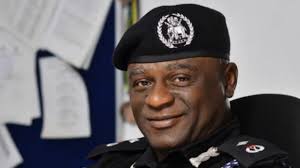
The National Police Council has unanimously endorsed the appointment of Olatunji Disu as the substantive Inspector-General of Police, bringing formal closure to a succession process that began with the abrupt resignation of former IGP Kayode Egbetokun last week.
The endorsement came on Monday following a meeting at the State House in Abuja, which lasted approximately 40 minutes and was chaired by President Bola Tinubu. Bayo Onanuga, the Special Adviser to the President on Information and Strategy, confirmed the outcome to journalists after the session. “Yes, they have unanimously endorsed Disu as IGP,” Onanuga said.
The meeting, which commenced at around 2:15 pm when Tinubu arrived at the Council Chamber, was convened in compliance with the Police Act 2020, which mandates that the Police Council formally consider the appointment of an Inspector-General before the nominee’s name is transmitted to the Senate for confirmation. The council is chaired by the President and comprises all 36 state governors, the Chairman of the Police Service Commission, and the Inspector-General of Police.
Those in attendance included Vice President Kashim Shettima, the Secretary to the Government of the Federation George Akume, National Security Adviser Nuhu Ribadu, Head of Civil Service Didi Walson-Jack, and the governors of Enugu, Nasarawa, Ogun, Kwara, Plateau, Ondo, and Lagos states. The Deputy Governor of Kogi State also attended, alongside the ministers of the Federal Capital Territory, Police Affairs, and Interior.
Disu, 59, has been serving in an acting capacity since his appointment on Wednesday, the day following Egbetokun’s exit. With Monday’s endorsement, his name is expected to be forwarded to the Senate for screening and confirmation in line with constitutional requirements.
The Presidency had signalled the council meeting in a statement it issued last week when announcing Egbetokun’s resignation. “In compliance with the provisions of the Police Act 2020, President Tinubu will convene a meeting of the Nigeria Police Council shortly to formally consider the appointment of AIG Disu as substantive Inspector-General of Police, after which his name will be transmitted to the Senate for confirmation,” Onanuga stated at the time.
Two senior officials within the Presidency and the police establishment had separately confirmed on Sunday that the meeting would hold on Monday. “The Police Council Meeting is on Monday,” one of the sources said. A second source, described as familiar with the President’s schedule, also confirmed the gathering, noting, “Yes, we are meeting on Monday. The usual time for FEC meetings is 12:00 or 1:00 pm.”
The circumstances surrounding Egbetokun’s departure have remained a subject of scrutiny. While his resignation letter officially cited “family issues” as the reason for his exit, reports emerged over the weekend indicating that he was summoned to the Presidential Villa on a Monday evening and informed that he would need to step down. The contrast between the stated reason and the reported circumstances of his departure has drawn attention, though the Presidency has not publicly addressed the discrepancy.
The Police Act 2020, which replaced the Police Act of 1943, was signed into law by former President Muhammadu Buhari and represented a significant legislative overhaul of the framework governing Nigeria’s police administration. Among its provisions is the requirement that the Police Council, as a constitutionally recognised body, play a formal role in validating the appointment of the country’s top police officer. The council’s composition, spanning the presidency, all state governments, and key security and administrative offices, is designed to give the appointment a degree of federal character and institutional legitimacy before the Senate exercises its confirmation powers.
The position of Inspector-General of Police is one of the most consequential appointments in Nigeria’s security architecture. The IGP oversees a force of over 300,000 personnel, manages internal security operations across all 36 states and the Federal Capital Territory, and reports directly to the President through the Minister of Police Affairs. The role has historically been at the centre of debates around police reform, funding, deployment, and accountability.
Disu’s emergence follows a pattern in which acting appointments are made swiftly to prevent a vacuum at the top of the command structure, with the formal endorsement and Senate confirmation process following thereafter. His confirmation, when eventually completed, will position him to lead the force at a time when internal security challenges, including banditry, kidnapping, and the persistent insurgency in the northeast, continue to test the institution’s capacity and public credibility.