
NRC to Deploy Electric Trains on Warri, Lagos Corridors
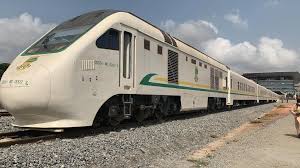
The Nigerian Railway Corporation has announced plans to introduce electric-powered trains on major rail corridors, beginning with the Warri and Lagos routes where domestic gas resources can provide reliable power generation for operations. Managing Director Kayode Opeifa disclosed the electrification strategy during an appearance on Sunrise Daily on Channels Television, framing the initiative as a critical component of broader efforts to reduce operating costs, improve service efficiency, and align Nigeria’s railway infrastructure with international standards.
The electrification programme builds upon a systematic modernisation effort that commenced in 2015, when the federal government began replacing antiquated narrow-gauge track systems with modern standard-gauge rail lines across the country. Completed projects under this transformation include the Abuja–Kaduna Railway, which connects the federal capital to the commercial hub of northern Nigeria; the Warri–Itakpe Railway linking the Niger Delta to the central region; the Lagos–Ibadan Railway serving the southwestern economic corridor; and the Abuja Rail Mass Transit system providing intra-city connectivity within the capital territory. Construction has also commenced on the ambitious Port Harcourt–Maiduguri corridor, a transnational project designed to establish direct rail linkage between Nigeria’s southern coastline and the far northeastern region.
Opeifa emphasised that infrastructure protection remains essential to sustaining these investments. He urged state governments to deepen collaboration with the Railway Police, which currently maintains operational presence across twenty-six states, to secure mobility corridors against vandalism and criminal interference. He referenced specific instances of successful inter-agency cooperation, notably the Railway Police’s deployment in support of the Oshodi transport hub clean-up operation in Lagos, as models for future coordination.
The constitutional and legal framework governing rail development in Nigeria has undergone significant transformation in recent years. Reforms have moved railway matters from the Exclusive Legislative List, which reserved such authority exclusively to the federal government, to the Concurrent List, thereby enabling subnational participation in rail development. Several states have initiated projects under this expanded jurisdiction: Lagos State continues expanding its metropolitan rail network; Kano State is developing connections to complement federal corridors; Ogun State is pursuing rail integration with Lagos industrial zones; and Plateau State has commenced planning for rail services linking its highland capital to broader national networks. The NRC has responded to this multilevel governance environment by developing a comprehensive national rail map designed to coordinate federal and state initiatives, prevent duplicative construction, and ensure interoperability between separately administered systems.
Operational challenges persist alongside infrastructure expansion. Opeifa addressed public concerns regarding ticket racketeering, the fraudulent resale of railway tickets at inflated prices that has plagued popular routes. He explained that the corporation has implemented a double verification protocol requiring passenger authentication both at station waiting areas and during final boarding procedures, specifically deployed on high-demand corridors where scalping has been most prevalent. Security monitoring capabilities have been enhanced particularly on the Abuja–Kaduna route, where passenger volumes have necessitated increasing daily service frequency to three round trips.
The corporation’s strategic vision extends beyond conventional passenger and freight services. Opeifa indicated that the NRC intends to leverage rail infrastructure for tourism development and entertainment purposes, recognising that modern railway systems globally generate substantial revenue through experiential and leisure travel. This diversification strategy aligns with the corporation’s stated objective of strengthening national integration through improved physical connectivity while positioning rail transport as a direct contributor to economic growth.
The electrification announcement represents a significant technological transition for Nigerian rail transport. Diesel locomotives have historically dominated the country’s railway operations, reflecting both the legacy of British colonial infrastructure development and subsequent decades of deferred maintenance and investment. Electric rail systems offer substantial operational advantages including higher speeds, reduced noise pollution, lower per-kilometre energy costs, and decreased carbon emissions, though they require substantially greater upfront capital investment in overhead catenary systems, substations, and grid connectivity.
The selection of Warri and Lagos as pilot corridors reflects strategic resource planning rather than merely traffic volume considerations. Both locations possess access to Nigeria’s extensive domestic natural gas reserves, which can fuel dedicated power generation facilities for rail electrification without dependence upon the national electricity grid, which remains characterised by chronic instability and insufficient generation capacity. This approach mirrors successful electrification strategies employed in other developing economies where grid unreliability has necessitated autonomous power solutions for critical infrastructure.
The 2015 commencement date for modernisation efforts corresponds with the administration of President Muhammadu Buhari, under whom railway rehabilitation emerged as a signature infrastructure priority. The subsequent completion of multiple standard-gauge lines during the 2015–2023 period represented the most substantial railway investment in Nigeria since the immediate post-independence decades of the 1960s, when the original narrow-gauge network constructed during colonial rule still received regular maintenance and incremental extension.
The Port Harcourt–Maiduguri corridor currently under construction revives a historical transportation vision dating to the early twentieth century, when British colonial administrators first surveyed potential east–west rail connections across northern Nigeria. The project’s realisation would establish the first direct rail linkage between the Niger Delta petroleum-producing region and the Lake Chad basin, potentially facilitating both agricultural commodity flows southward and petroleum product distribution northward while reducing pressure on road networks that have historically carried such freight.
State-level rail initiatives under the Concurrent List framework introduce both opportunities and coordination challenges. The Lagos State metropolitan rail system, developed independently of federal NRC operations, has already demonstrated substantial passenger demand for urban rail services, while Kano’s planned connections to the federal network could establish important interchange nodes for trans-Saharan freight movements. The national rail map developed by NRC serves as an essential planning instrument to prevent incompatible track gauges, mismatched station locations, or competing claims to limited rights-of-way in densely populated corridors.
Security concerns remain acute given Nigeria’s experience with infrastructure vandalism, particularly in the Niger Delta region where pipeline sabotage has historically disrupted petroleum operations and where rail infrastructure could face similar threats. The Railway Police’s current operational presence in twenty-six states provides substantial geographic coverage, though gaps remain in several states where rail lines traverse territory without dedicated security presence. The Oshodi clean-up operation cited by Opeifa represented a significant governance intervention in one of Lagos’s most congested transport nodes, where informal commercial activities had encroached upon rail corridors and formal motor parks, demonstrating the necessity of sustained inter-agency coordination for infrastructure protection.
Ticket racketeering has emerged as a predictable consequence of supply constraints on high-demand routes, particularly the Abuja–Kaduna service which offers a safer alternative to road travel through a region historically affected by armed banditry. The double verification system represents an administrative response to a market phenomenon driven by insufficient seating capacity relative to passenger demand, suggesting that further frequency increases or rolling stock expansion may ultimately prove necessary to eliminate the arbitrage opportunities that sustain scalping networks.