

Replacing Shettima on Religious Grounds Risky, Says APC Chieftain
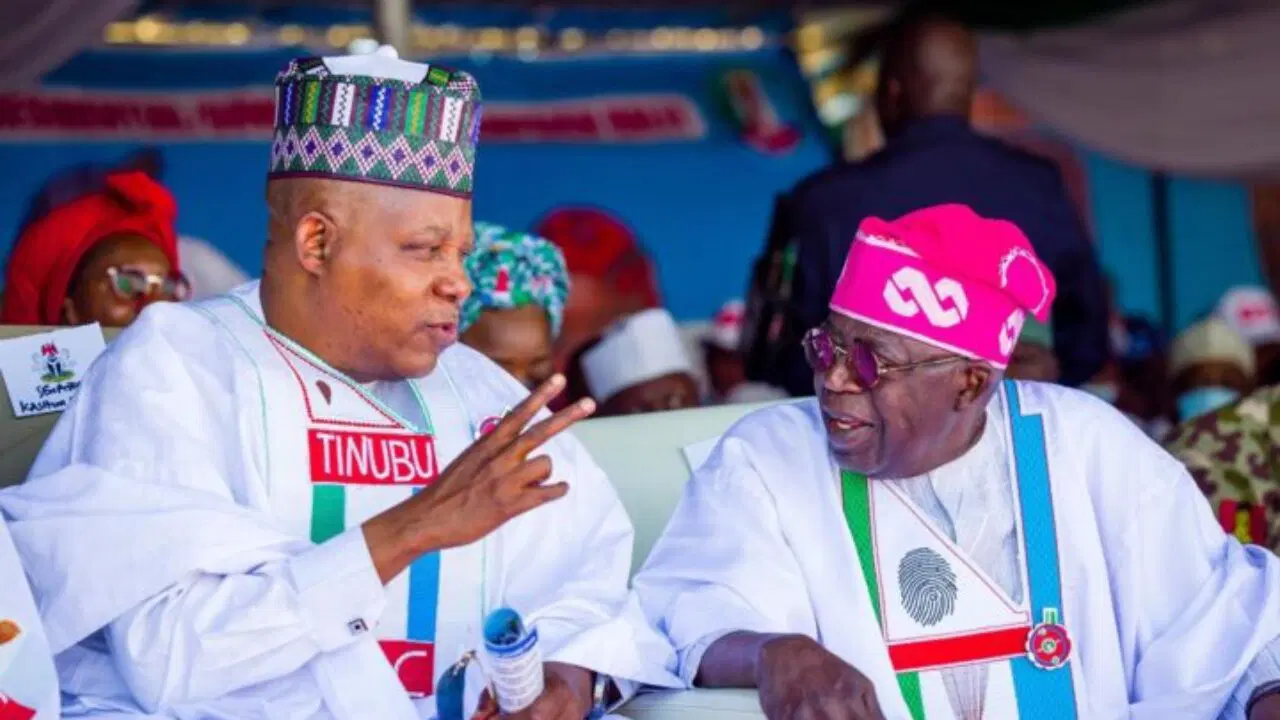
A chieftain of the All Progressives Congress and security expert, Abayomi Nurain Mumuni, has advised against calls to replace Vice President Kashim Shettima on the party’s ticket ahead of the 2027 general elections, cautioning that such a decision could undermine President Bola Ahmed Tinubu’s re-election chances.
Mumuni, who served as a member of the intelligence and security team of the Tinubu/Shettima Presidential Campaign Council during the 2023 presidential election, warned on Wednesday that replacing the vice president on religious grounds would be politically risky and could introduce unnecessary uncertainty into the administration.
His remarks come amid mounting speculation over the future of the Tinubu-Shettima partnership, following the controversial omission of Vice President Shettima’s photograph from a banner displayed at the North-East Zonal Public Hearing on the amendment of the APC constitution. The incident has fuelled public debate and triggered questions about the party’s vice-presidential slot for 2027.
Read Also: APC Rules Out Automatic Tickets For Defecting Governors Ahead Of 2027 Elections
Some voices within political circles have reportedly advocated for the substitution of Shettima with a Christian vice-presidential candidate, ostensibly to address concerns about religious balance on the ruling party’s ticket. President Tinubu, a Muslim from the South-West, and Vice President Shettima, also a Muslim from the North-East, have faced criticism from certain quarters over the Muslim-Muslim configuration of the 2023 ticket, a matter that generated considerable controversy during the last election cycle.
However, Mumuni argued that discussions about replacing Shettima may not align with prevailing political realities. He stated that, in his assessment, the northern region currently lacks a Christian candidate with sufficient grassroots support and nationwide appeal capable of complementing President Tinubu’s electoral strength.
“Decisions of this magnitude must be guided by political calculations and electoral realities, not sentiment,” Mumuni said, warning that any misstep could adversely affect the party’s electoral fortunes in 2027.
The APC chieftain also emphasised what he described as Vice President Shettima’s loyalty to President Tinubu and commitment to the administration’s policy direction. He noted that continuity in leadership often contributes to political stability and effective governance, particularly during the implementation phase of government programmes.
Mumuni cautioned that changing the vice president could introduce uncertainty, both within the ruling party and in public perception, especially at a time when the administration is still working to deliver on its mandate. He suggested that such a transition could affect policy coordination, administrative efficiency, and the working relationship between the president and his deputy.
“Maintaining cohesion and prioritising effective governance will best serve the country’s interests,” he said.
While acknowledging that calls for broader representation in leadership are legitimate and reflect genuine concerns among various segments of the Nigerian population, Mumuni urged party leaders to explore alternative ways of promoting inclusivity without disrupting the existing political arrangement.
He suggested that inclusivity could be strengthened through strategic appointments of qualified individuals with proven capacity and broad acceptance across the country’s diverse religious and ethnic communities. According to him, representation can be achieved through cabinet positions, key government agencies, and other strategic offices without necessarily altering the presidential ticket.
Read Also: APC Candidate Declares “Divinely Guaranteed” Victory in Osun 2026.
Mumuni further advised against drawing direct comparisons between Nigeria’s political environment and foreign examples, including recent developments in the United States. He noted that Nigeria’s political landscape requires solutions tailored to its unique social, cultural, and political dynamics, and that what works in other democracies may not necessarily be applicable or effective in the Nigerian context.
He outlined potential challenges that could arise from changing the vice president, including internal party tensions, questions of alignment between the president and a new running mate, and the need for such a candidate to build trust and working relationships within the administration and the party structure.
According to Mumuni, such a transition could also disrupt policy coordination and administrative efficiency during a critical political period, as a new vice president would require time to settle into the role and understand the workings of government at the highest level.
The APC chieftain maintained that retaining the Tinubu-Shettima ticket remains, in his view, the most viable option as preparations for the 2027 elections intensify. He called on APC stakeholders to focus on internal cohesion, constructive dialogue, and governance delivery, stressing that unity and strategic planning are essential for the party’s future electoral success.
The question of religious balance in Nigerian politics has been a recurring theme in the country’s electoral history. For decades, an unwritten convention known as the principle of balancing has guided the composition of major party tickets, with parties typically pairing presidential and vice-presidential candidates from different religions and regions to reflect Nigeria’s diversity.
The decision by President Tinubu and the APC to field a Muslim-Muslim ticket in the 2023 elections broke with this convention and generated significant public debate. Supporters of the decision argued that competence and loyalty should trump religious considerations, while critics warned that it could alienate Christian voters and deepen religious divisions.
Despite the controversy, the APC won the 2023 presidential election, though by a margin that reflected a deeply divided electorate. President Tinubu secured approximately 36 per cent of the vote in a four-way race, with significant opposition from the Peoples Democratic Party and the Labour Party.
As the 2027 elections approach, the question of whether to retain the Muslim-Muslim ticket or revert to a religiously balanced pairing has emerged as a key issue within the APC. Some party members believe that a Christian vice-presidential candidate could help broaden the party’s appeal, particularly in the South-East and parts of the North-Central region where Christian populations are significant.
However, others, including Mumuni, argue that changing the ticket could be perceived as a sign of weakness or internal disarray, and could alienate northern Muslim voters who supported the APC in 2023.
The omission of Vice President Shettima’s photograph from the APC zonal public hearing banner has been interpreted by some observers as a signal of dissatisfaction with the current arrangement, though party officials have not issued any formal statement on the matter.
Vice President Shettima, a former governor of Borno State, has been a prominent figure in Nigerian politics, particularly in the North-East. He is widely regarded as a key ally of President Tinubu and has been involved in major policy initiatives of the current administration, including economic reforms and security strategies.
Political analysts have noted that any attempt to replace Shettima would likely require careful negotiation within the APC, particularly given the vice president’s political base and his role in mobilising support for the party in the northern region.