
Rival ADC Factions Lay Siege to INEC
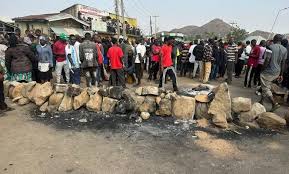
The leadership struggle within the African Democratic Congress (ADC) reached a fever pitch on Thursday as a faction led by Nafiu Gombe stormed the Independent National Electoral Commission (INEC) headquarters in Abuja. Accompanied by Kogi State lawmaker Leke Abejide, the group demanded formal recognition of Gombe as national chairman, claiming the party is under threat from “usurpers.” This protest follows a massive counter-demonstration just 24 hours earlier by a rival faction loyal to former Senate President David Mark. The dual sieges on the electoral umpire suggest a party in total structural collapse.
Gombe’s faction accused the David Mark leadership of attempting to “hijack” the party through the window rather than the front door. Abejide argued that the ADC constitution requires a two-year active membership before any individual can aspire to a leadership position, a swipe at the relatively recent arrival of the Mark-led group. He urged INEC to revert to the status quo ante bellum and affirm Gombe’s chairmanship to protect the party from “moneybags.” The commission’s National Commissioner, Abdullahi Abdu Zuru, accepted their petition, promising a formal review of the dispute.
The chaos at the INEC gates underscores a bizarre ideological split within the opposition. During Wednesday’s “#OccupyINEC” protest, Mark’s supporters—including members of the Kwankwasiyya movement—reportedly sang the defunct national anthem, “Arise, O Compatriots!” The choice to use the anthem replaced by President Bola Tinubu in 2024 served as a symbolic, if confused, act of defiance against the current political establishment. While Mark’s group claims INEC is undermining democracy, the Gombe faction ironically commended the commission for obeying recent court orders.
This internal warfare has effectively paralysed the ADC’s ability to function as a “third force” in Nigerian politics. The contradictory nature of the protests, one praising the regulator and the other condemning it, leaves INEC in a precarious legal position. With prominent former governors and presidential candidates picking sides, the dispute has transcended a simple administrative row and become a battle for the party’s soul. Such public fracturing rarely ends in reconciliation; it usually ends in the courtroom or at the graveyard of defunct political movements.
The involvement of the Kwankwasiyya movement suggests that the ADC’s crisis is being fueled by broader regional alliances looking for a stable platform ahead of 2027. If the party cannot resolve its chairmanship, it risks being deregistered or rendered ineligible for upcoming local and state contests. For now, the ADC exists as two separate entities sharing one name, each holding its own rallies and appointing its own committees. It is a recipe for electoral irrelevance.
As both factions retreat to plan their next moves, the ball remains in INEC’s court. The commission must decide which constitution and which membership register it recognises as authentic. Until that determination is made, the ADC remains a party of protesters rather than a party of candidates. Nigeria’s political history is littered with such divisions, and they almost always favour the ruling party by default.