

Russia Agrees to Stop Recruiting Kenyans For Ukraine War
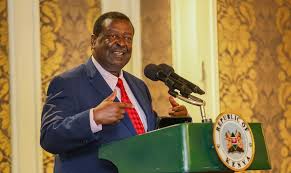
Russia has committed to ending the recruitment of Kenyan nationals into its military forces following high-level diplomatic talks in Moscow between Kenyan Foreign Minister Musalia Mudavadi and Russian Foreign Minister Sergei Lavrov on Monday, March 16, 2026.
Mudavadi announced the breakthrough agreement during a joint press briefing with Lavrov, confirming that Kenyan citizens would no longer be eligible for enlistment through the Russian Ministry of Defence in a move aimed at halting a recruitment pipeline that has sent over 1,000 Kenyans to fight in the Russia-Ukraine conflict.
“I want to make it clear that we have now agreed that Kenyans shall not be enlisted through the Ministry of Defence. They will no longer be eligible to be enlisted,” Mudavadi stated. “There will no further enlisting.”
The agreement follows mounting pressure from Kenyan families, civil society groups, and lawmakers who have described a shadowy network of recruitment agents, human traffickers, and rogue state officials who have lured Kenyans to Russia with false promises of high-paying civilian jobs, only to force them into military contracts and deploy them to the deadliest battlefields of the Ukraine war.
A Kenyan intelligence report presented to lawmakers in February 2026 revealed that more than 1,000 Kenyan citizens had been recruited to fight for Russia in Ukraine, a figure five times higher than authorities had previously estimated. The report warned that recruitment networks remained active and were continuing to target vulnerable Kenyans through social media platforms, travel agencies, and unregulated employment brokers.
Mudavadi described the recruitment as “unacceptable and clandestine” during interviews preceding his Moscow trip, acknowledging that affected families were gathering courage to speak publicly about their missing relatives. “We are getting a lot of pressure from some of the affected families who are now gathering more courage to come forward and speak to the issue,” he told Reuters before departing for Russia.
During the Moscow talks, Mudavadi emphasized that the issue was not intended as a confrontation but rather as an effort to protect Kenyan citizens from harm. “It’s not a confrontation,” he stated. “This is about speaking to issues as they are and the distress that they’re causing to the Kenyan people, and we need a joint effort to be able to resolve it.”
Lavrov did not directly address the recruitment ban in his public remarks but confirmed that the Russian Defence Ministry was examining cases that had caused concern among Kenyan officials. “Russia is not forcing anyone to enlist. Just as in the case of participation in the special military operation, volunteers join this operation in full compliance with Russian law,” Lavrov claimed, characterizing all recruitment as voluntary and legal.
However, testimonies from Kenyan recruits captured by Ukrainian forces and interviews with families of deceased soldiers paint a starkly different picture. Many Kenyans report being deceived into signing Russian-language military contracts they could not read or understand, having their passports confiscated, being threatened with death if they refused to deploy, and receiving minimal military training before being sent to front-line assault units.
The case of Evans Kibet, a 36-year-old Kenyan long-distance runner captured by Ukrainian forces near Vovchansk in August 2025, has become emblematic of the deceptive recruitment practices. Kibet told AFP in an interview from a Ukrainian detention facility that he had traveled to Russia in July 2025 for what he believed was a sporting event and exhibition race in St Petersburg.
“I was tricked. I didn’t know what I was doing,” Kibet stated in the interview. He said that after his visa expired, a Russian agent offered to extend his stay if he signed employment documents. “We signed this contract without reading it, without knowing what it was. We got ourselves in a situation where there was no return. I was told: ‘Either you go to fight or we’ll kill you,'” Kibet explained.
Kibet described being driven to a military training camp where he received only one week of basic weapons instruction before being deployed to the front lines near Kharkiv. He fled during his first combat mission and wandered through the battlefield for three days before surrendering to Ukrainian troops. “You go 10 metres and you see a dead body. You die there and nobody cares about you. You die like a dog,” he told German broadcaster Deutsche Welle.
Ukraine’s prisoner of war coordination headquarters spokesperson Petro Yatsenko confirmed that foreign nationals from Somalia, Sierra Leone, Togo, Cuba, Sri Lanka, Cameroon, Ghana, Nigeria, Uganda, and other countries are being held as prisoners of war after capture on the battlefield. “Very few are captured alive; most are either killed or seriously injured,” Yatsenko told the BBC.
Ukrainian intelligence estimates released in February 2026 indicate that more than 1,780 citizens from 36 African countries are currently fighting alongside Russian forces in Ukraine. A separate investigation by Swiss-based research organization INPACT documented 1,417 verified African recruits from 35 countries who signed contracts with the Russian Army between January 2023 and September 2025, including more than 300 who were killed within months of arriving at the front lines.
According to INPACT’s February 2026 report, the countries with the highest numbers of recruits were Egypt with 361 fighters, Cameroon with 335, Ghana with 234, The Gambia with 56, and Mali with 51. The report described the recruitment as “not an isolated phenomenon, but rather the core of a deliberate and organized strategy” designed to integrate African fighters into assault waves meant to overwhelm Ukrainian defensive lines through attrition warfare.
The recruitment scheme operates through a multi-layered network that begins in Russia before branching into national and local operations throughout Africa. INPACT researcher Lou Osborn told media outlets that one Russian recruiter admitted his travel agency was merely a front for Russia’s Federal Security Service, the FSB, which coordinates recruitment operations.
“There is one layer of recruitment which is directly managed from Russia,” Osborn explained. “We were even able to speak with a Russian recruiter who told us that actually his travel agency was not real and that it was a front for the Russian security services, the FSB, which was coordinating these recruitment efforts.”
Recruits are typically promised monthly salaries ranging from $2,000 to $3,500, sign-up bonuses exceeding $6,000, and Russian citizenship upon completion of their contracts. Many are told they will work as security guards, drivers, or in other civilian roles far from combat zones. Once they arrive in Russia, however, their passports are confiscated and they are forced to sign military contracts, often at gunpoint, before being given minimal training and deployed directly to front-line assault units.
Kenyan politicians have publicly accused rogue government officials of colluding with human trafficking syndicates to facilitate the recruitment. During parliamentary debates in February 2026, lawmakers demanded investigations into how Kenyans were able to travel to Russia, sign military contracts, and be deployed to Ukraine without detection by security agencies.
The recruitment scandal has also affected other African nations. Ghana’s Foreign Minister Samuel Okudzeto Ablakwa confirmed in February 2026 that more than 50 Ghanaian citizens had been killed in the Ukraine war after being “lured into battle” through deceptive recruitment schemes. Ablakwa told Reuters the true figure could be higher and warned that Ghanaians were being targeted through false job advertisements on the dark web.
“They have no security background. They have no military background. They have not been trained,” Ablakwa stated. “They were just lured and deceived and then put on the front lines.”
South Africa repatriated 17 of its citizens from the Donbas region in February 2026 after they reported being trapped in Ukraine following deceptive recruitment. South African authorities have launched a criminal investigation into allegations that Duduzile Zuma-Sambudla, a member of parliament and daughter of former President Jacob Zuma, was involved in luring men to Russia to fight in Ukraine under the guise of bodyguard training for a political party.
The Kenya-Russia recruitment agreement comes amid broader diplomatic efforts by African governments to address the issue without damaging longstanding bilateral relationships with Moscow. Kenya and Russia established diplomatic relations on December 14, 1963, just one day after Kenya gained independence from British colonial rule, making the Soviet Union the second country to recognize Kenyan sovereignty.
During the Cold War era, Kenya maintained cordial relations with the Soviet Union as a member of the Non-Aligned Movement. The Soviet Union offered scholarships to Kenyan students, funded infrastructure projects including the construction of what is now the Jaramogi Oginga Odinga Teaching and Referral Hospital in Kisumu, and provided diplomatic support for Kenya’s post-independence development.
President Uhuru Kenyatta visited Moscow in October 2019 to attend the Russia-Africa Summit, where Kenya and Russia agreed to establish a business council to oversee joint trade and investment programs. During that summit, Kenyatta acknowledged the Soviet Union’s role in supporting Kenya’s independence struggle, stating that “our founding fathers, including my own father Jomo Kenyatta, drew great vision from the Soviet Union.”
Mudavadi emphasized during his Moscow visit that Kenya sought to broaden bilateral cooperation beyond the Ukraine recruitment issue. “We do not want for any reason our partnership with Russia to be defined from the lenses of the special operation agenda only,” he stated. “The relationship between Kenya and Russia is much more broader than that.”
The foreign minister indicated that he also intended to negotiate agreements allowing Kenyans easier access to the Russian job market through legitimate, regulated channels. Kenya exports cut flowers, coffee, tea, fruits, and vegetables to Russia, while Russia exports cereals, iron and steel, fertilizers, and paper products to Kenya. Approximately 10,000 Russian tourists visit Kenya annually.
Russian Foreign Ministry spokeswoman Maria Zakharova stated on March 12, 2026, that Lavrov would discuss with Mudavadi the “state and prospects for the development of traditionally friendly Russian-Kenyan relations,” including economic and trade partnerships.
While Kenya has secured Russia’s commitment to end recruitment, significant challenges remain in repatriating Kenyans already serving in Russian military units and retrieving the remains of those killed in combat. Mudavadi told the BBC that families of deceased recruits have been unable to bury their loved ones because bodies remain in Ukraine or Russia. “It is difficult because, remember, it depends on where the body has been found. Some have been found in Ukraine. We are also working with the government of Ukraine to try and get the remains of those people repatriated,” he explained.
Kenya’s Principal Secretary for Foreign Affairs Korir Sing’oei confirmed that the Kenyan mission in Moscow is pursuing cases of individual Kenyans held as prisoners of war by Ukraine. Ukraine has indicated willingness to negotiate repatriation if Kenya makes formal requests, though many African governments have shown limited interest in actively seeking the return of citizens captured while fighting for Russia.
The broader pattern of foreign fighter recruitment by Russia reflects the severe manpower pressures facing Russian military forces as the conflict in Ukraine enters its fifth year. Since launching its full-scale invasion in February 2022, Russia has suffered catastrophic casualties estimated by Western intelligence agencies to exceed several hundred thousand killed and wounded.
To sustain combat operations without ordering politically sensitive mass mobilization of Russian citizens, the Kremlin has turned to recruiting foreigners through a combination of financial incentives for willing volunteers and coercive tactics targeting vulnerable populations in developing countries. In addition to African recruits, Russia has deployed thousands of North Korean soldiers to Ukraine, recruited fighters from Central Asian republics, and enlisted convicts from Russian prisons in exchange for pardons.
Danish researcher Karen Philippa Larsen, who studies Russian recruitment of foreign nationals, told Latvian news website Meduza that Russia has a “huge need for people to fight in this war” and that most foreign recruits lack military training. “Some of them say that their commanders directly told them that they would be killed if they left. They felt like they were prisoners on the front line,” Larsen stated.
The recruitment of Africans to fight in Ukraine has created diplomatic tensions for African governments seeking to maintain balanced relations with both Russia and Western nations while protecting their citizens from exploitation. Most African countries abstained from United Nations votes condemning Russia’s invasion of Ukraine, reflecting longstanding political and economic ties with Moscow dating to the Soviet era.
However, the human trafficking dimensions of recruitment schemes have forced African governments to take public positions. Nigeria’s foreign ministry issued an urgent warning in February 2026 about illegal recruitment of Nigerians for unnamed foreign conflicts following Ukrainian claims that bodies of two Nigerian nationals had been discovered on the battlefield.
The Nigerian statement warned citizens about “deployment to combat zones after being misled and coerced into signing military service contracts” through deceptive promises of employment, educational opportunities, and migration incentives written in foreign-language contracts.
Ghana has announced plans to raise public awareness about trafficking networks during its upcoming presidency of the African Union in 2027. Ablakwa described the recruitment issue as bigger than any single country and called for a continental response. “If Africans are being lured into a foreign war through deception and exploitation, then Africa should respond collectively,” he stated.
International Crisis Group senior consultant Pier Pigou suggested that the issue would likely not damage Russia-Africa relations significantly unless it triggered major political backlash. “For the vast majority of people it’s a case of ‘these dudes are just trying to earn a living. And because their countries don’t provide that for them, they’re going to take opportunities that arise,'” Pigou told Reuters.
The Kenya-Russia agreement represents the first publicly announced commitment by Moscow to cease recruitment from a specific African country. Whether Russia will honor the commitment and extend similar agreements to other African nations remains unclear, as the Russian Defence Ministry did not respond to requests for comment on recruitment practices.
Mudavadi described himself as “pragmatic and realistic” about engaging Russia on the issue, acknowledging Moscow’s status as a global superpower with which Kenya has maintained long-term relations. The delicate diplomatic approach reflects Kenya’s desire to protect its citizens while preserving economic and political ties with Russia that have endured for more than six decades.
For families of Kenyans killed, injured, or still serving in Russian military units in Ukraine, the agreement offers limited immediate relief. Protests by relatives of missing recruits outside Kenya’s parliament building in Nairobi have intensified pressure on the government to secure the return of those still in Russia and Ukraine and to prosecute individuals involved in trafficking operations.
As the Russia-Ukraine conflict continues with no end in sight, the fate of thousands of African fighters caught in a European war they neither understood nor chose remains one of the conflict’s lesser-known humanitarian crises.