

Saudi Pro League Officials Reject Ronaldo Influence as Star Misses Al-Riyadh Clash
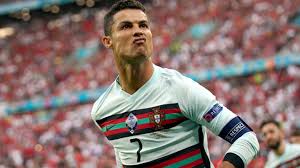
The Saudi Pro League has publicly emphasised that no individual player, regardless of global stature, can influence recruitment decisions beyond their own club, following reports that Cristiano Ronaldo’s future at Al-Nassr has been cast into uncertainty.
The 39-year-old Portugal forward was notably absent from Al-Nassr’s squad for Monday’s league fixture against Al-Riyadh, sparking widespread speculation in Portuguese media that he had refused to participate amid mounting frustration over the club’s management and direction.
Read Also: Cristiano Ronaldo Absent Against Al-riyadh
Ronaldo later shared an image on social media showing himself back in training, but doubt persists over whether he will be included in the squad for Friday’s crucial match against Al-Ittihad, one of the league’s traditional powerhouses.
According to a report by the BBC published on Friday, Ronaldo’s alleged discontent stems largely from Karim Benzema’s transfer earlier this week from Al-Ittihad to league leaders Al-Hilal. Benzema, who spent 14 years alongside Ronaldo at Real Madrid and won multiple UEFA Champions League titles with him, made a spectacular debut for his new club by scoring a hat-trick in a commanding 6-0 victory over Al-Okhdood.
The move has raised eyebrows given that both Al-Nassr and Al-Hilal operate under the ownership and strategic oversight of Saudi Arabia’s Public Investment Fund, the sovereign wealth fund that has driven the rapid transformation and global expansion of the Saudi Pro League since 2023. The PIF controls four of the league’s most prominent clubs—Al-Nassr, Al-Hilal, Al-Ittihad, and Al-Ahli—and has invested billions of dollars to attract some of the world’s most decorated footballers to the kingdom.
However, league officials moved swiftly to clarify the governance structure and reject any notion that marquee players could dictate transfer activity across the competition.
In a statement provided to BBC Sport, a Saudi Pro League spokesperson said: “The Saudi Pro League is structured around a simple principle: every club operates independently under the same rules. Clubs have their own boards, their own executives, and their own football leadership. Decisions on recruitment, spending, and strategy sit with those clubs, within a financial framework designed to ensure sustainability and competitive balance.”
The statement appeared aimed at dispelling suggestions that Ronaldo, or any other high-profile figure, might have expected consultation or veto power over transfers involving rival clubs under the same ownership umbrella. Such arrangements are common in multi-club ownership models globally, but the league’s statement underscored that Saudi football operates on the basis of competitive autonomy.
While acknowledging Ronaldo’s contributions since his arrival in January 2023, the spokesperson added: “Cristiano has been fully engaged with Al-Nassr since his arrival and has played an important role in the club’s growth and ambition. Like any elite competitor, he wants to win. But no individual, however significant, determines decisions beyond their own club.”
Ronaldo joined Al-Nassr in January 2023 after his contract with Manchester United was terminated by mutual consent in November 2022, following a controversial interview in which he criticised the club’s ownership, management, and manager Erik ten Hag. His move to Saudi Arabia was widely regarded as a watershed moment for football in the Middle East, signalling the kingdom’s ambition to become a major force in global sport.
The five-time Ballon d’Or winner signed a contract reportedly worth £177 million per year, making him the highest-paid footballer in history. His arrival was followed by a wave of high-profile signings across the league, including Benzema, N’Golo Kanté, Riyad Mahrez, Roberto Firmino, Neymar, and Sadio Mané, transforming the Saudi Pro League into one of the most talked-about domestic competitions in world football.
Despite Ronaldo’s prolific goal-scoring form—he has netted over 70 goals across all competitions for Al-Nassr—the club has struggled to convert individual brilliance into collective silverware. His only major trophy with the Riyadh-based side remains the Arab Club Champions Cup, a regional competition won in August 2023. Al-Nassr has finished as runners-up in the Saudi Pro League in both seasons since his arrival, and the team was also eliminated in the semi-finals of the King’s Cup last season.
Read Also: Brand Value: Ronaldo’s Tacit De-marketing of Coca-Cola
This season, Al-Nassr sits third in the league table, trailing Al-Hilal by a significant margin. Al-Hilal, led by former Benfica and Flamengo coach Jorge Jesus, has dominated Saudi football in recent years, winning back-to-back league titles and maintaining an unprecedented unbeaten streak that stretched over 30 matches last season.
Benzema’s transfer to Al-Hilal has intensified the competitive gap. The 37-year-old French striker, who won the Ballon d’Or in 2022 and is widely regarded as one of the most complete forwards of his generation, brings championship pedigree and clinical finishing to a squad already brimming with talent, including Neymar, Aleksandar Mitrović, Sergej Milinković-Savić, and Rúben Neves.
Reports in Portugal, citing sources close to Ronaldo, have suggested that the forward feels undermined by the strengthening of a direct rival under the same ownership structure. Some outlets have speculated that he may be considering his options, although his contract with Al-Nassr runs until 2025, and any early departure would involve significant legal and financial complexities.
Ronaldo’s camp has not issued any public comment on the reports, and Al-Nassr’s management has remained silent on the matter. The club’s head coach, Luís Castro, a Portuguese manager who previously worked in Ukraine and Brazil, did not address Ronaldo’s absence in post-match remarks following Monday’s game.
The situation has drawn comparisons to previous tensions involving superstar players in league systems governed by multi-club ownership. In Europe, similar debates have emerged around clubs owned by the City Football Group and Red Bull, where questions about competitive integrity and autonomy have been raised by regulators and fans alike.
Saudi Arabia’s football project is a cornerstone of the kingdom’s Vision 2030 initiative, a national strategy aimed at diversifying the economy away from oil dependency and positioning the country as a global hub for tourism, entertainment, and sport. The Saudi Pro League’s expansion has been accompanied by significant investment in stadium infrastructure, youth academies, and broadcasting rights, with matches now televised in over 150 countries.
However, the league has faced criticism from human rights organisations, who argue that the football investments are part of a broader “sportswashing” strategy designed to improve Saudi Arabia’s international image amid ongoing concerns over freedom of expression, women’s rights, and the treatment of migrant workers.