

Smugglers Throw 22 Dead Overboard in Mediterranean Crossing
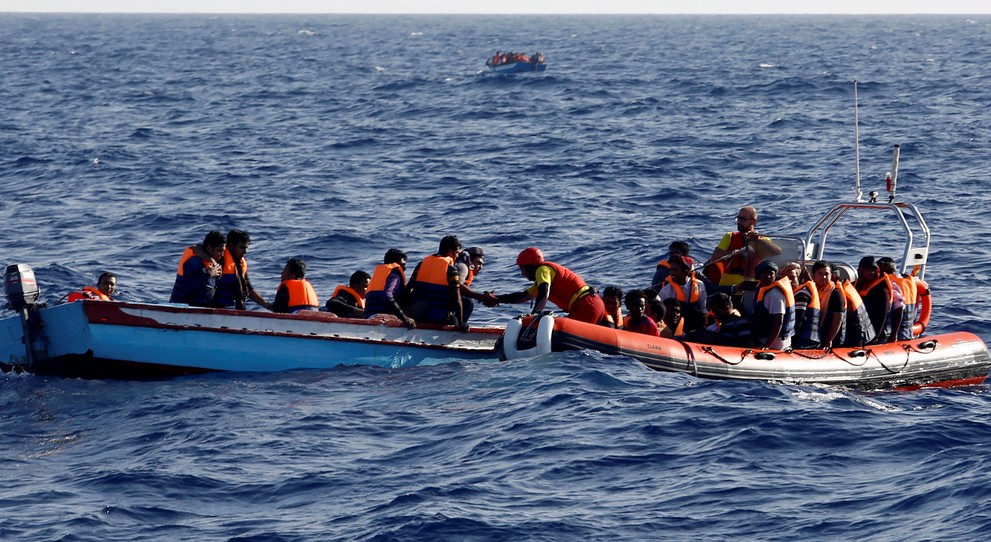
The Mediterranean has claimed at least 22 more lives in a harrowing display of the risks facing those fleeing to Europe. Survivors of a rubber boat adrift for six days told Greek authorities that those who perished were thrown into the sea on the orders of a people smuggler. The vessel, which departed from Tobruk, Libya, on 21 March, lost its bearings and ran out of food and water. The Greek coastguard rescued the remaining passengers after nearly a week of aimless drifting. Two survivors are currently receiving treatment at a hospital in Heraklion, Crete.
Smuggling tactics have reached a new level of depravity. Based on survivor accounts, the bodies of the deceased were discarded to lighten the load or perhaps to hide the evidence of a failed journey. Authorities have arrested two South Sudanese men, aged 19 and 22, suspected of being the traffickers behind the voyage. This incident follows a similar tragedy on 9 February, where 53 migrants vanished after their boat capsized off Zuwara, Libya. The route from Libya remains the deadliest migratory corridor in the world.
Crete has become a primary, if unintended, destination. According to the United Nations High Commissioner for Refugees (UNHCR), more than 16,770 asylum seekers arrived in Crete in 2025 alone. The surge in arrivals forced the Greek government to suspend the processing of asylum applications for three months in mid-2025, specifically targeting those arriving from Libya. Despite these tighter restrictions, the desperation of those fleeing conflict and poverty continues to outweigh the documented risks of the sea.
The humanitarian toll for the year is already staggering. At least 107 people have died or gone missing in Greek waters in 2025, a figure that likely undercounts the true number of “ghost ship” fatalities. The International Organisation for Migration (IOM) noted that extreme weather in January claimed 375 lives, with hundreds more believed unrecorded. For many, the Mediterranean is no longer a gateway to a new life, but a mass grave for the “unrecorded” poor.
Libya’s internal collapse continues to fuel the crisis. Since the fall of Muammar Gaddafi in 2011, the country has lacked a central authority capable of policing its long, porous coastline. Smuggling networks operate with near-impunity, charging thousands of dollars for seats on unseaworthy rubber dinghies. The European Union’s border agency, Frontex, remains active in the area, recently rescuing another 26 people off Crete, but the sheer volume of crossings is overwhelming local resources.
Justice for the deceased remains elusive. While the arrest of the two South Sudanese suspects provides a rare opportunity for prosecution, the masterminds of these smuggling rings often remain safely ashore in Libya. The Greek coastguard’s grim discovery is a reminder that as long as the push factors of war and poverty remain, the pull of Europe will continue to draw thousands into the hands of killers disguised as navigators.