

South Africa Declares National Disaster as Floods Kill Over 30
 South Africa Declares National Disaster as Floods
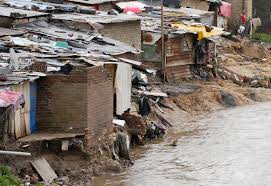
South Africa has declared a national disaster following catastrophic flooding that has claimed more than 30 lives and destroyed homes across its northeastern provinces, while neighbouring Mozambique grapples with widespread devastation that has displaced over 173,000 people and forced a woman to give birth on a rooftop while awaiting rescue.
The head of South Africa’s National Disaster Management Centre, Elias Sithole, announced the classification on Sunday, marking a significant escalation in the government’s response to the humanitarian crisis that has unfolded across southern Africa in recent weeks.
“I classify the disaster as a national disaster,” Sithole stated, signalling the severity of the situation and paving the way for enhanced coordination of relief efforts and resource mobilisation.
Read Also: South African Police Shoot Nigerian Man Dead; Four Officers Arrested
Heavy rains and violent storms have pounded the two southern African nations for weeks, with South Africa’s northeastern provinces of Limpopo and Mpumalanga bearing the brunt of the destruction. The relentless downpours have claimed more than 30 lives in these regions alone, with authorities warning that the death toll may continue to rise as search and recovery operations progress.
In Mozambique, rivers have burst their banks with devastating force, swallowing entire neighbourhoods across several regions and forcing thousands of residents to flee their homes. The flooding has created scenes of desperation, with survivors clinging to rooftops and seeking refuge in trees as they await rescue.
Among the most harrowing accounts to emerge from the crisis is that of a woman in Mozambique’s Gaza province who was forced to give birth on a roof where her family had been stranded since Thursday. Chauna Macuacua, a resident of the province located north of the capital Maputo, told international news agency AFP that her sister-in-law delivered the baby under dire circumstances.
“We’ve been here for four days. My nephew was born yesterday around 11:00 p.m. (2100 GMT), and we still haven’t had any rescue or assistance for the baby and mother,” Macuacua said, highlighting the slow pace of rescue operations in affected areas.
South African authorities continued to search for survivors and recover bodies over the weekend, though flooding had begun to recede in some areas. The iconic Kruger National Park, one of Africa’s largest game reserves and a major tourist attraction, was forced to close and evacuate guests on Thursday as floodwaters threatened the facility.
“Day visitation to the park will resume as of tomorrow,” South African National Parks announced on social media on Sunday, while urging visitors to “exercise caution” as conditions remain unpredictable.
In Mozambique, rescue efforts have struggled to reach survivors stranded on rooftops and in trees across flood-affected regions. According to official data, at least eight people have died in the country since December 21, but this figure is expected to rise significantly as more individuals are declared missing and recovery operations expand.
Wilker Dias, director of Plataforma Decide, a civil society organisation operating in Mozambique, confirmed receiving reports of several missing persons and warned of a potential increase in casualties.
“I think the number of dead will increase in the next hours,” Dias told AFP, reflecting growing concerns about the scale of the disaster.
The crisis has also claimed South African officials attempting to assist in relief efforts. South Africa dispatched rescue teams to southern Mozambique on Sunday after a vehicle carrying five members of a South African mayoral delegation was swept away by floodwaters in Chokwe, approximately 200 kilometres north of Maputo.
According to the latest figures released by the Mozambican government on Friday, more than 173,000 people have been affected by the floods across the country, representing a significant humanitarian emergency that has stretched the capacity of local and national authorities.
Read Also: Struggle for the Soul of South Africa: Justice, Politics and the Jailing of President Jacob Zuma
The declaration of a national disaster in South Africa activates emergency protocols that allow for rapid deployment of resources, coordination between various government departments, and potential access to emergency funds. It also enables the mobilisation of the South African National Defence Force and other critical services to support rescue, relief, and reconstruction efforts.
Southern Africa has historically been vulnerable to extreme weather events, with seasonal flooding affecting the region periodically. However, climate scientists have warned that the intensity and frequency of such disasters are increasing due to climate change, placing greater strain on infrastructure and emergency response systems in countries across the subcontinent.
The current flooding represents one of the most severe humanitarian crises to affect the region in recent years, with the full extent of the damage still being assessed. As rescue operations continue and floodwaters gradually recede, authorities face the enormous challenge of providing shelter, food, and medical assistance to displaced populations while beginning the long process of rebuilding devastated communities.