

Supreme Court Orders Sule Lamido, Sons to Face N1.35bn Corruption Trial
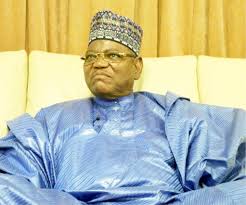
The Supreme Court has ordered the continuation of the N1.35 billion corruption trial of former Jigawa State Governor Alhaji Sule Lamido and his two sons, Mustapha and Aminu, reversing a Court of Appeal judgment that had previously discharged them.
In a unanimous decision delivered on Friday by a five-member panel led by Justice Abubakar Sadiq Umar, Nigeria’s apex court upheld the appeal filed by the Economic and Financial Crimes Commission and set aside the July 2023 judgment of the Court of Appeal that had freed the defendants.
The Supreme Court held that the EFCC’s appeal possessed merit and directed that Lamido and his sons return to the Federal High Court in Abuja to open their defence in the long-running case.
Lamido, his sons, a third defendant named Aminu Wada Abubakar, and two companies—Bamaina Holdings Limited and Speeds International Limited—are standing trial before Justice Ijeoma Ojukwu of the Federal High Court on a 37-count amended charge bordering on money laundering and abuse of office.
The EFCC has alleged that Lamido, who served as governor of Jigawa State between 2007 and 2015, laundered N1.35 billion in kickbacks from contractors handling state government projects during his tenure.
The case has followed a tortuous path through Nigeria’s judicial system since charges were first brought against the former governor and his co-defendants. At the conclusion of the prosecution’s case presentation, the defendants filed a no-case submission, a legal procedure through which accused persons argue that the prosecution has failed to establish sufficient evidence to warrant their entering a defence.
Read Also: Supreme Court Upholds $40,000 Forfeiture Against Former Jigawa Governor’s Son
Justice Ojukwu of the Federal High Court dismissed the no-case submission and ruled that the prosecution had presented sufficient evidence to establish a prima facie case against the defendants, thereby requiring them to mount a defence.
However, in July 2023, the Court of Appeal overturned Justice Ojukwu’s ruling and struck out the charges against Lamido and his co-defendants, effectively freeing them from the corruption allegations. That decision prompted the EFCC to escalate the matter to the Supreme Court.
In its appeal, the anti-graft agency argued that the Court of Appeal had erred in law by discharging the defendants despite what it characterised as overwhelming evidence linking them to the alleged offences. The commission contended that the appellate court had misapplied legal principles governing no-case submissions and had improperly evaluated the evidence presented during trial.
The Supreme Court’s judgment on Friday vindicated the EFCC’s position, ordering that the charges be restored in their entirety and directing the Federal High Court to proceed with the trial to allow Lamido and the other defendants to present their defence.
The case represents one of several high-profile corruption prosecutions brought against former state governors in Nigeria’s ongoing battle against public sector graft. Lamido, a prominent figure in the opposition Peoples Democratic Party, has consistently maintained his innocence throughout the proceedings.
The former governor’s political career has been marked by controversy since leaving office in 2015. He contested the PDP presidential primary ahead of the 2019 general election but lost to former Vice President Atiku Abubakar. Lamido has remained an influential voice within the party and has frequently criticised the administration of President Bola Tinubu and the ruling All Progressives Congress.
The prosecution of former governors has become a recurring feature of Nigeria’s anti-corruption landscape, with several ex-state chief executives facing trial for alleged financial impropriety during their tenures. The outcomes of these cases have varied, with some resulting in convictions while others have collapsed due to procedural issues or perceived political interference.
The EFCC, established in 2003, has made the recovery of stolen public funds and the prosecution of corrupt officials central to its mandate. However, the commission has faced criticism over the years for what some observers describe as selective prosecution and the protracted nature of many high-profile cases.
Nigeria’s judicial system has also come under scrutiny for the length of time required to resolve corruption cases, with trials often stretching across many years due to various factors including legal technicalities, adjournments, and appeals through multiple levels of the court hierarchy.
The Lamido case exemplifies these challenges, having been in the legal system for several years since charges were first filed. The Supreme Court’s decision now returns the matter to the Federal High Court for what will effectively be a resumption of proceedings from the defence stage.
Under Nigerian criminal procedure, once a trial court rules that a prima facie case has been established and orders defendants to enter their defence, the accused persons are required to present evidence and witnesses to rebut the prosecution’s case. Failure to present a credible defence can result in conviction based on the evidence already presented by the prosecution.
The 37-count amended charge against Lamido and his co-defendants includes allegations of money laundering, which carries substantial penalties under Nigerian law. The Money Laundering (Prohibition) Act provides for imprisonment and financial penalties for individuals convicted of laundering proceeds of criminal activity.
The involvement of Lamido’s sons and the two corporate entities in the charges reflects the EFCC’s assertion that the alleged corruption scheme involved multiple parties and the use of corporate structures to disguise the movement of illicit funds.