


The Abubakar Malami Persecution: When Vendetta Wears the Mask of Anti-Corruption
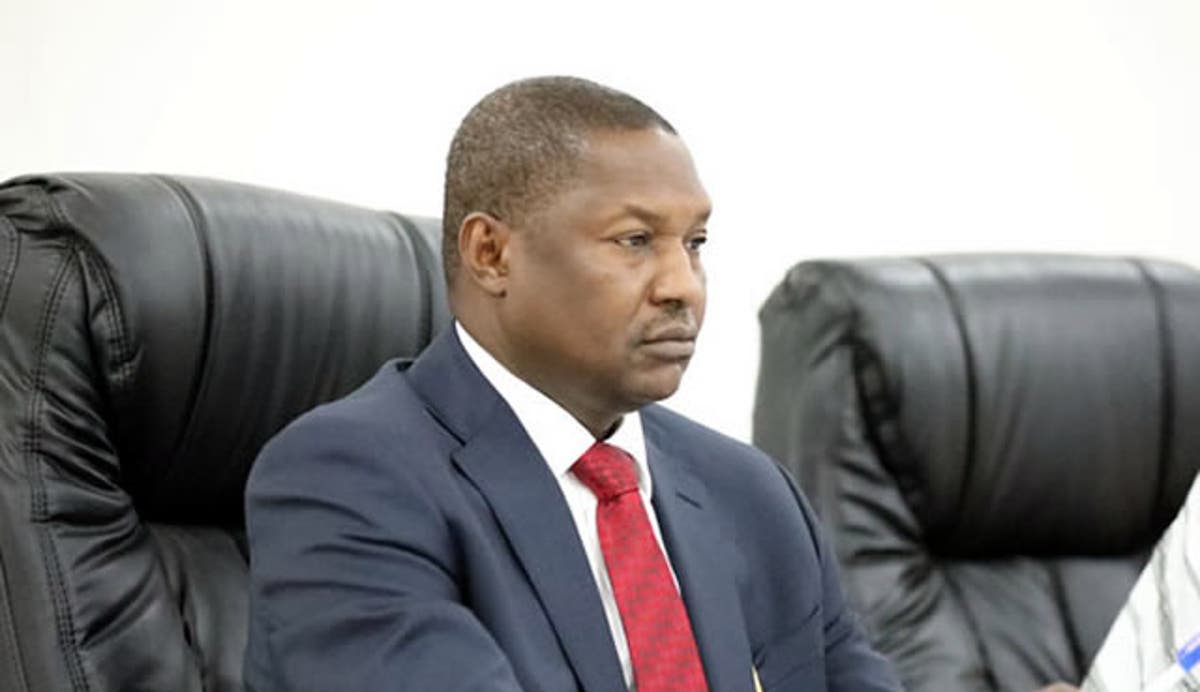
The Economic and Financial Crimes Commission’s relentless pursuit, arrest and detention of former Attorney-General and Minister of Justice, Abubakar Malami (SAN), has all the hallmarks of a state-sponsored vendetta masquerading as an anti-corruption crusade. For over two years now, the EFCC under Ola Olukoyede has subjected Abubakar Malami to what can only be described as a fishing expedition of epic proportions—arresting him repeatedly, seizing his passport, demanding daily check-ins at their office, and interrogating his wives, children, and associates. They have searched his records at the Federal Inland Revenue Service for tax infractions, and combed through his asset declarations at the Code of Conduct Bureau. Yet, after all these numerous investigations spanning two years, not a single charge has been filed. The timing and nature of this investigation reeks of something far more sinister than genuine concern for public accountability.
Let’s start with the elephant in the room: Ola Olukoyede, the current EFCC Chairman orchestrating Malami’s persecution, served as Secretary to the Commission under Ibrahim Magu—the very man Abubakar Malami, as Attorney-General, investigated and recommended for removal through a properly constituted judicial panel. The Justice Ayo Salami panel during the Buhari administration found both Magu and his secretary—now Chairman Olukoyede—culpable of serious infractions. The Salami panel’s findings were damning.
Ibrahim Magu was suspended and removed from office. His secretary, now Chairman Olukoyede, was disciplined alongside him. Both men were found wanting by a presidential investigative panel. Yet today, that same secretary who was disciplined for his role in Magu’s corrupt administration now sits as Chairman of the EFCC. And his first major target? The Attorney-General who exposed him and his former boss. If this isn’t textbook vendetta, then words have lost all meaning.
The EFCC’s central allegation against Malami is that he duplicated the recovery process for $322.5 million in the Sani Abacha loot—money that Swiss lawyer Enrico Monfrini had supposedly already recovered before Malami took office in 2015. This claim collapses under the weight of basic facts. When Malami assumed office as Attorney-General in 2015, not a single dollar of the disputed Abacha funds had been remitted into Nigeria’s Federation Account. The recovery process was not complete, as the necessary memorandum of understanding between the governments of Nigeria and Switzerland had yet to be signed. In fact, by the end of 2016—almost two years after the Jonathan administration left office—the funds still hadn’t materialized. If the work was done, where was the money?
Monfrini himself applied in December 2016 to be re-engaged for the same recovery job the EFCC now claims he had already completed. Why would a lawyer who had finished his work and delivered the money reapply for the same contract? Because the job wasn’t done. Monfrini’s terms in 2016 were a $5 million upfront deposit and a success fee ranging from 20% to 40% of recovered assets, which, had Nigeria accepted those terms, the country would have forfeited between $64.5 million and $129 million to a single lawyer—money that could have built hospitals, schools, and roads.
Malami rejected those terms. Instead, his office engaged Nigerian lawyers on a transparent 5% success-fee basis with no upfront payments. This decision alone saved Nigeria between ₦76.8 billion and ₦179.2 billion, depending on whether you compare it to Monfrini’s 20% or 40% demands. The money was eventually recovered and remitted into a dedicated Central Bank account—not into anyone’s personal pocket. Every step of the process went through the National Executive Council. There was oversight, transparency, and ultimately, success. So where exactly is the crime? The EFCC has been investigating for two years and cannot point to a single naira or dollar that ended up in Malami’s account. They cannot show any evidence of money laundering, embezzlement, or abuse of office. What they have is innuendo, speculation, and a narrative that doesn’t survive scrutiny.
 There is also the Kebbi connection. Malami, a political heavyweight in Kebbi, had declared his intention to run for governor in 2023. He had picked up his nomination form, and the APC ticket was virtually his. But then-President Muhammadu Buhari—his former boss and father-in-law—asked him to remain as Attorney-General until the end of the administration. Malami, ever loyal, dropped his gubernatorial ambition and instead nominated and supported Dr. Nasir Idris, who is now the sitting governor.
But Nasir Idris, like many politicians who owe their rise to kingmakers, now sees his political godfather as a threat. Malami’s continued interest in the Kebbi governorship endangers Idris’s grip on power and his ambitions for a second term or higher office. Rather than compete politically, Idris has reportedly weaponized the EFCC to eliminate his rival. The Kebbi State Government’s response to Malami’s defection from the APC tells you everything you need to know. Ahmed Idris, the Chief Press Secretary to Governor Nasir Idris, openly gloated that they were “happy” Malami left the party, claiming he “added no value” to their administration. This is the same man who supported Idris’s rise to power. The ingratitude is matched only by the transparent political motive behind the EFCC’s actions.

Malami officially left the All Progressives Congress on July 2, 2025, and joined the African Democratic Congress (ADC), citing insecurity, economic decline, and the abandonment of governance as his reasons. He has since declared his intention to contest the 2027 Kebbi gubernatorial election. In response, the EFCC—which had been circling him for two years—intensified its harassment. This isn’t law enforcement. It’s political intolerance, harassment and elimination.
Malami was not just any member of the APC. He was a founding member, an unapologetic Buharist, and for eight years, the chief legal officer of the Buhari administration. He wielded enormous power and influence, and many considered him untouchable—not because he was corrupt, but because he had the backing of President Buhari. Buhari’s death removed the last protective shield around Malami. While Buhari was alive, the EFCC was cautious. Malami was not just the former Attorney-General but also Buhari’s son-in-law. Touching him required navigating the sensitivities of a man who still commanded respect and loyalty within the APC and the nation’s political establishment. But with Buhari dead and Malami now in the opposition, the gloves came off.
The EFCC’s aggression escalated dramatically after Malami’s defection to the ADC. This is no coincidence. Malami is now perceived as a leading opposition figure and a potential threat in the 2027 elections. His legal acumen, political experience, and northern base make him a formidable opponent. The easiest way to neutralize such a threat? Drag him through endless investigations, tarnish his reputation in the media, and keep him tied up in alleged corruption battles so he cannot effectively campaign. This is political persecution, plain and simple.
The recovery of the $322.5 million went through Nigeria’s National Executive Council—the highest decision-making body of the federal government, comprising the President, Vice President, and all federal ministers. This wasn’t a backroom deal. It wasn’t a unilateral decision by Malami. The award of the contract was discussed, deliberated upon, and approved by the NEC. If there was anything improper about the process, then the entire Buhari cabinet would be complicit. Yet the EFCC has singularly focused on Malami. Why? Because he’s no longer in government. Because he’s no longer in the APC. Because he’s now in the opposition. And because Ola Olukoyede, the man whose tenure under Magu was tainted by scandal, has a personal score to settle.
For over two years, the EFCC has subjected Malami and everyone connected to him to relentless scrutiny. They have arrested and interrogated Malami himself multiple times, arrested and interrogated his wives, children and associates
Not a single charge has been filed. Not one piece of concrete evidence of wrongdoing has been presented. No money trail leads to Malami’s account. No assets have been traced to him that he cannot account for. The EFCC has thrown everything at him—and come up empty. If Malami were truly guilty of corruption, money laundering, or abuse of office, the EFCC would have filed charges by now. Instead, they continue to harass him, leaking damaging stories to the press while offering no substantive evidence to back up their claims.
What’s happening to Malami should concern every Nigerian, regardless of political affiliation. The EFCC was created to fight corruption, not to serve as a tool of political persecution. When anti-corruption agencies are weaponized to target opposition figures, punish defectors, and settle personal scores, they lose all credibility. Nigeria has seen this playbook before—the EFCC’s pursuit of opposition politicians, while ignoring the misdeeds of the real criminals in power. Malami’s case is just the latest example.
The message being sent is that if you leave the ruling party, if you challenge the sitting governor, if you dare to oppose those in power, we will use the machinery of state to destroy you. Your reputation will be dragged through the mud. Your family will be harassed. Your business will be disrupted. And even if we can’t find any evidence of wrongdoing, we’ll keep investigating until you give up or are too broken to be a political threat.
The EFCC needs to do one of two things: either file charges against Malami based on concrete evidence or end this persecution. If they have evidence of corruption, let them present it in court. Let Malami defend himself in a proper legal proceeding, not through media leaks and selective prosecution. Let a judge, not the court of public opinion, decide his guilt or innocence. But if, after two years of investigations and fishing expeditions, they still have nothing—then Ola Olukoyede should have the integrity to exonerate Malami and publicly apologize for the harassment.
Abubakar Malami on his part should also explore his legal options. The courts must step in to check the excesses of an agency that has clearly overstepped its mandate. Nigerians deserve better than this. We deserve an EFCC that fights corruption, not one that serves the political interests of governors, ex-governors, and chairmen with grudges. We deserve a justice system where your guilt or innocence is determined by evidence, not by which party you belong to or whose toes you stepped on.
****
Dr. Rabiu Yau Ahmed can be reached at: rabiuyau.ahmed@gmail.com