
Tinubu Orders Police Off VIP Duty, Shettima to Lead Ranch Plan
President Bola Tinubu has forcefully reiterated his directive to withdraw police officers from protecting VIPs, demanding immediate compliance to redeploy them to confront rampant kidnappings. His orders, issued during Wednesday’s Federal Executive Council meeting, include a new ranch initiative led by Vice-President Kashim Shettima, aiming to address both security and economic flashpoints.
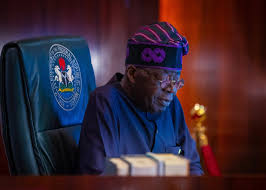
On Wednesday, President Tinubu presided over the Federal Executive Council at the State House in Abuja. He expressed clear frustration with the slow pace of implementing his earlier order, stating firmly, “I honestly believe in what I said…It should be effected. If you have any problem because of the nature of your assignment, contact the IGP and get my clearance.” He directed the Minister of Interior, Dr Olubunmi Tunji-Ojo, to work with the Inspector-General of Police, Kayode Egbetokun, and the Nigeria Security and Civil Defence Corps to swiftly replace withdrawn police escorts. “The minister of interior should liaise with the IG and the Civil Defence structure to replace those police officers who are on special security duties. So that you don’t leave people exposed,” Tinubu insisted.
To ensure full adherence, the President instructed the National Security Adviser, Nuhu Ribadu, and the Department of State Services to provide further guidance. “NSA and DSS will provide further information and form the committee and review the structure,” he said. Linking the move to a spike in abductions, Tinubu emphasized, “We are facing challenges of kidnapping. We need all the forces we have on the ground, fully utilized.” He also announced that forest guards would be armed, declaring, “I have directed the NSA to arm our forest guards, too. Take it seriously.”
This reaffirmation follows an initial directive issued on November 23, 2025, after a security meeting at the State House. That order came in response to a series of attacks where at least 300 people, mostly schoolchildren, were kidnapped across Kebbi, Kwara, and Niger States. A statement by the President’s Special Adviser on Information and Strategy, Bayo Onanuga, had clarified that police would focus on core duties, while VIPs seeking protection would request armed personnel from the NSCDC.
Public scrutiny on excessive security details intensified when Nobel Laureate Professor Wole Soyinka criticized the practice. At the 20th Wole Soyinka Centre for Investigative Journalism Awards in Lagos on December 9, Soyinka described seeing “an excessively large security battalion assigned to a young individual close to the Presidency,” an entourage he said was “sufficient to take over a small country.” He revealed that the individual was Seyi Tinubu, the President’s son. In a viral video, Soyinka said, “I was so astonished that I started looking for the national security adviser… I said I’ve just seen something I can’t believe I don’t understand.”
Beyond police redeployment, President Tinubu assigned Vice-President Kashim Shettima to spearhead a livestock reform plan through the National Economic Council. He directed, “Again, especially livestock reform, I think the Vice President should get the NEC first of all to see which villages or grazing reserves can be salvaged or rehabilitated into Ranches, Livestock settlements.” Tinubu stressed the need to eliminate conflicts and create economic opportunities, stating, “We must eliminate the possibility of conflicts and turn the Livestock reform into economically viable development. The opportunity is there. Let’s use it.”
He acknowledged that land belongs to states constitutionally, urging NEC to collaborate with states to convert grazing reserves into livestock villages.