


Trump Files $10 Billion Defamation Lawsuit Against BBC Over Edited Jan. 6 Speech
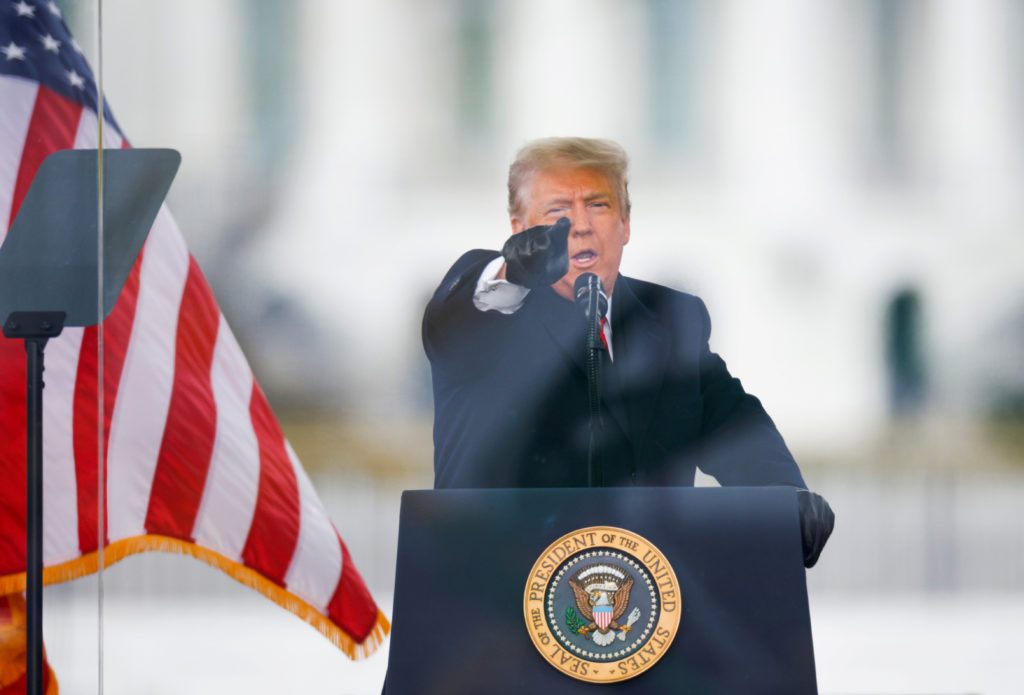 FILE PHOTO: U.S. President Donald Trump gestures as he speaks during a rally to contest the certification of the 2020 U.S. presidential election results by the U.S. Congress, in Washington, U.S, January 6, 2021. REUTERS/Jim Bourg/File Photo
US President Donald Trump has filed a $10 billion defamation lawsuit against the British Broadcasting Corporation (BBC), alleging the broadcaster maliciously edited his January 6, 2021, speech to falsely depict him as inciting the Capitol riot.
The lawsuit, filed on Monday, in federal court in Miami, Florida, seeks $5 billion on each of two counts: defamation and violation of Florida’s Deceptive and Unfair Trade Practices Act. Trump’s legal team alleges that a BBC Panorama documentary, “Trump: A Second Chance?”, which aired days before the 2024 election, deceptively spliced sections of his speech delivered nearly an hour apart. The edit, according to the complaint, created the false impression he explicitly urged supporters to attack the Capitol while omitting his calls for peaceful protest. A spokesperson for Trump’s team stated the “formerly respected and now disgraced BBC defamed President Trump by intentionally, maliciously, and deceptively doctoring his speech in a brazen attempt to interfere in the 2024 Presidential Election.”
The documentary, though not broadcast in the United States, became accessible via VPNs and was linked to BBC activities in Florida, bringing it within the jurisdiction of the state’s courts. The film came under intense scrutiny following a leaked internal memo that highlighted the misleading edit. This controversy led to the resignations of BBC Director-General Tim Davie and news chief Deborah Turness in November 2025. While BBC Chairman Samir Shah apologized for an “error of judgment,” the corporation has maintained there was no basis for defamation, denying any malice or intent to mislead the public.
This legal action fits a pattern of high-profile media challenges by Trump, who recently secured substantial settlements from ABC and CBS over separate claims. Legal experts, however, note the significant hurdles the case faces under US law. To prove defamation, a public figure like Trump must demonstrate “actual malice”—that the BBC either knew the edited portrayal was false or acted with reckless disregard for the truth. The choice to file in Florida, where the BBC has operational ties, may also reflect strategic considerations, potentially influenced by the shorter statute of limitations for libel claims in the United Kingdom.
The lawsuit underscores escalating tensions between prominent political figures and major media institutions over editorial standards, perceived bias, and accountability. It places a renewed spotlight on the January 6 speech itself, in which Trump used phrases like “fight like hell” but also told supporters to “peacefully and patriotically” make their voices heard.
The subsequent Capitol riot resulted in multiple deaths and injuries.