
Trump Says Israel to Halt Strikes on Iran Gas Field
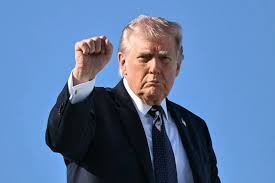
Fresh tensions in the Middle East have pushed global energy markets into uncertainty, as United States President Donald Trump publicly declared that Israel would not carry out further strikes on Iran’s key gas infrastructure, while warning of severe consequences if hostilities continue.
The statement followed a sharp escalation involving Iran, Israel, and Gulf energy facilities, which has already triggered a five per cent surge in crude oil prices amid fears of prolonged disruption to global supply chains.
The crisis centres on attacks linked to the vast South Pars gas field in Iran, part of the world’s largest natural gas reserve shared with Qatar. The facility plays a critical role in global liquefied natural gas supply, particularly through Qatar’s export operations at Ras Laffan, one of the largest LNG hubs globally.
According to publicly available statements, Tehran launched retaliatory strikes on energy installations across the Gulf, including Qatar’s Ras Laffan LNG facility, after Israel struck Iran’s South Pars gas field earlier in the week. The Qatari facility reportedly sustained extensive damage, raising concerns about output disruptions in a region responsible for a significant share of global energy exports.
Reacting to the developments, Trump stated in a social media post that Washington had no prior knowledge of Israel’s attack on the Iranian facility. He further declared that “NO MORE ATTACKS WILL BE MADE BY ISRAEL” on the South Pars gas field, on the condition that Iran ceases its attacks on Qatari infrastructure.
The US president added a direct warning to Tehran, stating that if Iran continues to target Gulf energy assets, the United States would “massively blow up the entirety of the South Pars Gas Field,” signalling a potential escalation that could further destabilise the region.
However, subsequent remarks suggested a moderation of tone. Trump later indicated that Israel would refrain from further strikes unless provoked, describing earlier Israeli action as a response to tensions in the region. He characterised the attack as Israel having “violently lashed out” amid ongoing hostilities.
The conflicting signals have drawn attention to inconsistencies in Washington’s messaging. While Trump maintained that the United States was not informed ahead of the Israeli strike, a report by The Wall Street Journal indicated that he had approved the plan targeting Iran’s gas infrastructure. The discrepancy remains unresolved in official communications.
The unfolding situation reflects a widening conflict now entering its third week, with energy infrastructure increasingly becoming a focal point of military and strategic calculations. Iran’s threats to extend attacks to oil and gas installations across the Gulf, including in Saudi Arabia, underscore the broader risks to regional stability.
Market reactions have been swift. Oil prices climbed by approximately five per cent following the strikes, driven by fears that damage to critical facilities such as South Pars and Ras Laffan could constrain supply in an already tight global energy market. Analysts have consistently identified the Gulf region as a strategic chokepoint, where disruptions can have immediate global impact due to the concentration of production and export capacity.
South Pars, in particular, holds strategic importance. The field accounts for a substantial portion of Iran’s gas production and is jointly developed with Qatar, where it is known as the North Field. Together, the reserve represents the largest known natural gas deposit globally, making any military activity around it a significant concern for energy security.
The broader geopolitical context adds further complexity. Tensions between Iran and Israel have historically involved proxy engagements and covert operations, but direct strikes on major energy infrastructure mark a notable escalation. Previous conflicts in the region, including attacks on oil facilities in Saudi Arabia in 2019, have demonstrated how quickly such incidents can disrupt global markets.
Trump’s remarks also highlight the delicate balance in US foreign policy, particularly in relation to Israel and Gulf allies. His assertion that Qatar was “not involved” in the initial escalation appears aimed at reinforcing US ties with the Gulf state, which hosts one of America’s largest military bases in the region.
Despite the apparent attempt to de-escalate, uncertainty remains high. Iran has not formally responded to Trump’s latest position at the time of reporting, and the possibility of further retaliation cannot be ruled out.
With energy infrastructure now at the centre of the conflict, the situation continues to carry significant implications not only for regional security but also for global economic stability, especially as markets react to any sign of disruption in supply from the Gulf.