
Trump Warns Iran Team Over World Cup
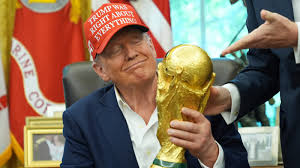
United States President Donald Trump has issued a contradictory warning to Iran’s national football team regarding their participation in the 2026 FIFA World Cup, stating that their “life and safety” would be at risk if they compete in the tournament, just forty-eight hours after assuring FIFA President Gianni Infantino that the team would be welcome. The statement, posted on Trump’s Truth Social platform on Thursday, has intensified uncertainty surrounding Iran’s involvement in the competition and raised questions about the consistency of American diplomatic messaging during ongoing military hostilities.
“The Iran National Soccer Team is welcome to The World Cup, but I really don’t believe it is appropriate that they be there, for their own life and safety,” Trump wrote. The comment represents a significant shift in tone from his position on Tuesday, when Infantino emerged from a White House meeting stating that Trump had “reiterated that the Iranian team is, of course, welcome to compete in the tournament in the United States.”
The conflicting statements arrive amid active military conflict between the United States, Israel, and Iran that commenced on February 28, 2026, when coordinated American and Israeli air strikes targeted Iranian nuclear facilities and military installations. The war, which has entered its sixth week, has generated substantial security concerns regarding the feasibility of Iranian athletes travelling to North American soil while their nation remains in a declared state of hostilities with the tournament’s primary host nation.
The 2026 World Cup, scheduled to run from June 11 to July 19 across sixteen cities in Canada, Mexico, and the United States, represents the first forty-eight team edition of the tournament and the first to be hosted by three nations. Iran qualified for the competition through the Asian Football Confederation’s preliminary rounds, securing their place before the outbreak of military operations. Under FIFA statutes, national teams cannot be disqualified from competitions based on political circumstances without explicit approval from the FIFA Council, making any exclusion of Iran a complex procedural matter.
Infantino’s engagement with Trump on this issue marks the first occasion on which the FIFA president has publicly acknowledged the Middle East war in an official capacity. The Swiss-Italian administrator, who has cultivated a close working relationship with the American president since Trump’s return to office in January 2025, awarded Trump the inaugural FIFA Peace Prize in December 2025. The honour, created specifically for the presentation, cited Trump’s “contributions to international dialogue” though it drew criticism from human rights organisations who noted the award preceded any resolution of ongoing conflicts.
The FIFA president’s statement following Tuesday’s White House meeting attempted to navigate the diplomatic sensitivities of the situation. “We discussed the current situation in Iran and the importance of sport as a bridge between peoples,” Infantino wrote on his official social media accounts. “President Trump reiterated that the Iranian team is, of course, welcome to compete in the tournament in the United States.” The statement made no reference to security conditions or safety guarantees, omissions that appear significant in light of Trump’s subsequent remarks.
Trump’s Thursday statement referenced unspecified threats to Iranian players, without elaborating on whether these concerns stemmed from potential American public hostility, security service actions, or other sources. “I really don’t believe it is appropriate that they be there,” he emphasised, framing the warning as protective rather than exclusionary. The distinction carries potential legal implications, as outright government prohibition of Iranian entry could trigger FIFA sanctions against the United States as a tournament host.
The president’s intervention in Iranian football affairs extended beyond the national team this week. Trump publicly advocated for asylum to be granted to five members of Iran’s women’s national team who remained in Australia following the 2026 AFC Women’s Asian Cup. The players had declined to participate in the pre-match singing of Iran’s national anthem during a group stage fixture, an act widely interpreted as solidarity with domestic protest movements. “They should be given immediate asylum,” Trump posted on March 9. “They are brave women who stood up to a brutal regime.”
Australia’s Department of Home Affairs confirmed on Wednesday that asylum applications from the five footballers had been approved, with Immigration Minister Andrew Giles stating that “Australia recognises the legitimate fears these athletes have expressed regarding their safety upon return to Iran.” The case has drawn international attention to the precarious position of Iranian sportswomen amid the country’s compulsory hijab laws and the violent state response to the 2022-2023 protest wave.
The convergence of military conflict and international sport places FIFA in an unprecedented governance position. The organisation’s statutes mandate political neutrality while simultaneously committing to the “universality” of football participation. Historical precedents offer limited guidance: the Soviet Union participated in the 1986 World Cup in Mexico despite Cold War tensions, while Yugoslavia was excluded from Euro 1992 due to United Nations sanctions, though that prohibition resulted from an international legal framework rather than unilateral national decision.
Security planning for the 2026 tournament has been substantially complicated by the Middle East war. The United States Secret Service, which holds primary responsibility for protective operations during the event, has reportedly conducted revised threat assessments regarding potential demonstrations, cyber incidents, and physical security risks associated with Iranian participation. Tournament organisers have not disclosed whether additional security protocols would be implemented for Iranian team movements should the squad travel to North America.
Iran’s football federation has maintained public silence regarding Trump’s statements, though sources within Asian football circles indicate that contingency planning for alternative arrangements has been discussed at the administrative level. The Iranian government, through its Ministry of Foreign Affairs, has not issued formal response to the safety warning, concentrating official communications instead on condemnation of American military actions.
The 2026 World Cup qualification of Iran was secured through a third-place finish in AFC Group A during the continental qualifying tournament held between November 2024 and November 2025. The team, managed by Amir Ghalenoei since 2023, defeated Qatar, Uzbekistan, and the United Arab Emirates in decisive fixtures to secure automatic qualification. Their prospective group stage opponents include Argentina, Denmark, and Tunisia, with scheduled matches in Los Angeles, Dallas, and Toronto.
Trump’s warning, while not constituting official government policy, creates substantial practical complications for tournament logistics. Iranian nationals currently face enhanced visa scrutiny under existing American immigration procedures, and the State Department has issued a Level 4 “Do Not Travel” advisory for Iran that complicates reciprocal diplomatic arrangements. The president’s personal intervention suggests that executive pressure may influence consular decisions regardless of formal FIFA agreements.
The episode illuminates the expanding intersection of sport and geopolitical conflict in contemporary international relations. FIFA’s commercial interests, projected to generate approximately eleven billion dollars in revenue from the 2026 tournament, depend upon stable host government relationships. Simultaneously, the organisation’s claims to global representational legitimacy require the inclusion of member associations regardless of political circumstances. Trump’s contradictory positioning exploits this tension, offering formal welcome while emphasising practical obstacles to participation.
As the tournament opening approaches in ninety-one days, the status of Iran’s participation remains unresolved. FIFA has not indicated whether alternative host arrangements for Iranian matches might be considered, nor whether the organisation would support visa facilitation efforts should the American executive branch impose additional entry barriers. The coming weeks will determine whether Trump’s warning represents rhetorical positioning or presages concrete administrative action affecting one of Asia’s most successful footballing nations.