

UN Warns: Wars Fuel Rape Epidemic on Women
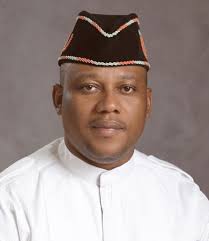
The United Nations Deputy Secretary-General, Amina Mohammed, has warned that violence against women and girls is being intensified by ongoing conflicts, militarisation and deeply rooted inequality across multiple regions, calling on governments to move beyond rhetoric and implement concrete protective measures.
Speaking at a high-level meeting marking five years of the UN Group of Friends for the Elimination of Violence against Women and Girls, Mohammed said armed conflicts worldwide are exposing women and girls to severe and enduring harm that undermines development and human rights gains.
The deputy chief delivered her remarks on the sidelines of the 70th Session of the Commission on the Status of Women at UN Headquarters in New York on Thursday. The Commission on the Status of Women, established in 1946 by the UN Economic and Social Council, is the United Nations’ principal global body dedicated to promoting gender equality and advancing the rights and empowerment of women. It plays a central role in setting international standards on women’s rights and monitoring progress on gender equality commitments by member states.
According to UN data, more than 4,500 cases of conflict-related sexual violence were verified in 2024, though the actual figure is believed to be significantly higher due to widespread stigma, fear of retaliation, and the collapse of reporting systems in war zones. The verified cases represent only documented incidents where survivors were able to access reporting mechanisms, often in environments where medical facilities, legal structures and protection services have been destroyed or rendered inaccessible by violence.
Mohammed highlighted alarming patterns emerging from several ongoing crises. In Sudan, UN experts have documented widespread sexual violence and targeted attacks on women human rights defenders amid the country’s brutal civil conflict. In the Democratic Republic of the Congo, a child has been reported raped every half hour, reflecting the systematic use of sexual violence as a weapon of war and terror. In Haiti, sexual violence against children has surged dramatically in recent years as gang violence and political instability have eroded state authority and protective institutions.
The deputy secretary-general stressed that women must be placed at the center of peace processes and political decision-making structures, warning that sustainable peace cannot be achieved while women and girls remain excluded from negotiations and unprotected from violence.
“Conflicts around the world are exposing women and girls to severe and lasting harm,” Mohammed stated, emphasizing that the international community must move from condemnation to coordinated action that addresses both immediate protection needs and the structural drivers of gender-based violence.
In a related development that underscored the scale of civilian harm in Sudan’s ongoing conflict, UN human rights chief Volker Türk expressed alarm over the devastating impact of increasing drone attacks on civilians, amid reports that more than 200 civilians have been killed by drones since March 4 alone in the Kordofan region and White Nile state.
“It is deeply troubling that despite multiple reminders, warnings and appeals, parties to the conflict continue to use increasingly powerful drones to deploy explosive weapons with wide-area impacts in populated areas,” Türk, the UN High Commissioner for Human Rights, said.
He renewed his call for both the Sudanese Armed Forces and the Rapid Support Forces, the rival military factions engaged in a civil war that began in April 2023, to fully abide by international humanitarian law, “particularly the clear prohibition on directing attacks against civilians and civilian objects and infrastructure, and against any form of indiscriminate attacks.”
In West Kordofan, at least 152 civilians have reportedly been killed by Sudanese army drone strikes, including at least 50 when a market and a hospital were hit. Attacks on two separate markets in Abu Zabad and Wad Banda on March 7 left at least 40 civilians dead, while a lorry carrying civilians was struck allegedly by a SAF drone on March 10, reportedly killing at least 50 civilians.
In South Kordofan, at least 39 civilians were reportedly killed, including 14 in the state capital Dilling, in heavy artillery shelling by the Rapid Support Forces and allied SPLM-North forces between March 4 and 5. Many homes, schools, markets and health facilities were damaged or destroyed in the attacks, compounding the humanitarian impacts on civilians and local communities already struggling with displacement, food insecurity and collapsed public services.
Türk also expressed alarm at the recent expansion of the conflict to White Nile state, which has come under heavy attack by RSF militia drone strikes since March 4. A secondary school and a health clinic in Shukeiri village were hit on March 11, reportedly killing at least 17 civilians, including one health worker.
“It will soon be three full years since the senseless conflict in Sudan began, devastating millions of lives and livelihoods. Yet the violence, fueled by these new technologies of war, simply keeps spreading,” Türk said.
Sudan’s civil war, which erupted in April 2023 following a power struggle between the Sudanese Armed Forces led by General Abdel Fattah al-Burhan and the Rapid Support Forces commanded by Mohamed Hamdan Dagalo, known as Hemedti, has resulted in one of the world’s largest humanitarian crises. According to UN estimates, the conflict has displaced more than 10 million people, triggered widespread famine conditions, and resulted in tens of thousands of deaths. The use of advanced weaponry, including increasingly sophisticated drones, has escalated civilian casualties and expanded the geographical scope of the violence.
The News Agency of Nigeria reports that the 70th session of the Commission on the Status of Women, which opened on Monday, will conclude on March 19. Representatives of member states, UN entities, and ECOSOC-accredited non-governmental organisations from all regions of the world, including Nigeria, are attending the session.
The priority theme of the session is ensuring and strengthening access to justice for all women and girls, including by promoting inclusive and equitable legal systems, eliminating discriminatory laws, policies and practices, and addressing structural barriers that prevent women from accessing legal remedies and protection.
The session comes at a time when global data shows persistent gaps in women’s access to justice systems. According to UN Women, in many countries, discriminatory legal frameworks continue to restrict women’s economic rights, property ownership, and ability to seek redress for violence. Barriers include high costs, lack of legal literacy, geographic inaccessibility of courts, and cultural norms that discourage women from pursuing formal legal channels.
Nigeria is among the countries participating in the session, with representatives expected to engage in discussions on strengthening legal protections for women and addressing gaps in implementation of existing gender equality frameworks. The country has made some legislative progress in recent years, including the passage of the Violence Against Persons Prohibition Act in 2015, though implementation remains uneven across states and access to justice for survivors of gender-based violence continues to face significant challenges.
The session’s focus on justice systems reflects growing recognition that legal frameworks alone are insufficient without accompanying reforms that address economic barriers, cultural resistance, and institutional weaknesses that prevent women from accessing protection and remedies.
Mohammed’s warnings about conflict-related violence and Türk’s concerns about escalating civilian harm in Sudan highlight the intersection of armed conflict, humanitarian crisis and gender-based violence, issues that remain central to international human rights and development agendas as conflicts continue to proliferate across multiple regions.