
US-Israel Joint Strikes On Iran Trigger Retaliations
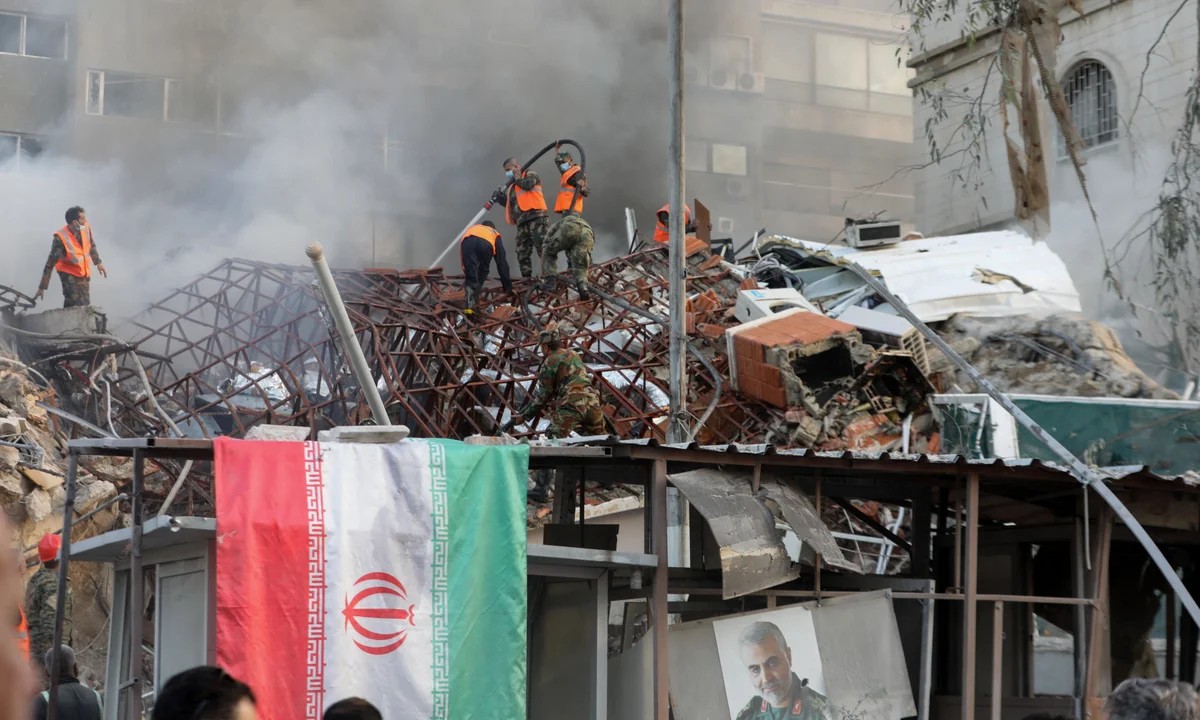
A dramatic escalation in Middle East tensions erupted yesterday as the United States and Israel conducted coordinated military strikes on Iranian nuclear and military facilities. The assault prompted swift retaliatory attacks from Tehran on northern Israel and several Gulf states hosting American bases, while global reactions revealed deep divisions over the legality and implications of the operation.
Dubbed Operation Epic Fury by the United States, the joint campaign targeted sites in Tehran and other locations following stalled nuclear negotiations that failed to resolve disputes over uranium enrichment and ballistic missile development. President Donald Trump announced the commencement of major combat operations, framing them as necessary to neutralize imminent threats from Iran and explicitly calling for regime change.
Speaking shortly after the strikes began, Trump stated that the attacks were aimed at “eliminating imminent threats from the Iranian regime,” describing it as “a vicious group of very hard, terrible people” whose activities endangered the U.S., its troops, bases, and allies worldwide. He acknowledged the possibility of American casualties but emphasized what he called the mission’s necessity in preventing a nuclear-armed Iran.
“We pray for every service member as they selflessly risk their lives to ensure that Americans and our children will never be threatened by a nuclear-armed Iran,” Trump said.
He further declared, “We are going to destroy their missiles and raze their missile industry to the ground,” noting that the U.S. had repeatedly sought a diplomatic agreement but that Iran “rejected every opportunity to renounce their nuclear ambitions.” Addressing the Iranian Revolutionary Guard Corps, Trump warned them to lay down their arms or face “certain death.”
In a direct appeal to the Iranian people, he assured American support for political change, stating that once the campaign concluded, they would have an opportunity to “take over” their government, describing it as potentially their “only chance for generations.”
Israeli Prime Minister Benjamin Netanyahu echoed those sentiments, stating that the strikes were intended to remove what he called an “existential threat” and would “create the conditions for the brave Iranian people to take their fate into their own hands.” In a video address, Netanyahu praised Trump’s leadership and emphasized the joint nature of the operation.
The strikes have already resulted in significant civilian casualties. Iran’s judiciary reported that the death toll from an attack on a girls’ school in the southern city of Minab rose to 85. Officials described heavy losses, with rescue workers continuing to clear debris from the site.
Iranian Foreign Minister Abbas Araghchi shared images of the damaged building, stating that “innocent children” had been killed and vowing that the attacks “will not go unanswered.” A Foreign Ministry spokesperson labeled the strike a “blatant crime” and called on the United Nations Security Council to intervene.
Separately, reports indicated that at least two students were killed in another strike east of Tehran.
One of the targeted areas in Tehran was reportedly near the offices of Supreme Leader Ayatollah Ali Khamenei. He was not in the capital at the time and had been relocated to a secure location, according to officials.
In response, Iran launched missiles targeting northern Israel and several Gulf Arab states — including Qatar, Kuwait, the United Arab Emirates, and Bahrain — where U.S. military bases are located. A senior Iranian official declared that “all American and Israeli assets and interests in the Middle East have become legitimate targets,” adding that there were “no red lines after this aggression.”
Explosions were reported in northern Israel as the military intercepted incoming missiles, with no immediate confirmation of casualties. Blasts were also reported near military installations in the Gulf, including Al Udeid Air Base in Qatar and the U.S. Navy’s Fifth Fleet headquarters in Bahrain. Qatar’s Defence Ministry stated that several attacks were successfully thwarted.
Iran’s Islamic Revolutionary Guard Corps claimed that Israeli and U.S. military targets had been struck by what it described as “powerful blows,” adding that operations would continue “until the enemy is decisively defeated.”
The escalation led to widespread airspace closures across the Middle East. Iran, Israel, Iraq, Jordan, Qatar, Bahrain, Kuwait, and the United Arab Emirates suspended flights, while Syria temporarily closed part of its southern airspace.
Analysts warned that global shipping routes and oil prices could be severely affected by the widening conflict.
The strikes followed months of unsuccessful nuclear negotiations. A third round of indirect talks earlier this month ended without resolution, with both sides citing persistent differences over uranium enrichment limits and Iran’s ballistic missile program. While Iran reportedly agreed not to stockpile enriched uranium and to accept international verification measures, U.S. demands for a permanent halt to enrichment and missile restrictions remained unresolved.
Prior to the strikes, the U.S. had reinforced its military presence in the region with aircraft carriers, additional fighter jets, and missile defense systems, signaling dissatisfaction with the pace of diplomatic progress.
International responses were sharply divided. Several Middle Eastern governments condemned the strikes as violations of international law that risked triggering broader war. Some Western governments defended them as necessary to prevent nuclear proliferation.
The United Kingdom stated that Iran “must never be allowed” to acquire a nuclear weapon, while clarifying it did not participate in the operation. British authorities convened emergency meetings and advised nationals in Bahrain, Kuwait, Qatar, and the UAE to remain indoors.
Ukraine attributed the escalation to the Iranian government and expressed support for the Iranian people, while Germany, France, and Britain jointly condemned Iranian retaliatory attacks and called for restraint and renewed negotiations.
Qatar’s Foreign Ministry condemned the attack on its territory and reserved the right to respond in accordance with international law.
The confrontation reflects decades of strained U.S.-Iran relations. Tensions date back to the 1953 coup that removed Prime Minister Mohammad Mossadegh after he nationalized Iran’s oil industry, reinstating Shah Mohammad Reza Pahlavi. Relations deteriorated following the 1979 Islamic Revolution and the subsequent U.S. Embassy hostage crisis, which severed diplomatic ties.
Iran’s nuclear program, originally developed with U.S. assistance in the 1950s, became a focal point of international concern after revelations in 2002 about undeclared facilities. The 2015 Joint Comprehensive Plan of Action (JCPOA) placed limits on enrichment in exchange for sanctions relief. However, the U.S. withdrawal from the agreement in 2018 led to renewed sanctions and Iranian breaches of the deal’s limits.
Efforts to revive negotiations under subsequent administrations faltered amid geopolitical tensions, regional conflicts, and disagreements over missile restrictions.
Israel-Iran relations, once cooperative before 1979, deteriorated after the revolution. Iran adopted a strongly anti-Israel stance and supported regional armed groups, while Israel conducted covert operations aimed at slowing Iran’s nuclear development. Recent years saw escalating shadow warfare, including cyberattacks, proxy conflicts, and direct missile exchanges.
As strikes continued into a second day, with reports of renewed attacks on Tehran, fears grew that the conflict could expand further, raising concerns over nuclear escalation and global economic disruption.