

US Launches Priority Visa System for 2026 World Cup Ticket Holders Amid Travel Restrictions
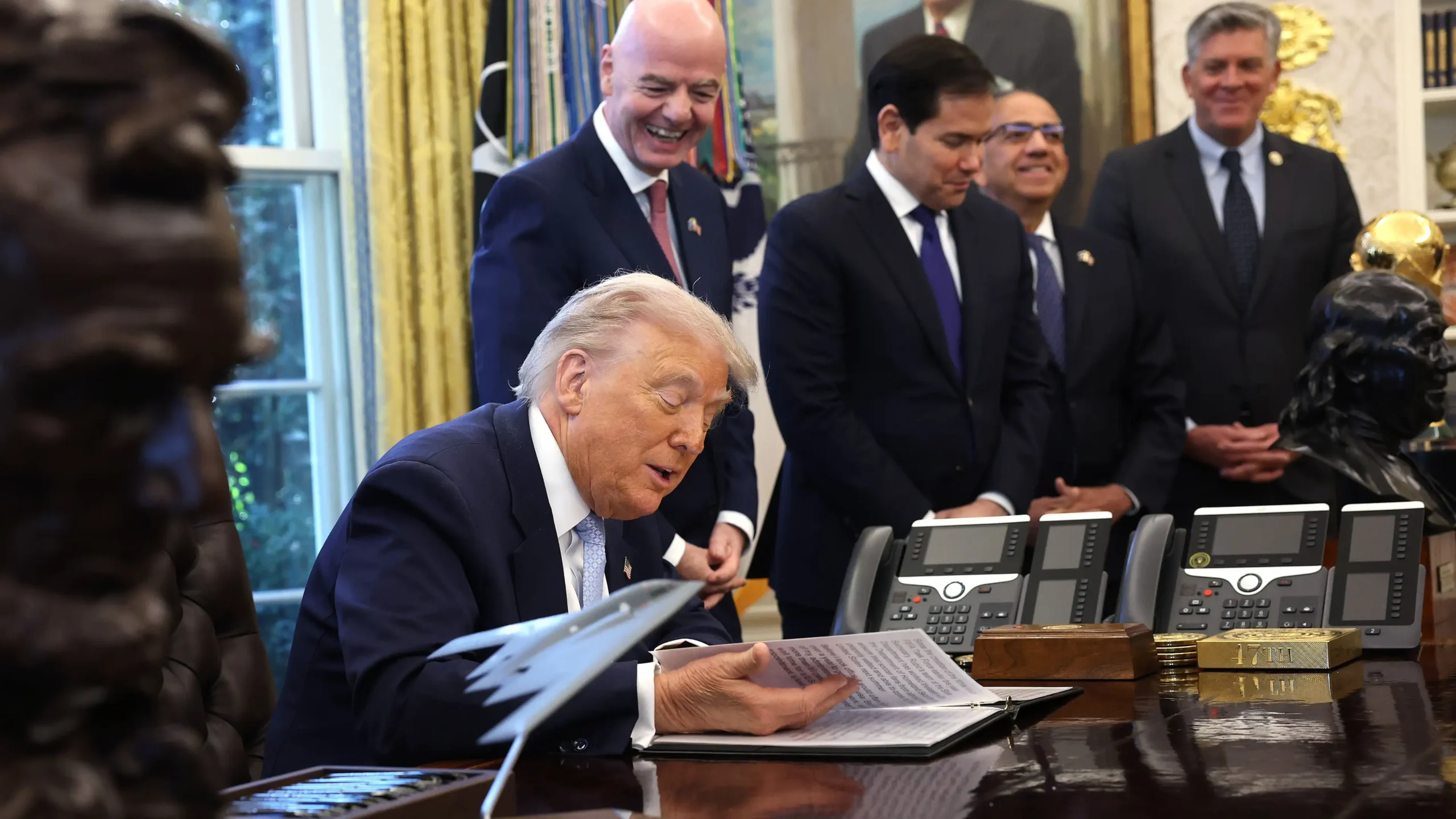
The United States has introduced a priority visa appointment system for holders of tickets to the 2026 FIFA World Cup, allowing football fans to secure expedited visa slots ahead of the tournament scheduled to begin on June 11.
The FIFA Prioritised Appointment Scheduling System, which went live on Tuesday, is designed to enable ticket holders to access prioritised visa appointments before the competition kicks off. The initiative comes as the US prepares to host the majority of matches in the global football showpiece, which will be jointly staged by the United States, Canada, and Mexico from June 11 to July 19.
According to reports by the BBC, the US will host 78 of the 104 matches across 11 cities, with the final scheduled for MetLife Stadium in New Jersey. The scale of the event has raised logistical and security concerns, prompting the US government to put in place mechanisms to manage the anticipated influx of international visitors.
Read Also: US Visa Restrictions: Shehu Sani Calls Policy Exclusionary, Urges Nations to Fix Homefront
In November, President Donald Trump announced that the Departments of State and Homeland Security had been working to ensure that football fans from around the world are properly vetted and able to travel to the United States for the tournament.
“I’ve directed my administration to do everything within our power to make the 2026 World Cup an unprecedented success. We are setting records on ticket sales,” Trump said.
FIFA President Gianni Infantino has projected that between five and ten million people will travel to North America to attend the World Cup. Speaking about the initiative, Infantino described the FIFA Pass as a tool to ensure legitimate football fans can attend the tournament under the best conditions.
“With this FIFA Pass, we can make sure that those who buy a ticket, legitimate football fans, can attend the World Cup in the best conditions, starting with getting their visa and then coming to the country to enjoy the tournament,” Infantino said.
The new system was introduced partly to address concerns that citizens of some countries whose teams have qualified for the World Cup may not otherwise receive visa appointments in time for the tournament due to existing backlogs at US embassies and consulates worldwide.
A senior State Department official stated that the system is expected to significantly reduce wait times, with applicants in over 80 per cent of countries now able to schedule a visa appointment in less than 60 days.
“At the visa appointment, the applicant must show they qualify for the visa and plan to follow our laws and leave at the end of the tournament. America’s safety and the security of our borders will always come first,” the official said.
However, the State Department has emphasised that obtaining a FIFA Pass appointment does not guarantee that a visa will be approved. All applicants must still undergo thorough security screening and vetting, and the final decision on visa issuance rests with consular officers.
Most citizens of countries under the US Visa Waiver Programme, which covers much of Europe, including the United Kingdom, as well as Japan, Australia, and several other nations, can ordinarily travel to the US visa-free for up to 90 days. These travellers are not required to use the FIFA Pass but must instead apply for an Electronic System for Travel Authorisation, commonly known as ESTA.
Despite the launch of the priority visa system, significant uncertainty remains over whether supporters from every qualifying country will ultimately be able to enter the United States. This uncertainty stems from recent immigration policy measures introduced by the Trump administration, which have imposed restrictions on visa processing and travel from dozens of countries.
Read Also: US Suspends Immigrant Visa Processing For Nigeria, Ghana, 73 Other Countries
President Trump recently issued a directive pausing the processing of immigrant visas affecting 75 countries. Of these, 15 have already qualified for the 2026 World Cup, including five-time champions Brazil. A further seven nations on the list remain in contention to qualify for the competition.
The State Department has clarified that the pause applies only to immigrant visas and does not affect non-immigrant visas, such as those issued to tourists, athletes and their families, and media professionals. This means that football fans in countries affected by the suspension of immigrant visa processing will still be able to apply to travel for the World Cup.
Countries already qualified for the tournament that are on the list of 75 affected by the immigrant visa pause include Algeria, Brazil, Cape Verde, Colombia, Egypt, Ghana, Haiti, Iran, Ivory Coast, Jordan, Morocco, Senegal, Tunisia, Uruguay, and Uzbekistan. Nations still in contention on the list include Albania, Bosnia-Herzegovina, the Democratic Republic of Congo, Iraq, Jamaica, Kosovo, and North Macedonia.
The order to pause the processing of immigrant visa applications from the 75 countries took effect on Wednesday, January 21.
In addition to the immigrant visa pause, President Trump expanded a travel ban that came into force on January 1, barring nationals of certain countries from entering the United States. Haiti and Iran, both of which have qualified for the 2026 World Cup, are on the list of countries with full travel restrictions. Ivory Coast and Senegal, who have also qualified, are subject to partial restrictions.
The State Department has stated that a FIFA Pass appointment does not allow people who are otherwise ineligible to be issued a visa under existing US immigration law or executive orders. This means that fans from the four qualified countries facing full or partial travel restrictions—Haiti, Iran, Ivory Coast, and Senegal—are unlikely to be able to travel to the US for the tournament.
However, official guidance specifies that there are exceptions under the travel ban for athletes, members of athletic teams, including coaches, persons performing necessary support roles, and their immediate relatives. These exceptions would allow players and team officials from restricted countries to participate in the World Cup.
Crucially, the guidance adds that the exception does not apply to fans or spectators. While supporters from restricted countries can still submit visa applications, they may be deemed ineligible for visa issuance or admission to the United States, effectively barring them from attending matches even if their national teams qualify and compete.
The 2026 FIFA World Cup will be the first edition of the tournament to feature 48 teams, expanded from the previous format of 32. The expansion is expected to bring unprecedented levels of global participation and viewership, but it has also introduced complex logistical and diplomatic challenges for the host nations.
The United States previously hosted the World Cup in 1994, an event that remains the highest-attended World Cup in history, with an average attendance of nearly 69,000 spectators per match. The upcoming tournament is expected to surpass those figures, given the increased number of matches and the popularity of football in North America, which has grown significantly over the past three decades.
The joint hosting arrangement with Canada and Mexico reflects FIFA’s evolving approach to World Cup hosting, which has increasingly favoured multi-nation bids to spread the financial and logistical burden of the event. Canada will host 13 matches, while Mexico will host 13 as well, with the remainder taking place in the United States.
The introduction of the FIFA Pass and the surrounding visa policies have sparked debate among football administrators, fans, and human rights advocates. Critics argue that travel restrictions could undermine the spirit of the World Cup, which is intended to be a global celebration of football that transcends political and national boundaries.
FIFA has historically emphasised the importance of ensuring that fans from all participating nations can attend the tournament. The organisation has worked with host countries in the past to secure visa facilitation agreements and temporary measures to ease travel for supporters.
The extent to which the US travel restrictions will affect fan attendance remains to be seen. Much will depend on how the policies are implemented in practice, and whether any additional exemptions or accommodations are made in the months leading up to the tournament.
For now, the US government has signalled that border security and immigration enforcement will remain top priorities, even as it seeks to facilitate one of the world’s largest sporting events. The State Department’s assurance that “America’s safety and the security of our borders will always come first” underscores the administration’s approach to balancing national security concerns with the demands of hosting a global tournament.