
US Places Nigeria Under Partial Travel Restrictions Over Security Concerns
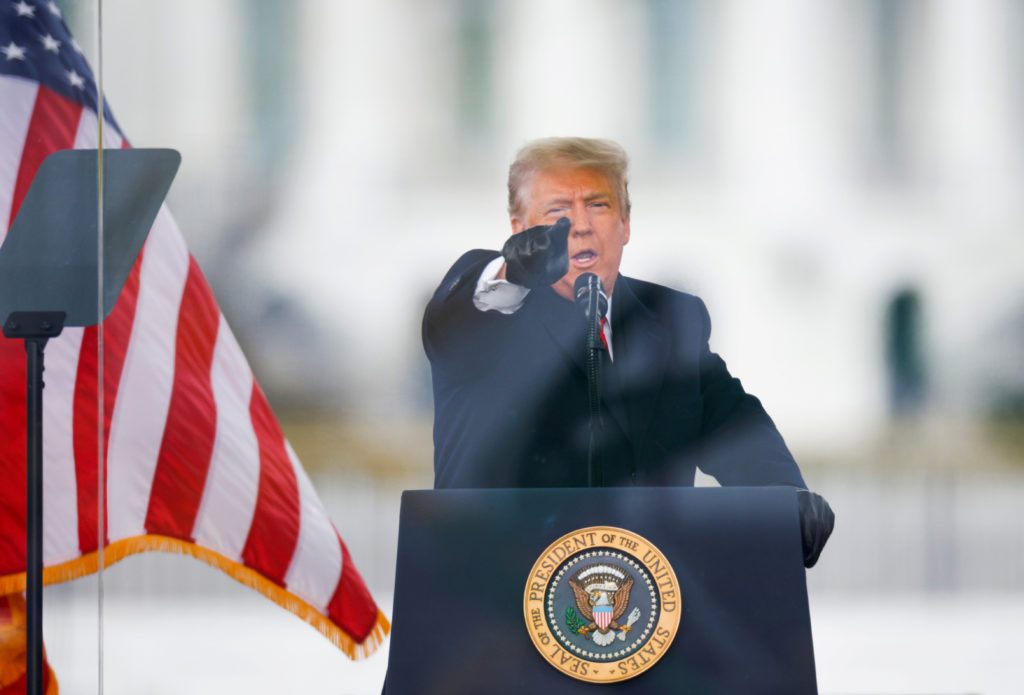 FILE PHOTO: U.S. President Donald Trump gestures as he speaks during a rally to contest the certification of the 2020 U.S. presidential election results by the U.S. Congress, in Washington, U.S, January 6, 2021. REUTERS/Jim Bourg/File Photo
The United States has imposed partial travel restrictions on Nigeria, citing security concerns and deficiencies in identity management systems, according to a new presidential proclamation signed by President Donald Trump.
The measure, detailed in a White House fact sheet released on the administration’s official X platform Tuesday, targets foreign nationals from countries identified as having inadequacies in information-sharing, security screening processes, and passport verification systems. Nigeria joins a list of nations facing heightened scrutiny, though it has avoided the full travel ban imposed on several other countries.
The decision follows a periodic review conducted by U.S. authorities to assess countries’ compliance with American security and vetting requirements. According to the White House, the evaluation focused on each nation’s ability to verify travellers’ identities, share criminal and security-related information, and maintain robust civil documentation systems.
“The United States must ensure that individuals seeking entry do not pose a threat to national security or public safety,” the White House stated in its official release, emphasising that the restrictions serve as protective measures rather than punitive actions.
Under the new proclamation, Nigerian nationals will remain eligible for certain U.S. visa categories, but applications will face additional scrutiny and limitations. The restrictions primarily affect select non-immigrant and immigrant visa classes, though exemptions continue for lawful permanent residents, current visa holders, diplomatic personnel, and individuals whose entry is deemed to serve U.S. national interests.
Nigeria’s classification under partial restrictions contrasts with the full entry bans imposed on Burkina Faso, Mali, Niger, South Sudan, and Syria. The distinction suggests that whilst Washington harbours concerns about Nigeria’s security infrastructure, it has not categorised the West African nation as presenting the same level of risk as countries under complete travel prohibition.
The White House clarified that the restrictions are not permanent and could be lifted if affected countries demonstrate improvements in addressing the identified security gaps. This provision offers Nigeria an opportunity to engage diplomatically with American authorities to resolve the underlying concerns.
The development has sparked apprehension amongst Nigerian travellers, students, and business professionals, particularly those with pending visa applications or planned trips to the United States. Nigeria maintains one of the largest applicant pools for U.S. visas in Africa, with thousands of citizens seeking entry annually for education, business, medical treatment, and family visits.
Security analysts suggest the move could prompt renewed diplomatic engagement between Abuja and Washington. Nigeria may need to demonstrate enhanced cooperation in information-sharing protocols, improvements in passport security features, and stronger identity verification systems to satisfy U.S. requirements.
As of the latest reports, Nigeria’s Federal Government had not issued an official response to the U.S. announcement. The Ministry of Foreign Affairs, which typically handles such bilateral matters, has remained silent on the development, leaving many Nigerian citizens seeking clarity on how the restrictions will affect their travel plans.
The new restrictions are scheduled to take effect in the coming months, according to the White House statement. The U.S. government has advised affected travellers to consult American embassies and consulates for updated guidance and specific information regarding their visa categories and eligibility.
This latest policy shift adds to ongoing discussions about immigration and border security under the Trump administration, which has prioritised stricter vetting procedures and enhanced cooperation with foreign governments on security matters.