
We Import Petrol While Exporting Crude: A Masterclass in Economic Self-Sabotage
On Monday, January 12, 2026, the Nigerian Upstream Petroleum Regulatory Commission (NUPRC) released its latest performance data, revealing a bittersweet reality. Nigeria averaged 1.64 million barrels per day (mbpd) of crude oil and condensates throughout 2025. While this shows a slight stabilization compared to previous years of rampant oil theft, it remains well below the government’s 2.0 million mbpd target.
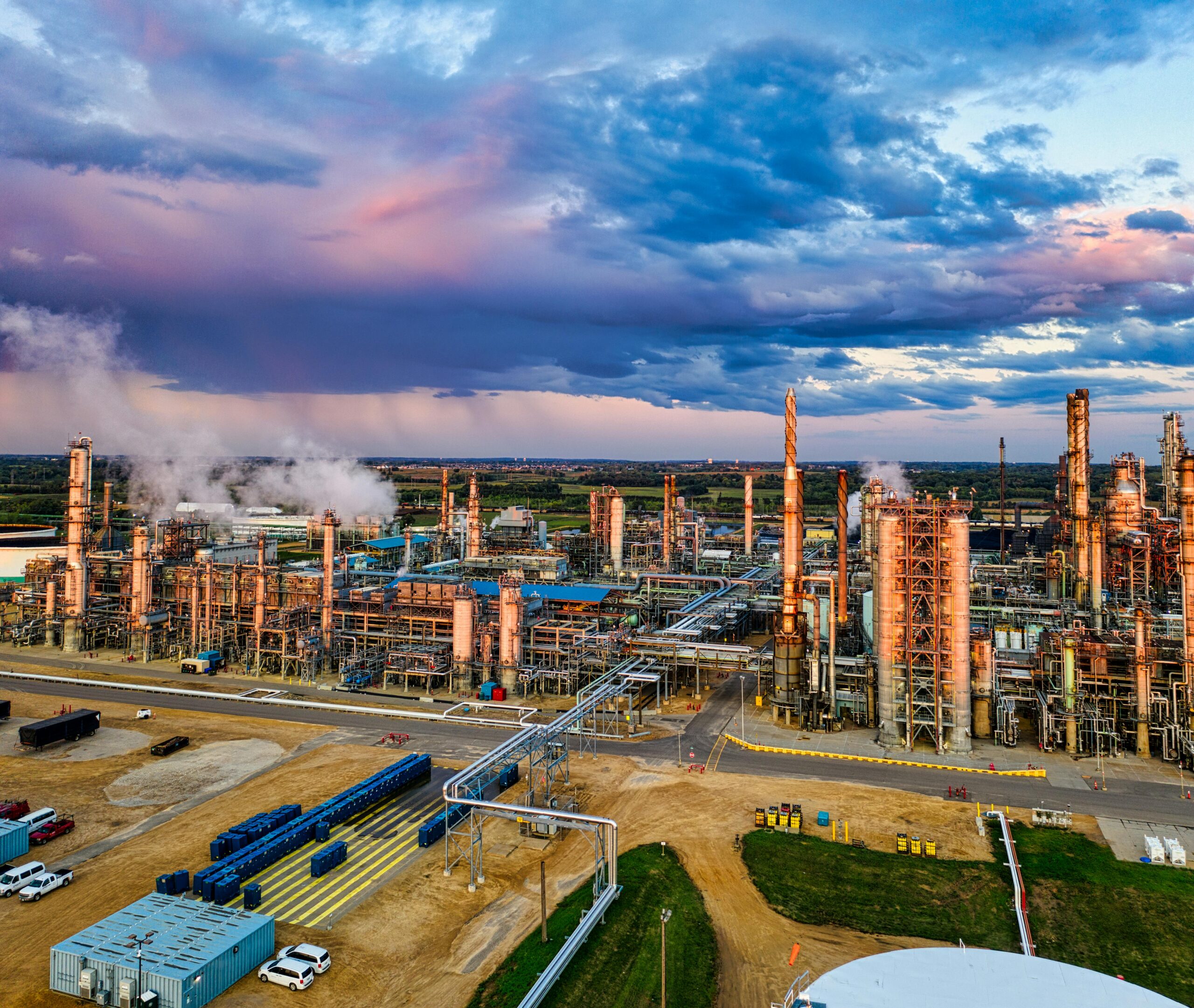
The tragedy isn’t just in what we fail to produce, but in what we do with what we have. For nearly thirty years, Nigeria’s four state-owned refineries in Port Harcourt, Warri, and Kaduna have been more like expensive museums than industrial hubs. Despite billions of dollars poured into Turn Around Maintenance, they produced zero petrol in late 2025.
According to data from the Central Bank of Nigeria (CBN) released just this week, Nigeria’s fuel import bill dropped a staggering 54% over the last two years—falling from $14.58 billion in 2023 to $6.71 billion in 2025. On the surface, this looks like a victory. However, the country still spent over N4 trillion on fuel imports in the first half of 2025 alone. Even with the massive $20 billion Dangote Refinery now pumping petrol into the local market, the “import-parity” pricing model means Nigerians are still paying global prices for locally refined fuel.
As the Crude Oil Refinery-owners Association of Nigeria (CORAN) stated in a recent 2026 policy brief:
“A country that imports what it can refine remains vulnerable to exchange-rate volatility and fiscal instability. Policy neutrality is no longer sufficient; we need intentionality to protect domestic value.”
While the government celebrated a Balance of Payments surplus on Tuesday, January 13, 2026, the average citizen is feeling a “Balance of Poverty.” The transition from being a net importer to a potential exporter of refined products has been painful.
The Federal Government recently approved the postponement of a 15% import duty on petrol until the first quarter of 2026. This move was a desperate attempt to prevent prices from skyrocketing to N1,400 per litre, a figure the Dangote Refinery warned could become the new reality if Nigeria relies solely on imports. Currently, prices hover around N835 to N950 per litre, a cost that the CBN predicts will remain the baseline throughout 2026.
Industry experts argue that the current system is an “oligopoly.” The Independent Petroleum Marketers Association of Nigeria (IPMAN) President, Abubakar Garima, recently noted:
“The fuel is available everywhere. So, if the fuel is available everywhere, then what is the need for importing? We are the owners of the filling stations… we should be encouraging local production to create jobs, not just shipping our wealth abroad.”
Self-sabotage is found in the “crude-for-naira” swaps and the infrastructure bottlenecks. Even with a world-class refinery in Lekki, Nigeria still faces fuel shortages at high prices.
Many smaller modular refineries cannot refine petrol; they only produce diesel and kerosene. Also in December 2025, the Dangote Refinery had to scale back production for maintenance, forcing a temporary surge in imports to fill the gap.
Despite improvements, pipelines are still being tapped, and “near-ready” oil fields remain trapped in red tape.
The irony of exporting raw crude only to import expensive petrol is not just a line in an economic report; it is a weight on the shoulders of people like Musa. When the government announces a “BOP surplus,” Musa sees it as a number on a screen. When he goes to the pump, he sees a number that means his children might not get meat in their soup this week.
The 2026 budget is anchored on a conservative $64.85 per barrel and a production target of 1.84 mbpd. If Nigeria hits these targets, it could rake in over N60 trillion in oil revenue. However, without fully functional state refineries and a transparent system that prioritizes local consumption over “stomach infrastructure” politics, that wealth will continue to bypass the hands that need it most.
We are a nation that has mastered the art of buying the shoes we made from a middleman in Europe, then complaining that the shoes are too expensive for our feet
The year 2025 marked a definitive, if painful, milestone in this masterclass of self-sabotage: the era of the “untraceable” subsidy finally met its end. For decades, the Nigerian government spent more on keeping petrol artificially cheap than it did on health, education, and defense combined. According to a policy document released by the National Orientation Agency (NOA) on June 10, 2025, the removal of the petrol subsidy ended a financial drain that had cost the nation over $84 billion between 2005 and 2022.
The government argues that this “bloodletting” of the national treasury was the only way to save the economy from collapse. “Successive administrations’ zeal to tame the menace had proved a fiasco,” the NOA report noted. Today, the money saved is reportedly being funneled into 40 critical road projects and increasing the financial allocations to state governments.
However, for the average Nigerian, this looks like a trade-off they never agreed to. While the government saves billions, the citizen pays the price in transport fares that have risen by over 200% in some regions. Human rights activist Senator Shehu Sani warned on Wednesday, January 14, 2026, that these reforms could fail if the “human impact” is ignored:
“You don’t remove subsidy first and start looking for palliatives later. You cushion the people before you introduce the shock.”
The “Naira-for-Crude” Gamble
As we’ve moved further into 2026, the strategy has shifted from mere survival to a complex game of currency management. To stop the “economic self-sabotage” of using scarce Dollars to buy back our own oil, the Federal Government began the “Crude-for-Naira” arrangement with local refiners.
This policy is designed to ease the pressure on the Naira by eliminating the need for oil marketers to source billions of Dollars from the black market, just to bring fuel into the country. The $20 billion Dangote Refinery, which ramped up production to over 52 million litres of petrol per day in late 2025, is the centrepiece of this plan.
But even with a local giant pumping fuel, the price at the pump remains stubborn. Why? Because as long as the state-owned refineries in Port Harcourt and Warri remain “perpetually under repair,” the market lacks true competition. Despite NNPC Limited’s insistence on Wednesday, January 14, 2026, that the Port Harcourt refinery is “up and running,” loading records show it remained largely shut down through December 2025.
Nigeria finds itself in a race against time. We are finally refining our own oil, but we are doing so in a system so damaged by years of neglect that even the “success” feels like a struggle. Until the state refineries provide a counterweight to private monopolies, and until the “infrastructure dividends” become visible roads rather than just budget lines, the masterclass in self-sabotage will continue to have its most unwilling students: the Nigerian people.