


Why China Swiftly Executed 11 Members Of Notorious Border Crime Family
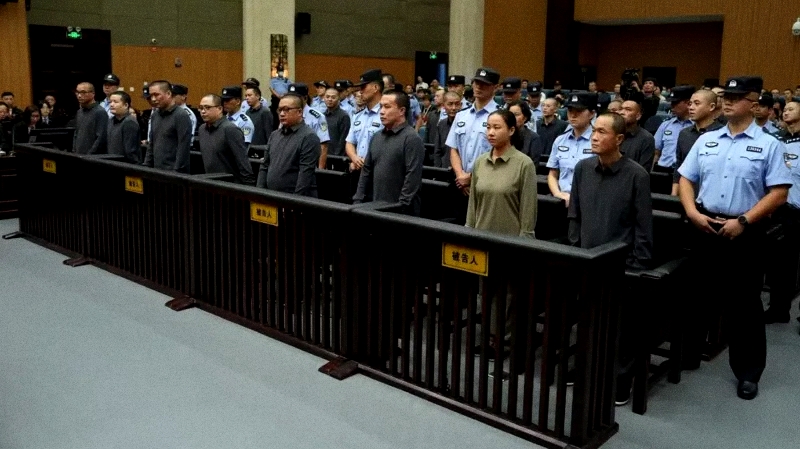
China’s rapid execution of 11 members of a notorious organised crime family operating along the China–Myanmar border underscores Beijing’s uncompromising stance on transnational crime, online fraud, and human trafficking.
The executions followed death sentences handed down in September, and came as no surprise to observers familiar with China’s judicial system, which carries out more executions than any other country, though exact figures remain a state secret.
The individuals belonged to four interlinked clans — the Ming, Bau, Wei and Liu families — who dominated Laukkaing, a remote town in Myanmar’s impoverished Shan State, from 2009.
Their rise followed a military offensive led by Myanmar’s current junta chief, Min Aung Hlaing, which expelled the ethnic insurgent group MNDAA from the region. The families subsequently consolidated power, shifting from traditional opium and methamphetamine production to an economy built on casinos and large-scale online fraud operations.
The clans maintained close ties with Myanmar’s military elite. In December 2021, Min Aung Hlaing publicly honoured Liu Zhengxiang, patriarch of the Liu family, for what was described as “extraordinary contributions to state development.” Members of the families also had political links to the military-backed USDP party.
However, the scam operations run out of Laukkaing became notorious for their brutality. Tens of thousands of mainly Chinese nationals were lured with promises of well-paid jobs, only to be imprisoned in fortified compounds where torture and abuse were routine. Victims were forced to run sophisticated “pig-butchering” online scams, primarily targeting Chinese citizens.
Read Also: China Executes 11 Members Of Myanmar-Based Scam Mafia In Major Crackdown
Public outrage in China intensified as victims and their families flooded social media with pleas for help. The situation escalated further in October 2023, when guards at Crouching Tiger Villa, a compound run by the Ming family, reportedly killed several Chinese nationals during an attempted escape.
With Beijing’s apparent approval, the MNDAA and allied forces launched an offensive, retaking Laukkaing as part of Myanmar’s ongoing civil war and pledging to eradicate scam operations. Leaders of the four families were detained, and more than 60 relatives and associates were handed over to Chinese authorities.
Ming Xuechang, the Ming family patriarch, later died by suicide after his capture, according to official accounts. Chinese authorities also publicised interrogation details, including an alleged confession by a family member who admitted killing a random victim to demonstrate power — evidence used to justify the severe punishment.
While 11 executions have now been carried out, five members of the Bau family are reportedly still awaiting execution, and trials involving the Wei and Liu families remain ongoing.
China has since expanded its crackdown, pressuring Thailand and Cambodia to extradite Chinese nationals accused of running major scam networks, and repatriating tens of thousands of citizens from scam compounds to face prosecution at home.
Despite the crackdown, analysts say the scam industry has adapted rather than disappeared, relocating to new areas in Myanmar and remaining deeply entrenched in parts of Cambodia, even as high-profile complexes along the Thai–Myanmar border have been forced to shut down.