

‘$200 Per Barrel’: Iran Vows to Block US-Bound Oil Through Strait of Hormuz
Tehran’s military command has issued one of its starkest warnings since the outbreak of the US-Israeli war on Iran, declaring that it will block all oil shipments through the Strait of Hormuz destined for the United States, Israel and their allies, and warning that crude prices could climb to $200 per barrel. The declaration, coming as the narrow waterway enters its eleventh day of effective closure, has reverberated swiftly across global energy markets and landed with particular weight in Nigeria, where petrol prices have already surged by 24 per cent within days, driving transport fares to more than double on several major routes.
Ebrahim Zolfaqari, spokesperson for Iran’s Khatam al-Anbiya military command headquarters, made the announcement on Wednesday March 11, 2026. “Let us firmly reiterate that we will never allow even a single litre of oil to pass through the Strait of Hormuz for the benefit of the US, the Zionists and their partners,” he stated. “Any vessel or oil shipment intended for America, the Zionist regime or their hostile allies will be a legitimate target for us.”
The statement went further, directly addressing efforts by Washington and its allies to manage oil prices through emergency reserve releases. “You will not be able to artificially lower the price of oil. Expect oil at $200 per barrel,” Zolfaqari warned. “The price of oil depends on regional security, and you are the main source of insecurity in the region.” He also signalled that Iran considered previous geopolitical strategies by its adversaries to have run their course. “Your strategy of hiding behind Iran’s neighbouring countries and the Muslims of the West Asia region, and even the world, has expired,” he said.
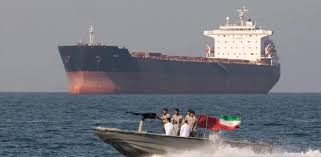
The Iranian statement did not arise in a vacuum. It is the latest escalation in a conflict that began on February 28, 2026, when the United States and Israel launched joint military strikes on Iran, including operations that resulted in the killing of Iran’s Supreme Leader Ali Khamenei. Iran responded with retaliatory missile and drone attacks on US military bases, Israeli territory and other Gulf states, while its Islamic Revolutionary Guard Corps issued warnings prohibiting vessel passage through the strait, leading to an effective halt in shipping traffic.
By March 2, a senior IRGC official confirmed publicly that the strait was closed. The impact on maritime traffic was swift. Tanker traffic dropped by approximately 70 per cent initially, with over 150 ships anchoring outside the strait to avoid risks, before traffic dropped to near zero.On March 5, the IRGC announced that Iran would keep the Strait of Hormuz closed only to ships from the US, Israel and their Western allies.
The military dimension of the crisis has since deepened significantly. Iran has begun laying mines in the strait, according to US intelligence sources, and its IRGC maintains the capacity to deploy a combination of mines, explosive-laden suicide boats and shore-based missile batteries, leading one US source to describe the waterway as “Death Valley.” The United Kingdom Maritime Trade Operations Centre reported at least ten attacks on ships as of March 8, with five crew members killed across two vessels. On one occasion, an IRGC-operated Thai-flagged bulk carrier, the Mayuree Naree, was struck as it attempted to pass through, with three of its 23 crew members unaccounted for after an explosion in the engine room.
US President Donald Trump had previously threatened that Iran would be “hit by the United States of America twenty times harder” if it did anything to stop the flow of oil through the Strait of Hormuz. On Wednesday, Trump told reporters he believed ships should continue passing through the waterway, saying “I think you’re going to see great safety, and it’s going to be very, very quickly.” Trump also said during an earlier CBS News interview that he was “thinking about taking over” the strait to ensure it remains open, though legal experts have noted significant difficulties with that position. Alexander Freeman, a partner at UK-based law firm Hill Dickinson, has said publicly that the United States has no jurisdiction over the Strait of Hormuz, noting that its waters fall under the sovereign territorial jurisdiction of Iran and Oman under the United Nations Convention on the Law of the Sea.
The Strait of Hormuz is the most strategically consequential maritime chokepoint on earth. According to the US Energy Information Administration, about 20 million barrels of oil worth approximately $500 billion in annual global energy trade transited through the strait each day in 2024. That volume represents roughly one-fifth of the world’s daily oil supply. The strait is just 33 kilometres wide at its narrowest point, with the actual shipping lane measuring only 3 kilometres in either direction, making it extraordinarily vulnerable to disruption.
In 2024, 84 per cent of crude oil and condensate shipments transiting the strait headed to Asian markets, with China, India, Japan and South Korea together accounting for 69 per cent of all crude and condensate flows. A similar pattern holds for liquefied natural gas, with 83 per cent of LNG volumes through the strait also heading to Asian destinations.
With the strait effectively closed, almost 15 million barrels per day of crude and 4.5 million barrels per day of refined oil remain stranded in the Gulf, meaning that storage tanks across the region are filling up at an alarming rate. The global consequences are expected to cascade well beyond energy markets. Supply chain experts have warned that about 85 per cent of polyethylene exports from the Middle East transit the Hormuz route, meaning that shortages and backlogs will raise the price of packaging, automotive components, and consumer goods. Roughly one-third of global fertiliser trade also passes through the strait, including large volumes of nitrogen exports, with fertiliser prices already showing sharp movement.
The closure has not been total in practice. Iran has continued to ship large amounts of crude oil to China through the strait. Iran sent at least 11.7 million barrels of crude through the Strait of Hormuz since the war began, all destined for China. Analysts note that Iran has commercial incentives not to close the route entirely. As Quantum Strategy’s David Roche observed publicly, “They need oil, otherwise they have no money,” suggesting some motivation on Iran’s part not to attack western shipping comprehensively.
The International Energy Agency, established in the aftermath of the 1973 Arab oil embargo precisely to coordinate responses to major supply disruptions, moved on Wednesday to activate the largest emergency reserve release in its history. IEA Executive Director Fatih Birol announced that the agency’s 32 member countries had unanimously agreed to make 400 million barrels of oil available from their emergency stocks. “IEA countries have unanimously decided to launch the largest-ever release of emergency oil stocks in our agency’s history,” Birol said at the agency’s Paris headquarters. “This is a major action aiming to alleviate the immediate impacts of the disruption in markets.”
The coordinated release represents the sixth such action in the agency’s five-decade history and substantially exceeds the previous record. The IEA’s last comparable intervention came in 2022, when member countries released 182 million barrels in response to Russia’s full-scale invasion of Ukraine, which disrupted global energy and commodity markets severely. Before that, the agency had also coordinated releases during the 1991 Gulf War and the 2011 Libyan civil war. The emergency stocks will be made available over a timeframe aligned with the national circumstances of each member country, and some countries are expected to supplement the coordinated release with additional emergency measures of their own. The IEA has stated that the most important factor for a return to stable oil and gas flows is the resumption of transit through the Strait of Hormuz, underscoring the view that reserve releases are a stopgap measure rather than a long-term solution.
The reverberations of the Strait of Hormuz crisis have landed hard on the Nigerian consumer. Oil marketers increased the price of Premium Motor Spirit to N1,300 per litre from N1,050 per litre, an increase of 24 per cent, as crude oil prices climbed to $110 per barrel in the international market The pump price of Automotive Gas Oil rose to N1,380 per litre from N1,100 per litre at MRS outlets, while NNPC outlets in Lagos were selling diesel at N1,680 per litre. In some Abuja filling stations, petrol had seen four separate price increases within a single week, moving from N880 per litre to N960, then N1,080, then N1,103, before settling at N1,175 from the Dangote refinery, while pump prices at independent marketers moved higher still.
Transport fares have reflected the increases sharply. Bus fares on routes through Area 8, Garki and the Central Area in Abuja, which had been around N800 before the price increases began, had risen to N1,500. The Nigeria-specific situation is compounded by the domestic policy context. President Bola Tinubu announced the removal of the petrol subsidy during his inauguration on May 29, 2023, a move that set off a sustained climb in domestic fuel prices even before the current international crisis. The downstream petroleum sector was fully deregulated in October 2024, meaning that Nigerians now absorb global price movements without the buffer that subsidised pricing previously provided, however imperfectly.
The Federal Government’s 2026 budget was based on a crude oil benchmark of $64.85 per barrel. With crude reaching $110 per barrel amid the Middle East conflict, the government has overshot its budget benchmark by 70 per cent, creating a complex fiscal situation in which government revenues from oil are theoretically higher, even as ordinary Nigerians bear the full brunt of higher domestic fuel prices.
Against this backdrop, the African Democratic Congress, the opposition party that has been rapidly consolidating its position as a major political platform ahead of the 2027 elections, moved on Wednesday to frame the fuel crisis as a governance failure as much as a global economic shock.
In a statement signed by the party’s National Publicity Secretary, Bolaji Abdullahi, the ADC called directly on the Federal Government to introduce a temporary and time-bound cap on petrol prices. “ADC calls on the Federal Government to immediately introduce a temporary and time-bound cap on petrol prices to prevent further increases that continue to push the cost of living beyond the reach of millions of Nigerians,” Abdullahi said in the statement. “Recent hikes in petrol prices reflect rising volatility in global oil markets, driven in part by the ongoing crisis in the Middle East. However, ADC believes that external shocks cannot justify allowing fuel prices to spiral without restraint in an already fragile economy, one that continues to reel from the consequences of the Tinubu-led APC government’s abrupt removal of the fuel subsidy.”
The party also urged the government to introduce targeted palliatives specifically designed for low-income Nigerians. On the government’s proposal to distribute 100,000 Compressed Natural Gas conversion kits, the ADC was pointed in its criticism, noting that the figure represents less than one per cent of Nigeria’s vehicle fleet of over 11 million, and questioning the adequacy of CNG refuelling infrastructure across the country.
The Federal Government, for its part, has indicated it does not intend to reverse the market-based pricing framework for fuel. Finance Minister Wale Edun, speaking on Channels Television, said the administration intends to focus on alternative measures rather than returning to regulated pricing, pointing to the 100,000 CNG conversion kits as part of the cushioning strategy, and noting that CNG currently costs roughly 25 to 30 per cent of the price of petrol.
The stand-off between the government’s insistence on market-determined pricing and the opposition’s demand for emergency intervention reflects a deeper political and economic debate about how Nigeria, a country that exports crude oil but must import refined petroleum products, should manage the exposure of its citizens to global energy shocks. Some analysts and continental bodies, including the African Petroleum Producers’ Organisation, have argued that the current crisis represents a strategic opportunity for African exporters including Nigeria, Angola and Algeria, projecting budget revenue growth of between 15 and 25 per cent, and recommending that African countries reorient exports toward European markets starved of Middle Eastern supplies. For the millions of Nigerians paying N1,300 or more per litre at the pump, such long-term strategic possibilities offer little immediate relief.